
ParentVibes
Women's Health Library · parentvibes.in
Women's Mental Wellbeing: Hormones, Mood, PMS, PMDD & Getting Support
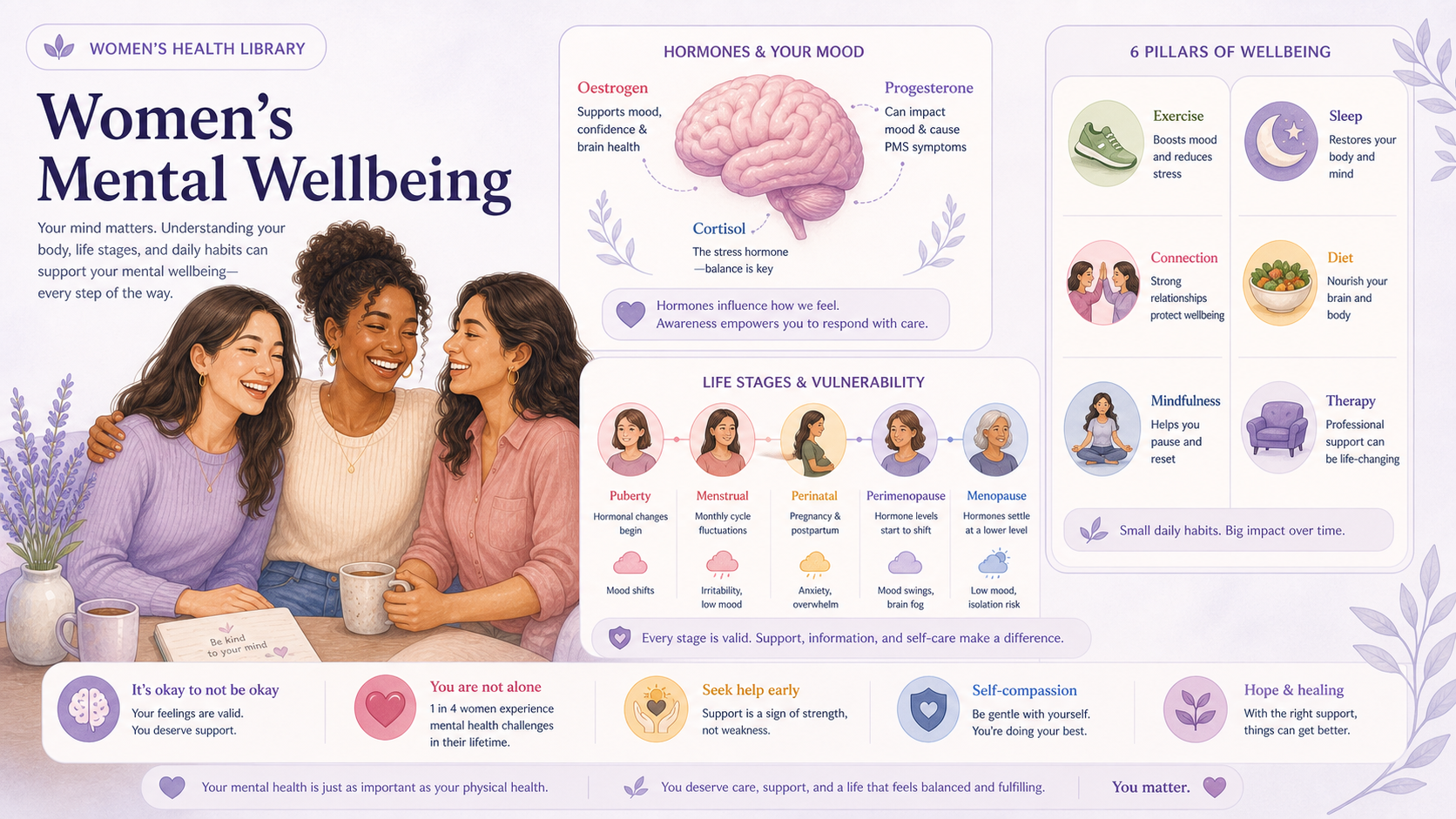
Mental wellbeing is just as important as physical health — and for women, the two are closely linked. Hormonal changes across the menstrual cycle, and at major life stages like pregnancy, after birth, and around menopause, can all affect mood, energy and emotional resilience. Feeling more sensitive before a period, for example, is extremely common and has a real biological basis.
For many women, premenstrual mood changes are mild (PMS — premenstrual syndrome). For a smaller group, they're severe enough to disrupt life and relationships — a condition called PMDD (premenstrual dysphoric disorder), which affects an estimated 2–5% of women. These are real, recognised conditions — not "being dramatic" — and they can be treated.
This guide explains the hormone–mood connection, what PMS and PMDD are, practical self-care that helps, and — most importantly — how and when to reach out for support. If you're struggling, you're not alone, and help is available.
You deserve support
If your mood or worries feel overwhelming, please talk to someone you trust and a qualified professional. The ParentVibes Ask a Doctor feature can help you take a first step.
Ask a Doctor →Useful tools
Everything You Need to Know (The Hormone–Mood Link)
Hormones don't "cause" all mental health difficulties, but they can strongly influence mood — and recognising the patterns helps you respond with self-compassion and the right support.
| Life stage / pattern | What can happen emotionally |
|---|---|
| Across the cycle (PMS) | Mood swings, irritability, low mood, anxiety, tension in the 1–2 weeks before a period, easing as it starts |
| Severe premenstrual (PMDD) | Marked depression, anxiety, anger or feeling overwhelmed, with real impact on work/relationships |
| Pregnancy & postpartum | Mood changes are common; some experience antenatal/postnatal depression or anxiety |
| Perimenopause/menopause | Mood changes, anxiety and sleep disruption can accompany hormonal shifts |
| Conditions like PCOS/thyroid | Linked with higher rates of low mood and anxiety |
PMS vs PMDD — the key difference
PMS symptoms are uncomfortable but manageable; PMDD symptoms are severe and significantly disrupt daily life, and they reliably appear in the premenstrual phase and lift after the period starts. PMDD is recognised and treatable.
What to Notice
Common emotional symptoms (cycle-linked or general):
Common emotional symptoms
- Mood swings, irritability, tearfulness
- Anxiety, tension, feeling overwhelmed
- Low mood or loss of interest
- Trouble concentrating
- Sleep changes (too much or too little)
- Appetite or energy changes
- (With PMS/PMDD) symptoms that come before the period and ease once it starts
Signs it's worth reaching out sooner
- Symptoms that disrupt your work, study, relationships or daily life
- Low mood, hopelessness or anxiety most days for two weeks or more
- Feeling unable to cope, or that things won't get better
Track while you read
Tick the symptoms that apply to you. This is a self-check, not a diagnosis — saved on this device only.
Please read
If you ever have thoughts of harming yourself or feel unable to stay safe, please reach out right away — to someone you trust, a mental-health professional, your local emergency services, or India's Tele-MANAS helpline on 14416 (or 1-800-891-4416), available 24/7. You deserve immediate support, and help is available.
Causes
Mental wellbeing is shaped by many factors working together:
- Hormonal sensitivity
- Some people are more sensitive to the normal hormone shifts of the cycle (a key factor in PMS/PMDD), pregnancy/postpartum, and menopause.
- Biology & genetics
- A family or personal history of depression or anxiety.
- Health conditions
- Thyroid problems, PCOS, chronic illness and poor sleep can affect mood.
- Life stressors
- Work, relationships, caregiving, finances, and major life changes.
- Social and cultural pressures
- Including stigma around discussing mental health, which can delay support.
Importantly, hormone-linked mood changes are not a personal failing — they reflect real biological and life factors, and support genuinely helps.
How Concerns Are Assessed
A doctor or mental-health professional assesses emotional health through conversation and, where relevant, your cycle pattern.
What helps / what a professional may do
- Talking it through — your symptoms, how long they've lasted, and their impact
- Symptom tracking — recording mood daily for at least two cycles is key to confirming PMS/PMDD (because the pattern matters)
- Checking physical causes — e.g. thyroid tests, since thyroid problems can affect mood
- Referral to a counsellor, psychologist or psychiatrist if needed
Your ParentVibes mood-and-cycle logs and Health Reports can be valuable to share at an appointment.
Support Options
Support is real and effective, and ranges from self-care to professional treatment depending on severity.
- Mild PMS / general low mood
- Lifestyle measures, stress management, good sleep, social support.
- Moderate–severe PMS / PMDD
- A doctor may discuss options including certain antidepressants (SSRIs) and/or hormonal approaches; talking therapies (e.g. CBT).
- Depression / anxiety
- Talking therapy, lifestyle support, and medication where appropriate, guided by a professional.
- Perinatal (pregnancy/postpartum)
- Specialist perinatal mental-health support.
The most important step is reaching out
A GP, gynaecologist, counsellor or psychologist can help you find the right support. Ask a Doctor on ParentVibes can help you begin.
Ask a Doctor →Medication is prescription-only and individual
Antidepressants and hormonal treatments must be assessed, prescribed and monitored by a doctor — never started or stopped on your own. Talking therapies are a safe, effective first step for many people.
Everyday Wellbeing
These habits support mental wellbeing — alongside, not instead of, professional help when it's needed:
Habits that help
- Regular movement — even a daily walk or gentle yoga lifts mood and eases PMS
- Balanced eating & steady blood sugar — regular meals with fibre, protein and healthy fats; limit excess caffeine, alcohol and sugar
- Protect your sleep — a consistent routine; poor sleep strongly affects mood
- Stress care — breathing, meditation, yoga, time in nature, hobbies, and rest
- Connection — talk to trusted friends, family, or a support community; reduce isolation
- Self-compassion — adjust expectations on harder days (e.g. premenstrually); you're allowed to slow down
Daily wellbeing habits
- Some movement
- Balanced meals, limited caffeine/alcohol
- Consistent sleep routine
- One calming/stress-relief activity
- Connect with someone
A note on coping
Healthy coping builds you up. Please avoid anything that harms you. If you feel the urge to cope in harmful ways, reach out to a professional or someone you trust — support is available and you deserve it.
When to See a Doctor
Please reach out to a doctor or mental-health professional if:
- Mood symptoms disrupt your daily life, work or relationships
- You feel low, hopeless or very anxious most days for two weeks or more
- Premenstrual symptoms are severe (possible PMDD)
- You're pregnant or recently had a baby and your mood is low or anxious
- You feel unable to cope, or that you need support
Please seek help right away
If you have thoughts of harming yourself or feel unable to stay safe, reach out now — to someone you trust, a mental-health professional, your local emergency services, or India's Tele-MANAS helpline on 14416 (or 1-800-891-4416), available 24/7. You are not alone, and immediate support is available.
Continue learning
Frequently Asked Questions
Is it normal to feel low or irritable before my period?
Yes — premenstrual mood changes (PMS) are very common and have a real biological basis. If they're severe and disrupt your life, it may be PMDD, which is treatable.
What's the difference between PMS and PMDD?
PMS symptoms are uncomfortable but manageable; PMDD is a severe form with marked mood symptoms that significantly affect daily life, appearing premenstrually and easing after the period. PMDD affects an estimated 2–5% of women.
Can hormones really affect my mental health?
Yes — hormonal shifts across the cycle, pregnancy, postpartum and menopause can influence mood, and some people are more sensitive to them.
How is PMDD treated?
A doctor may discuss talking therapy, lifestyle measures, and options such as certain antidepressants (SSRIs) or hormonal approaches — individualised and monitored.
What can I do at home to feel better?
Regular movement, balanced eating, good sleep, stress care and staying connected all help — and tracking mood with your cycle can reveal patterns. Please seek professional help if symptoms are persistent or severe.
Is it weak to ask for help?
Not at all — reaching out is a strong, healthy step, and effective support is available.
Can conditions like PCOS or thyroid affect mood?
Yes, both are linked with higher rates of low mood and anxiety, which is one more reason to get them checked and treated.
Was this guide helpful?
Understand your cycle better with ParentVibes
- Track your period dates
- Predict your next cycle
- Understand your fertile window
- Save health notes
- Get gentle reminders
Related tools
Period Tracker
Log periods and learn your personal cycle pattern.
Open tool
Ovulation Calculator
Estimate your ovulation date and fertile window.
Open tool
Fertility Window
See your most fertile days for trying to conceive.
Open tool
Pregnancy Tracker
Follow your pregnancy week by week once you conceive.
Open tool
Due Date Calculator
Estimate your baby's due date from your last period.
Open toolShare this guide with someone who needs it 💛
Medical review
- Last reviewed
- June 2026
- Medical reviewer
- Dr. Vinika G.
- Next review due
- June 2027
- Status
- Medically reviewed by Dr. Vinika G.
References
This article is for general information and education only and is not a substitute for professional medical or mental-health advice, diagnosis, or treatment. If you are struggling with your mental health, please consult a qualified doctor or mental-health professional. Medications must be prescribed and monitored by a doctor. This is a sensitive topic — if you are experiencing thoughts of self-harm or feel unable to stay safe, please contact someone you trust, a mental-health professional, your local emergency services, or India's Tele-MANAS helpline on 14416 (or 1-800-891-4416), available 24/7. You are not alone, and help is available. Content reviewed against guidance from ACOG, the NHS, the WHO, and peer-reviewed literature.
Women's Health Library journey
100%Related guides
Free resources
Start here
Your journey with ParentVibes
From your first period to your baby's vaccinations — one continuous, supported path.
Understand your cycle
Know your phases, hormones and what's normal.
Track your period
Log periods and learn your personal pattern.
Understand ovulation
Find your fertile window with the calculator.
Plan pregnancy
A calm, step-by-step start to trying to conceive.
Week-by-week pregnancy
Follow every week once you conceive.
Baby milestones
Track growth and development month by month.
Vaccination tracker
Stay on schedule and never miss a vaccine.
Medical disclaimer
This article is for educational purposes only and does not replace medical advice. If you have severe pain, heavy bleeding, missed periods, or unusual symptoms, please consult a qualified healthcare provider.