
ParentVibes
Women's Health Library · parentvibes.in
Bloating in Women: Causes, Cycle Links & How to Ease It
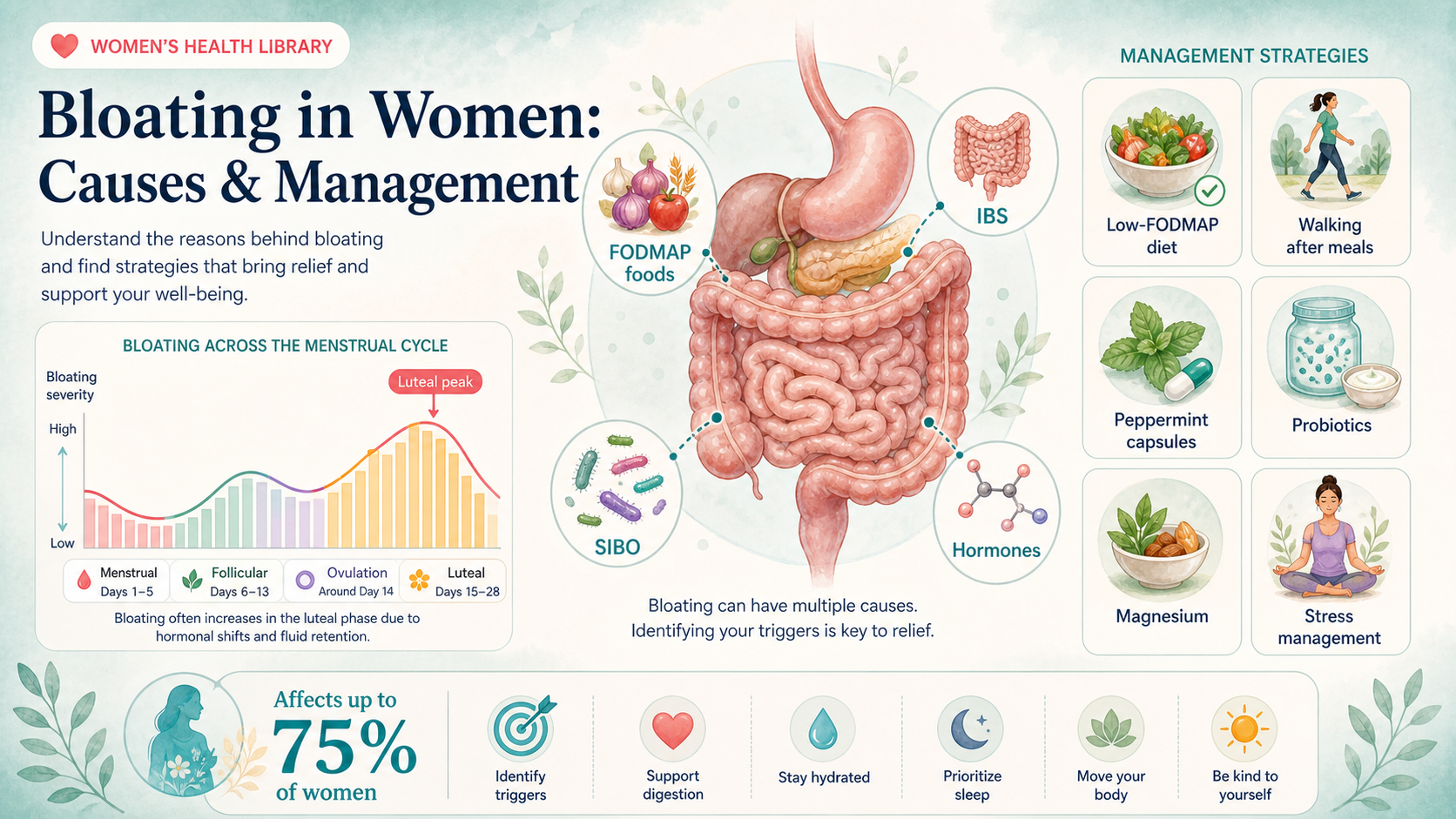
Bloating at a glance
Bloating is the uncomfortable, tight or full feeling in your tummy — sometimes with gas, gurgling, or an abdomen that looks visibly fuller by the end of the day. Almost everyone gets it at some point, and many women notice it especially around their periods. It can be annoying and make clothes feel snug, but most of the time it's harmless and short-lived.
For women, bloating has a few common threads: the natural hormone changes of the menstrual cycle (bloating is one of the classic premenstrual symptoms), what and how you eat, the health of your gut, and fluid retention. Often more than one of these is at play at once. The good news is that everyday changes — to meals, movement, hydration and routine — genuinely help most people feel more comfortable.
This guide explains what bloating is, why it's so common in women, what eases it at home, and — importantly — the warning signs that mean it's time to see a doctor. The single most useful red flag to remember: bloating that doesn't come and go but is there almost every day for around three weeks should always be checked.
Comes and goes vs. there all the time
Bloating that builds up over a day and settles overnight is usually nothing to worry about. Bloating that is persistent — present most days for around three weeks — is the pattern to take to a doctor, even if you feel otherwise well.
Useful tools
What Is Bloating?
Bloating is the sensation of your tummy feeling full, tight or swollen. It may come with a feeling of pressure, mild discomfort, more wind than usual, or a tummy that genuinely looks bigger (called distension). It often builds up during the day and eases overnight or after passing wind or going to the toilet.
Most bloating comes from extra gas in the digestive system, from food and fluid moving more slowly through the gut, or from your body holding on to a little extra water — for example, around your period. It is usually a normal, temporary part of digestion and the menstrual cycle rather than a sign of anything wrong. The key is the pattern: occasional bloating that comes and goes is reassuring, while bloating that stays for weeks is what deserves a closer look.
Notice your pattern
Jot down when you bloat, what you'd eaten, and where you are in your cycle. Over a few weeks, a clear pattern often emerges — and it's exactly what helps you (and a doctor) work out the cause.
Bloating, in short
Usually gas or fluid
Most bloating is trapped wind in the gut or temporary fluid retention — uncomfortable, not dangerous.
It often follows your cycle
Many women bloat in the days before a period and feel it settle once bleeding starts.
Food and gut habits matter
Eating quickly, fizzy drinks, very salty or gassy foods, and constipation all add to bloating.
Movement helps
A short walk after meals, regular activity and staying hydrated keep things moving and ease the fullness.
Mostly it comes and goes
Everyday bloating builds up and settles within a day or so — that pattern is reassuring.
Persistent bloating needs a check
Bloating almost every day for around three weeks, or with other warning signs, should be seen by a doctor.
What Bloating Feels Like
Bloating shows up a little differently for everyone. These are the sensations women most often describe — and a quick self-check to tell everyday bloating from the kind that needs a doctor.
Common feelings
- A tight, full or stretched feeling in the tummy
- A visibly fuller or 'puffy' abdomen by the end of the day
- More wind (burping or passing gas) than usual
- Rumbling or gurgling in the tummy
- Mild cramping or discomfort that eases after wind or a bowel motion
- Feeling full quickly during meals
Cycle-related bloating
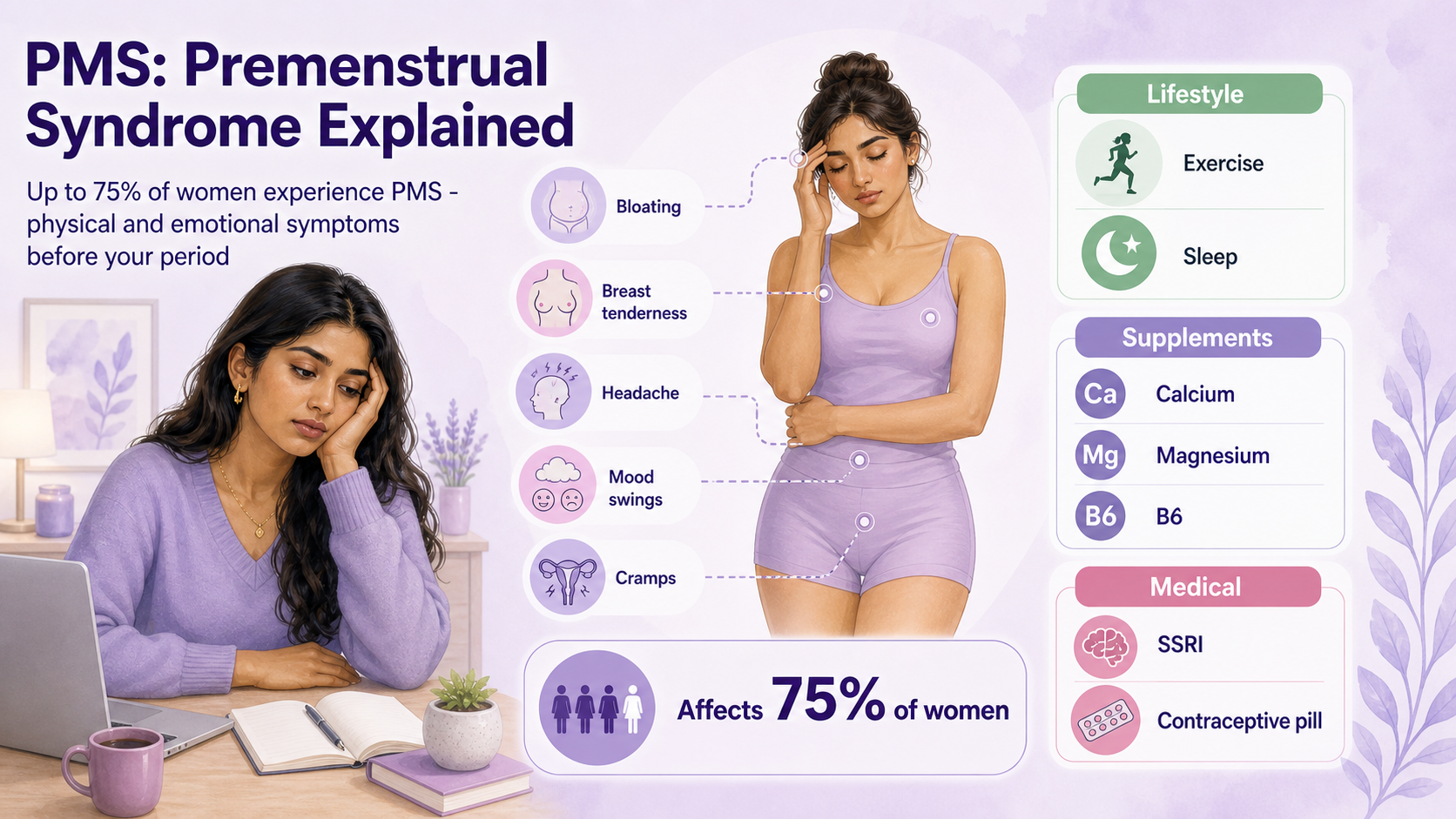
- Fullness and puffiness in the days before your period
- A feeling of water retention, sometimes with tender breasts
- Bloating that clearly eases once your period begins
- Often alongside other PMS symptoms like mood changes or tiredness
Track while you read
Tick the symptoms that apply to you. This is a self-check, not a diagnosis — saved on this device only.
The reassuring pattern
Bloating that builds up during the day and settles, or that tracks with your cycle and eases when your period starts, is usually nothing to worry about. Bloating that is there almost all the time is the one to flag.
What Causes Bloating in Women?
Bloating usually has more than one cause, and several can overlap — especially around your period. Here are the most common reasons women feel bloated.
- Your menstrual cycle and PMS
- In the days before a period, shifting oestrogen and progesterone can make your body hold on to more water and slow the gut a little — so many women feel bloated and full premenstrually. This kind of bloating typically eases once your period starts.
- Trapped wind and gas
- Gas builds up when you swallow air (eating quickly, chewing gum, fizzy drinks) or when gut bacteria break down certain foods. Beans, lentils and dal, onions, cabbage, cauliflower and other gassy vegetables are common culprits.
- Constipation
- When stools move slowly or you're not going regularly, the build-up causes a heavy, full, bloated feeling. Low fibre, not drinking enough, and being less active all make constipation — and bloating — more likely.
- What and how you eat
- Large meals, eating in a rush, very salty or fatty foods, and lots of fizzy or sugary drinks can all leave you bloated. Salt, in particular, encourages your body to retain water.
- Fluid retention
- Holding on to extra water — around your period, after a salty meal, or after a long day on your feet — can make the tummy (and sometimes hands or ankles) feel puffy and full.
- Food sensitivities and IBS
- Some people bloat in response to particular foods — for example lactose (in dairy) or certain carbohydrates. Irritable bowel syndrome (IBS) is a common gut condition where bloating comes with tummy pain and changes in bowel habit.
- Hormonal conditions
- Conditions such as PCOS or an underactive thyroid can be linked with bloating and changes in digestion. If bloating sits alongside other symptoms — like irregular periods or fatigue — it's worth mentioning to a doctor.
Most everyday bloating is down to gas, gut habits, food and the menstrual cycle — all very manageable. It's the pattern over time, not a single bloated day, that tells you whether to relax or get it checked.
Easing Bloating at Home
Most bloating responds well to simple, everyday changes. Try these consistently for a few weeks — and notice which ones make the biggest difference for you.
Eat in a calmer, slower way
- Eat slowly and chew well — rushing means you swallow more air
- Have smaller, more regular meals rather than one or two very large ones
- Sit down to eat and try not to talk with a full mouth, which traps air
Adjust what's on your plate
- Cut back on very salty and ultra-processed foods, which encourage water retention
- Go easy on known gassy foods (beans, dal, cabbage, onions) if they bother you — reintroduce slowly
- Limit fizzy drinks, and reduce chewing gum and sucking sweets, which make you swallow air
Keep things moving
- Build fibre gradually — whole grains, fruit, vegetables and pulses — to ease constipation
- Drink enough water through the day, which helps fibre work and reduces fluid retention
- Take a short walk after meals and stay generally active — movement keeps the gut moving
Mind your cycle
- Expect a little premenstrual bloating and be gentle with yourself in those days
- Reducing salt, caffeine and very sugary foods premenstrually can ease the fullness
- Gentle movement, yoga or stretching can relieve the heavy, bloated feeling before a period
Spot your own triggers
- Keep a simple food, symptom and cycle diary for a few weeks
- Look for patterns — a particular food, dairy, fizzy drinks, or certain days of your cycle
- Don't cut out whole food groups long-term without advice from a doctor or dietitian
A gentle reminder
Avoid restrictive 'detox' diets or over-the-counter bloating remedies as a routine fix. The basics — slower eating, balanced fibre, hydration and movement — do the real work, and a doctor can guide you if bloating persists.
When to See a Doctor
Most bloating is harmless. But because persistent bloating can occasionally be a sign of something that needs treatment, please see a doctor or gynaecologist if you notice any of the following.
Persistent bloating
Bloating that doesn't come and go — present almost every day for around three weeks or more, even if you otherwise feel well.
Bloating with pain
Persistent or severe tummy or pelvic pain along with the bloating.
Feeling full quickly or appetite changes
Getting full very quickly when you eat, or a noticeable loss of appetite.
Unexplained weight loss
Losing weight without trying, alongside the bloating.
Changes in bowel habits or bleeding
A lasting change in your bowel habits, blood in your stool, or any vaginal bleeding that isn't normal for you.
Bloating that doesn't settle with self-care
It carries on despite a few weeks of diet, fibre, hydration and movement changes.
Persistent bloating is worth checking
Bloating that is there almost all the time — most days for around three weeks — should always be reviewed by a doctor, especially if it comes with tummy or pelvic pain, feeling full quickly, appetite or weight changes, or changes in your bowel or bleeding. This is usually nothing serious, but it's important to rule out conditions that are far more treatable when found early. Please don't wait it out alone.
Ask a Doctor →Continue learning
Frequently Asked Questions
Why do I feel so bloated before my period?
The natural hormone changes before a period can make your body hold on to more water and slow the gut a little, so bloating and a full feeling are very common premenstrual symptoms. This kind of bloating usually eases once your period starts. Reducing salt, caffeine and very sugary foods in those days, along with gentle movement, can help.
What foods cause the most bloating?
Common triggers include very salty or ultra-processed foods (which encourage water retention), fizzy drinks, and gassy foods like beans, dal, cabbage, onions and cauliflower. For some people, dairy (lactose) or certain carbohydrates cause bloating. Eating quickly, large meals and chewing gum also make you swallow air. A simple food diary helps you spot your own triggers.
How can I get rid of bloating quickly?
A short walk, gentle movement or stretching can help trapped wind move along. Sipping water, avoiding fizzy drinks and very salty food, and not lying down straight after eating can ease the fullness. For everyday bloating these simple steps usually settle it within a day. If bloating is persistent rather than occasional, see a doctor rather than relying on quick fixes.
When should I be worried about bloating?
See a doctor if bloating is persistent — present almost every day for around three weeks — or if it comes with tummy or pelvic pain, feeling full quickly, loss of appetite, unexplained weight loss, a lasting change in bowel habits, or any unusual bleeding. Bloating that comes and goes, or that tracks with your cycle and eases when your period starts, is usually nothing to worry about.
Is bloating a sign of something serious?
Most bloating is caused by gas, gut habits, food and the menstrual cycle, and is harmless. Occasionally, persistent bloating can be linked to conditions like IBS, food sensitivities, or — less commonly — something that needs treatment, which is why bloating that stays for weeks should always be checked. Finding the cause early gives the best outcome, so it's worth a visit rather than worrying alone.
Can stress or my gut health cause bloating?
Yes. Stress can affect how your gut works and is closely linked with conditions like IBS, where bloating comes with tummy pain and changes in bowel habit. Looking after your gut — with balanced fibre, hydration, regular meals, movement and stress care — often eases bloating. If symptoms persist, a doctor can help work out what's going on.
Was this guide helpful?
Understand your cycle better with ParentVibes
- Track your period dates
- Predict your next cycle
- Understand your fertile window
- Save health notes
- Get gentle reminders
Related tools
Period Tracker
Log periods and learn your personal cycle pattern.
Open tool
Ovulation Calculator
Estimate your ovulation date and fertile window.
Open tool
Fertility Window
See your most fertile days for trying to conceive.
Open tool
Pregnancy Tracker
Follow your pregnancy week by week once you conceive.
Open tool
Due Date Calculator
Estimate your baby's due date from your last period.
Open toolShare this guide with someone who needs it 💛
Medical review
- Last reviewed
- June 2026
- Medical reviewer
- Dr. Vinika G.
- Next review due
- June 2027
- Status
- Medically reviewed by Dr. Vinika G.
References
This article is for general information and education only and is not a substitute for professional medical advice, diagnosis, or treatment. Always consult a qualified doctor or gynaecologist about your symptoms — especially if bloating is persistent (present most days for around three weeks) or comes with pain, feeling full quickly, appetite or weight changes, or changes in your bowel habits or bleeding. Do not start restrictive diets, cut out whole food groups, or take supplements or over-the-counter remedies long-term without medical advice. Content reviewed against guidance from the NHS, ACOG, the WHO and MedlinePlus.
Women's Health Library journey
100%Related guides
Free resources
Start here
Your journey with ParentVibes
From your first period to your baby's vaccinations — one continuous, supported path.
Understand your cycle
Know your phases, hormones and what's normal.
Track your period
Log periods and learn your personal pattern.
Understand ovulation
Find your fertile window with the calculator.
Plan pregnancy
A calm, step-by-step start to trying to conceive.
Week-by-week pregnancy
Follow every week once you conceive.
Baby milestones
Track growth and development month by month.
Vaccination tracker
Stay on schedule and never miss a vaccine.
Medical disclaimer
This article is for educational purposes only and does not replace medical advice. If you have severe pain, heavy bleeding, missed periods, or unusual symptoms, please consult a qualified healthcare provider.