
ParentVibes
Women's Health Library · parentvibes.in
Your First Period (Menarche): What to Expect — A Guide for Teens and Parents
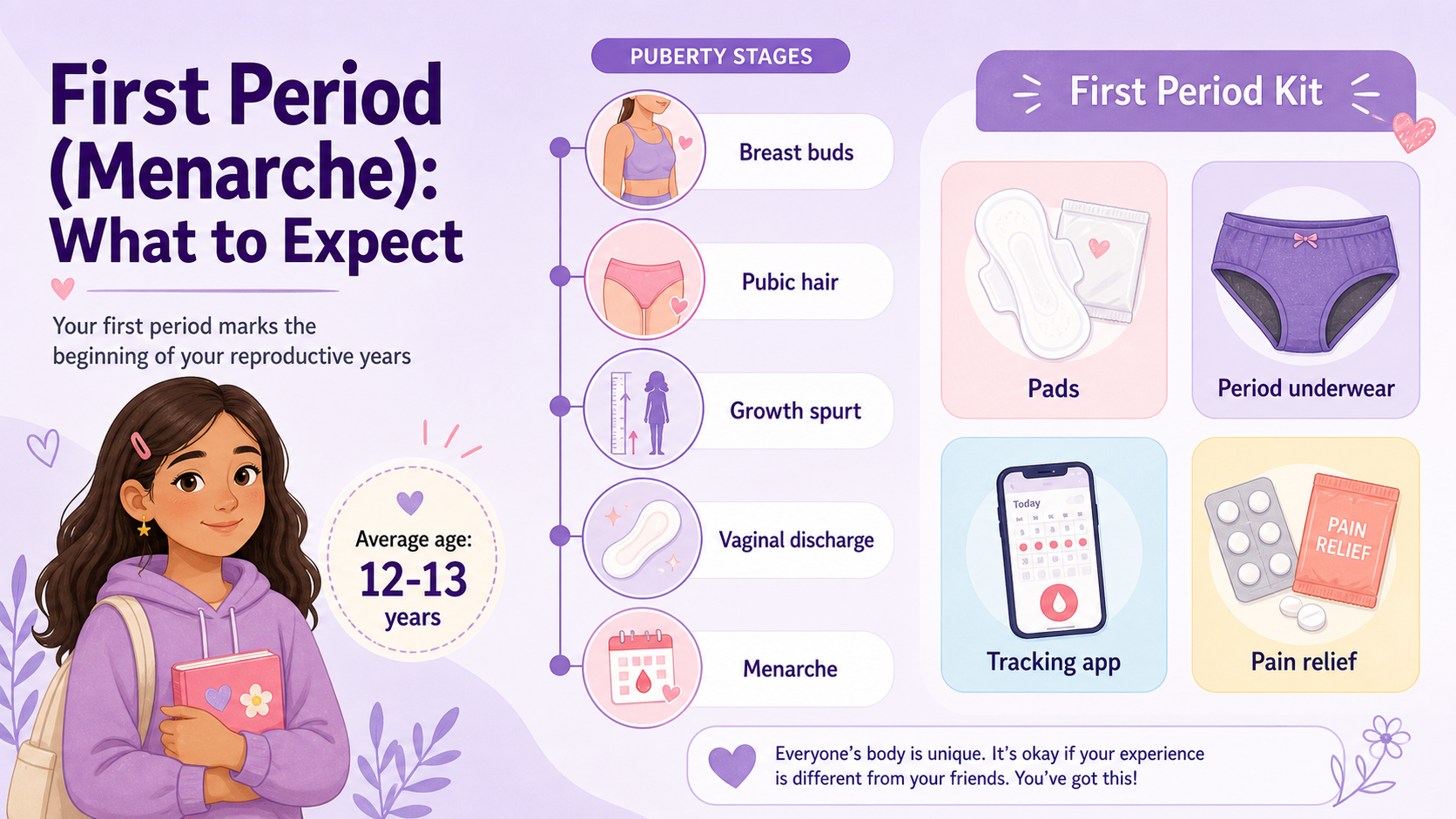
Quick Facts
A first period — known medically as menarche — is the day a girl bleeds for the very first time. It's a normal, healthy sign that the body is growing up and that the reproductive system is starting to work. It is not an illness, an emergency, or anything to be ashamed of.
Most girls get their first period around age 12, but anywhere from about 8 to 16 is completely normal. It usually arrives roughly two years after the first signs of puberty — breasts beginning to develop, a growth spurt, body hair, and sometimes a clear or whitish vaginal discharge in the months beforehand.
In many Indian families, periods can be wrapped in silence, restrictions or myths — which only makes a young girl feel confused or scared at a moment when she most needs reassurance. This guide is written for both teens and parents, in plain, judgement-free language: what to expect, why early periods are so often irregular, how to prepare a simple period kit, everyday hygiene and self-care, and the few signs that are worth a doctor's input.
For parents and teens together
You don't need a perfect speech. A calm, matter-of-fact chat — 'this is normal, here's what to do, you can always ask me' — does more good than any lecture. Tracking the first few periods in the ParentVibes Period Tracker also makes the new pattern easy to see.
Open the Period Tracker →Useful tools
Things worth knowing
It's a normal, healthy milestone
A first period means the body is growing exactly as it should — nothing is wrong.
Irregular at first is normal
For the first 1–3 years, cycles often skip, vary or come close together as they settle.
There's no single 'right' age
Most girls start around 12, but 8 to 16 is a perfectly normal window.
Being prepared takes the worry away
A small period kit in the school bag means the first period is never a surprise.
Talking about it helps
Open, judgement-free conversation removes shame and builds confidence.
It's not always red
Early period blood can look brown or pinkish — that's completely normal.
What's Normal in the First 1–3 Years
Early periods rarely behave like a clockwork adult cycle, and that's exactly as expected. After menarche, the ovaries and hormones take time to settle into a steady rhythm, so the first couple of years can look quite different from later life. Here's the normal range to expect:
| What | What's normal early on | Settles toward (adult) |
|---|---|---|
| Age at first period | Around 12; anywhere from ~8 to 16 is normal | — |
| Cycle length | Can range widely — roughly 21 to 45 days, with skipped months | Usually 21–35 days |
| Regularity | Often irregular and unpredictable for the first 1–3 years | More regular and predictable |
| Flow | Frequently light to moderate; sometimes heavier; varies month to month | Tends to settle into a personal pattern |
| Duration of bleeding | Usually 2–7 days | 2–7 days (about 5 is typical) |
| Colour | Red, but often brown or pink at the start or end of a period | Same — colour change is normal |
Irregular is the norm, not a problem
In the first few years after periods begin, missing a month, having periods come close together, or seeing the flow change is usually just the body finding its rhythm.
What to Expect (Signs It's Coming & What the First Periods Are Like)
There's often a run-up to the first period, and the first few periods themselves have their own pattern. Knowing both takes away the surprise.
Signs a first period may be coming
- Breasts starting to develop (often the earliest sign, around 1–2 years before)
- A growth spurt — getting taller quickly
- Pubic and underarm hair appearing
- A clear or whitish vaginal discharge in the months beforehand
- Mild mood changes, mild cramps, or a feeling of bloating
What the first periods are usually like
- Often light or moderate — sometimes just a brownish spotting at first
- Bleeding usually lasts about 2–7 days
- Cycles are often irregular: the next period may come in 3 weeks, or not for a couple of months
- Mild cramping in the lower tummy or back can happen
- Blood may look brown or pink, especially at the start or end — this is normal
Track while you read
Tick the symptoms that apply to you. This is a self-check, not a diagnosis — saved on this device only.
If any box feels unticked, that's a perfectly good reason to chat with a parent or a doctor — Ask a Doctor on ParentVibes can help you decide what's worth checking.
Why the First Period Happens (Puberty Hormones)
The first period is the visible result of puberty. The brain (the pituitary gland) begins sending hormone signals to the ovaries, which start producing oestrogen. Over a couple of years, oestrogen builds up the lining of the womb (uterus). Eventually the body completes a full cycle for the first time, the lining sheds, and that bleed is the first period (menarche). Because the system is brand new, it takes time to run smoothly.
- Puberty hormones switch on
- The brain signals the ovaries to make oestrogen, which kick-starts breast growth, the growth spurt and, eventually, periods.
- The womb lining builds and sheds
- Oestrogen thickens the womb lining; when hormone levels shift and there's no pregnancy, the lining sheds as a period.
- Ovulation may not happen every cycle yet
- In the early years, an egg isn't always released each month — a key reason early periods are irregular.
- The cycle is still settling
- It can take 1–3 years for the hormone rhythm to mature, so cycle length and flow vary during this time.
- Each girl's timing is her own
- Genetics, overall health, body weight and nutrition all influence when periods start and how quickly they settle.
Curious about the wider changes of puberty — body, mood and growth? Our Puberty guide explains what's happening and when.
When a Doctor's Input Helps
A first period doesn't need a diagnosis — it's a normal milestone. But a doctor's input is useful in a few situations, and asking is never an overreaction. Doctors treat the menstrual cycle as a 'vital sign,' so they expect and welcome these questions.
Situations where it's worth seeing a doctor
- No period by age 15–16, or no period within about 3 years of breasts starting to develop
- No signs of puberty at all (no breast development) by around age 13
- Periods that started and then stopped for several months (when pregnancy isn't a factor)
- Very heavy bleeding, very painful periods, or periods lasting longer than 7 days
- Bleeding before age 8, which is worth checking with a doctor
What a doctor may ask or check
- A simple history — when puberty signs began, when the first period came, and the pattern since (tracking really helps here)
- General growth and health, and signs of puberty
- Only if clinically needed — basic blood tests or a pelvic ultrasound (in India often done over the tummy for unmarried girls, guided by comfort and the clinician)
For parents
Raising period concerns early is a good thing, not a fuss. Spotting an unusual pattern sooner can flag a treatable health issue and reassure your child that her body is normal.
Managing the First Periods (Mostly Reassurance & Cramp Care)
For most girls, the first periods need no treatment at all — just reassurance, a period kit and simple comfort measures. Treatment only comes into the picture if there's a clear problem like very heavy or very painful periods.
- Mild cramps
- A warm compress or hot-water bottle on the lower tummy, gentle movement, rest, and simple pain relief if needed (check the dose with a parent or pharmacist).
- Irregular early cycles
- Usually no treatment — just reassurance and tracking. The pattern typically settles over the first 1–3 years.
- Very heavy or very painful periods
- See a doctor. Pain that stops school or daily life, or flooding/large clots, deserves a proper review rather than just 'putting up with it'.
- No period by 15–16
- See a doctor for a check of puberty and growth — most causes are manageable once identified.
The most powerful 'treatment' is calm
Letting a girl know periods are normal, that she's not 'dirty' or unwell, and that she can carry on with school, sport and daily life does an enormous amount of good.
Never self-medicate
Don't start hormonal pills or prescription medicines to 'fix' early periods without a doctor. Early irregularity is usually normal, and any medication must be assessed and chosen by a doctor for the individual girl.
Home Care (Period Kit, Hygiene, Tracking & Talking About It)
A little preparation turns the first period from a scary surprise into something completely manageable:
Build a period kit
- Keep 2–3 pads (a thin and a regular) in the school bag and a spare set at home
- Add a clean pair of underwear and a small pack of wipes or tissues
- Pop in a small paper bag or pouch for discreet disposal
- For sport or PE, sanitary pads work fine; older teens may later try tampons or a menstrual cup when comfortable
Hygiene (India-friendly)
- Change the pad roughly every 4–6 hours, sooner if it feels full — even on light days, for freshness
- Wash the outside area with plain water; avoid harsh soaps or internal washes
- Wrap and bin used pads hygienically — never flush them
- Wash hands before and after changing a pad
Tracking
- Note the date each period starts and how many days it lasts
- A few months of notes makes the new (and changing) pattern easy to see
- Tracking also gives a doctor exactly the information they need if a question comes up
Talking about it (for parents)
- Start before the first period, calmly and factually — surprise is what frightens children, not the facts
- Keep the door open: 'You can always ask me anything, no question is silly'
- Avoid shame, secrecy or restrictions; reassure her she can attend school, play and eat normally
- Involve a school nurse or trusted adult as another safe person to ask
Everyday wellbeing
- Normal food, sleep, school and activity all continue as usual during a period
- Iron-rich foods (leafy greens, dals, jaggery, eggs) support the body, especially with heavier periods
- Gentle movement and rest both help with cramps — let her listen to her body
When to See a Doctor
See a doctor if you (or your daughter) notice:
- No period by age 15–16, or no period within about 3 years of breasts starting to develop
- No signs of puberty (no breast development) by around age 13
- Bleeding that starts before age 8
- Very heavy bleeding — flooding, large clots, or soaking through a pad every 1–2 hours
- Severe pain that stops school, sport or daily activities, or isn't helped by simple measures
- Periods that last longer than 7 days, or come less than 3 weeks apart repeatedly
- Periods that started and then stopped for several months
- Tiredness, breathlessness or paleness that could suggest anaemia from heavy periods
Seek same-day care
For bleeding that soaks a pad every hour for several hours, fainting, or severe sudden tummy/pelvic pain.
Continue learning
Periods (Menstruation)
The complete guide to periods — what's normal, problems, and when to worry.
Read guide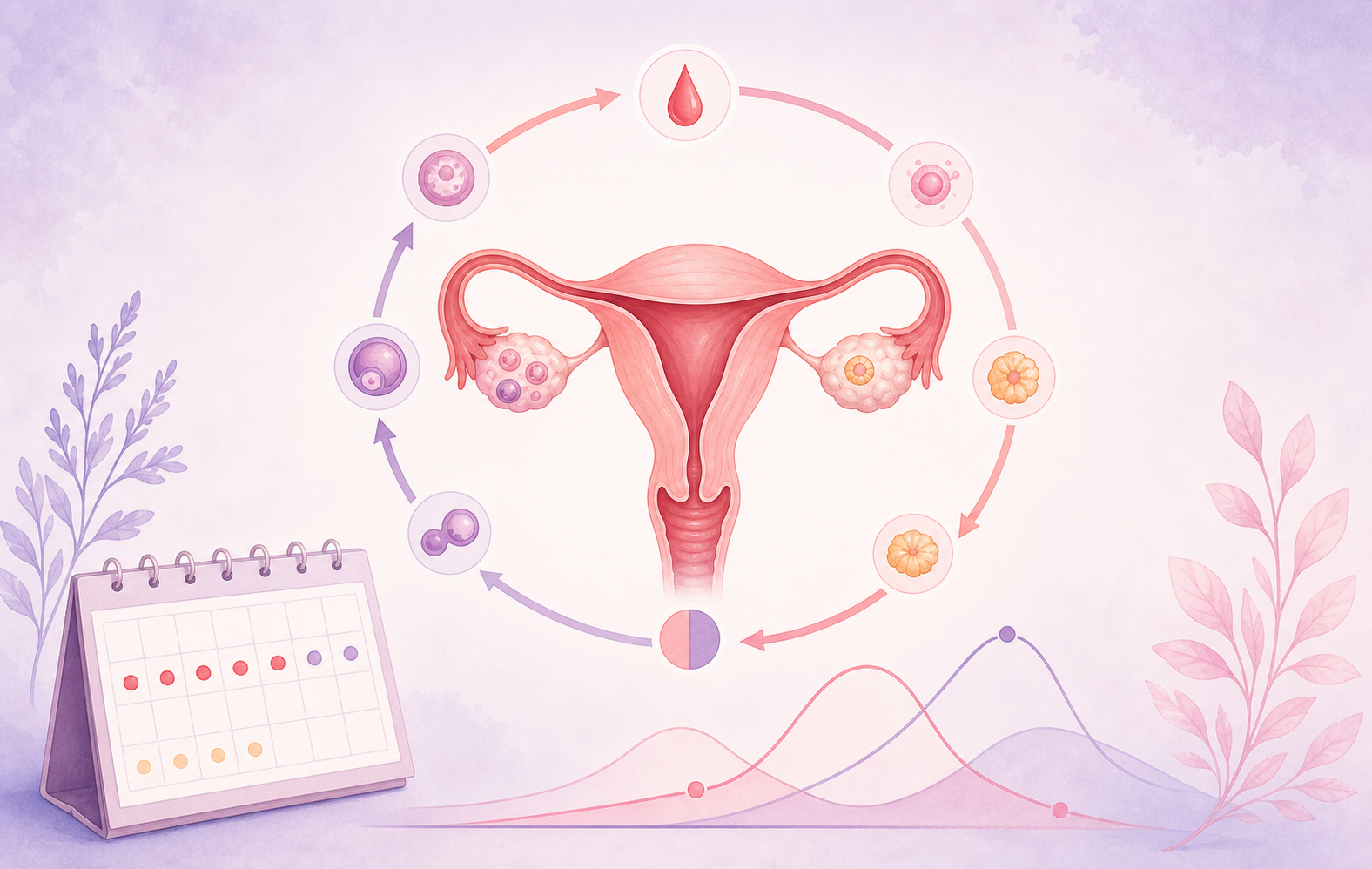
The Menstrual Cycle
The full hormonal rhythm behind a period — the four phases explained.
Read guidePuberty
The wider changes of growing up — body, mood and what to expect when.
Read guide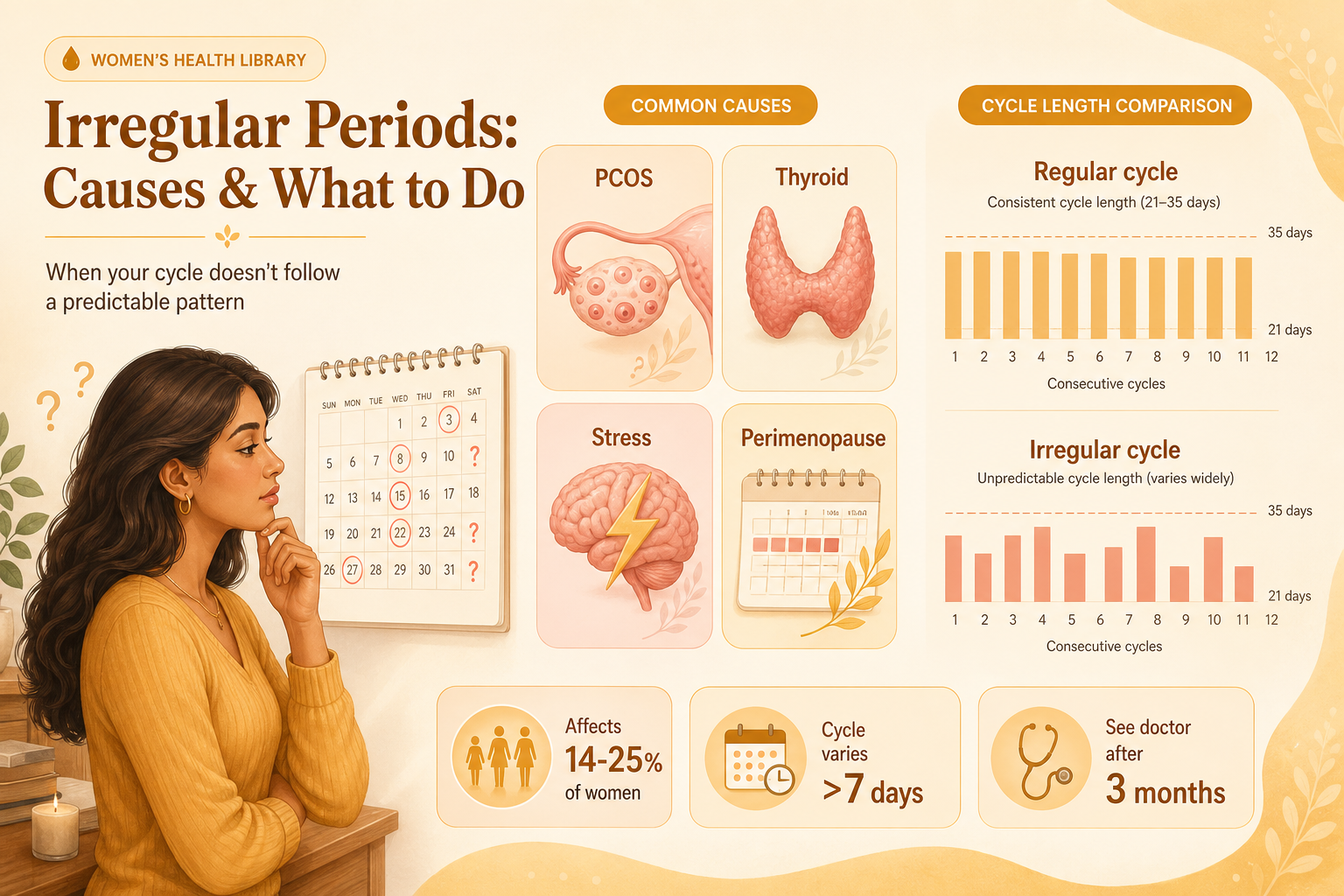
Irregular Periods
Why cycles go off-schedule and when irregularity is worth investigating.
Read guideFrequently Asked Questions
What age does the first period usually start?
Most girls start around age 12, but anywhere from about 8 to 16 is normal. It usually comes roughly two years after the first signs of puberty, such as breasts beginning to develop.
Is it normal for early periods to be irregular?
Yes — very normal. In the first 1–3 years after periods begin, cycles often vary, skip months, or come close together while the body's hormones settle into a steady rhythm. Persistent problems are worth a doctor's check, but irregular early periods are usually expected.
What age is too late for a first period?
See a doctor if there's no period by age 15–16, or within about 3 years of breasts starting to develop — and if there are no puberty signs at all by around age 13. Most causes of a late first period are manageable once identified.
What should be in a first-period kit?
A couple of pads, a clean pair of underwear, some wipes or tissues, and a small bag for discreet disposal. Keeping this in the school bag means a first period is never a surprise.
Is brown or light blood normal for a first period?
Yes. Early periods are often light, and the blood can look brown or pinkish, especially at the start or end. This is completely normal.
Can she go to school, play sport and eat normally during a period?
Absolutely. A period is normal and healthy — there's no need to restrict school, sport, bathing or any food. Gentle activity can even ease cramps.
How do I (as a parent) talk about the first period?
Keep it calm, early and factual: explain that it's normal, show what to do with a pad, and make clear she can ask you anything. Avoiding shame and secrecy matters far more than getting every word perfect.
Was this guide helpful?
Understand your cycle better with ParentVibes
- Track your period dates
- Predict your next cycle
- Understand your fertile window
- Save health notes
- Get gentle reminders
Related tools
Period Tracker
Log periods and learn your personal cycle pattern.
Open tool
Ovulation Calculator
Estimate your ovulation date and fertile window.
Open tool
Fertility Window
See your most fertile days for trying to conceive.
Open tool
Pregnancy Tracker
Follow your pregnancy week by week once you conceive.
Open tool
Due Date Calculator
Estimate your baby's due date from your last period.
Open toolShare this guide with someone who needs it 💛
Medical review
- Last reviewed
- June 2026
- Medical reviewer
- Dr. Vinika G.
- Next review due
- June 2027
- Status
- Medically reviewed by Dr. Vinika G.
References
This article is for general information and education only and is not a substitute for professional medical advice, diagnosis, or treatment. The age of a first period and what is 'normal' vary between individuals. Always consult a qualified doctor (a paediatrician or gynaecologist) about concerns relating to puberty or periods, and before starting, stopping, or changing any treatment or medication. Never disregard professional medical advice or delay seeking it because of something you read here. In a medical emergency, contact your doctor or local emergency services immediately. Content reviewed against guidance from the NHS, ACOG, and the American Academy of Pediatrics (AAP).
Women's Health Library journey
100%Related guides
Free resources
Start here
Your journey with ParentVibes
From your first period to your baby's vaccinations — one continuous, supported path.
Understand your cycle
Know your phases, hormones and what's normal.
Track your period
Log periods and learn your personal pattern.
Understand ovulation
Find your fertile window with the calculator.
Plan pregnancy
A calm, step-by-step start to trying to conceive.
Week-by-week pregnancy
Follow every week once you conceive.
Baby milestones
Track growth and development month by month.
Vaccination tracker
Stay on schedule and never miss a vaccine.
Medical disclaimer
This article is for educational purposes only and does not replace medical advice. If you have severe pain, heavy bleeding, missed periods, or unusual symptoms, please consult a qualified healthcare provider.