ParentVibes
Women's Health Library · parentvibes.in
Nutrition for Women: A Balanced Diet & the Key Nutrients You Need
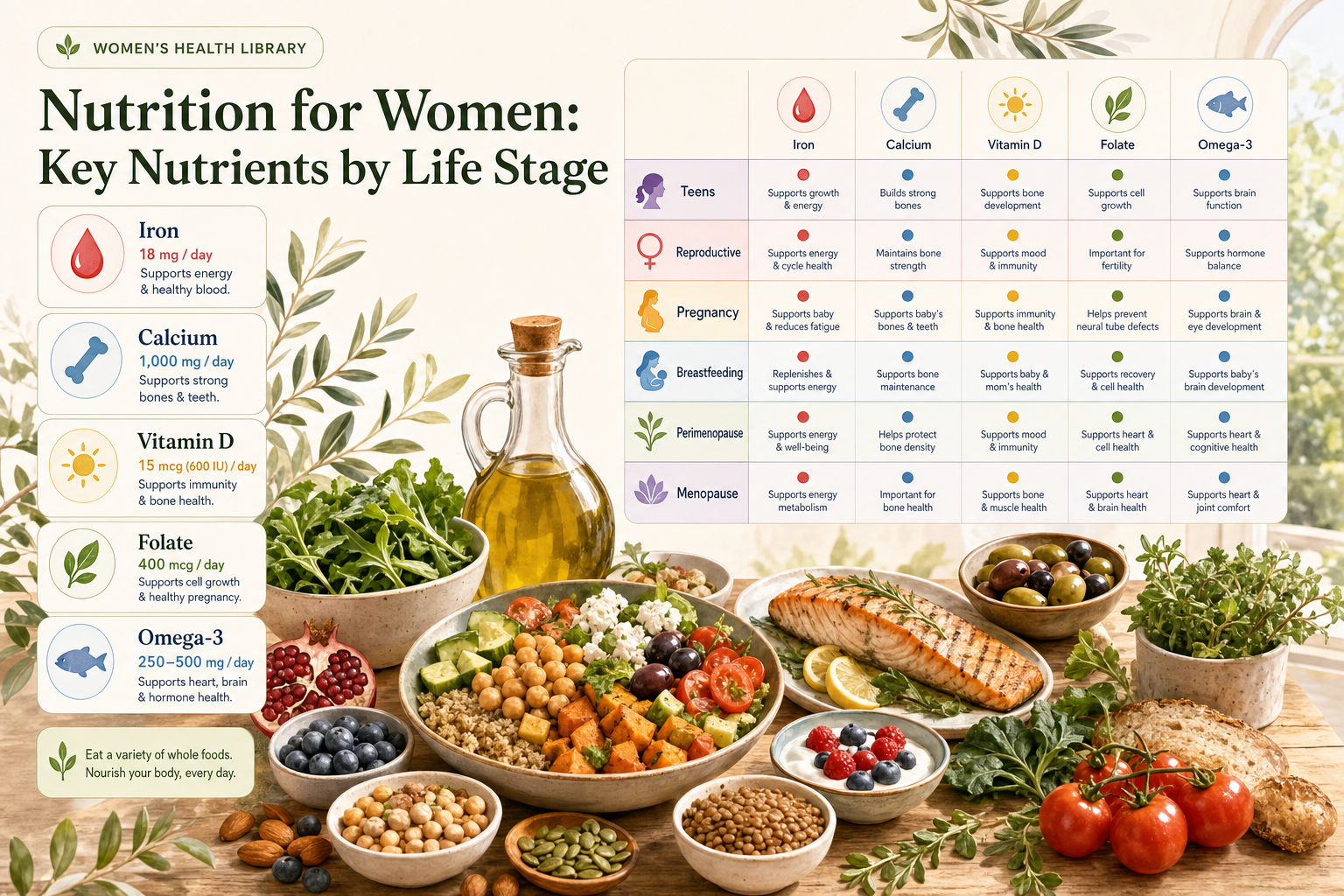
What you eat shapes your energy, hormones, periods, fertility, bone strength and long-term health. Women have some particular nutritional needs — for example, iron (lost through periods), folate (vital before and during pregnancy), and calcium and vitamin D (for lifelong bone health).
The reassuring news: most women can get the nutrients they need from a varied, balanced diet — no expensive superfoods or extreme plans required. A simple approach: build meals around plenty of vegetables and fruit, include whole grains, get enough protein, include some dairy or alternatives, and use healthy fats — while limiting sugary, fried and ultra-processed foods.
This guide explains a balanced plate, the key nutrients for women and where to find them in everyday Indian foods, and how needs change across life stages.
Track how you feel
Logging meals, energy and symptoms in ParentVibes helps you connect your diet with your cycle and wellbeing.
Open the tracker →Useful tools
Everything You Need to Know (The Balanced Plate)
A balanced diet means getting the right proportions from each food group.
| Food group | Aim for | India-friendly examples |
|---|---|---|
| Vegetables & fruit | The largest share — fill half your plate | Seasonal sabzi, leafy greens, tomatoes, carrots, fruit |
| Whole grains/starchy carbs | Choose wholegrain | Brown rice, whole wheat roti, jowar, bajra, ragi, oats |
| Protein | Some at each meal | Dals, rajma, chana, paneer, eggs, fish, chicken, tofu |
| Dairy/alternatives | For calcium | Milk, curd, paneer; fortified soy/almond options |
| Healthy fats | Small amounts | Nuts, seeds, mustard/groundnut/olive oil, ghee in moderation |
| Limit | Keep low | Sweets, fried snacks, refined-flour (maida) items, sugary drinks |
A simple rule
Half the plate vegetables/fruit, a quarter whole grains, a quarter protein, plus a little dairy and healthy fat. Pair carbs with protein and fibre to steady blood sugar — especially helpful for PCOS and energy.
Signs of Possible Nutrient Gaps
Diet-related issues often show up as:
Watch for
- Iron deficiency / anaemia: tiredness, weakness, breathlessness, pale skin, hair fall — common with heavy periods
- Low calcium / vitamin D: poor bone health over time; vitamin D also matters for mood and immunity
- Low folate / B12: fatigue; folate is critical before and in early pregnancy to help prevent neural-tube defects
- General poor diet: low energy, sugar crashes, poor concentration, frequent illness
Track while you read
Tick the symptoms that apply to you. This is a self-check, not a diagnosis — saved on this device only.
Persistent tiredness, hair fall or breathlessness can signal iron deficiency — common in women with heavy periods. See a doctor for a simple blood test rather than self-diagnosing.
Why Women's Needs Differ
Several factors shape women's nutrition needs:
- Menstruation
- Monthly blood loss raises iron needs; heavy periods increase the risk of deficiency.
- Pregnancy & breastfeeding
- Higher needs for folate, iron, calcium and energy.
- Bone health
- Women are at higher risk of osteoporosis later, so calcium and vitamin D matter across life.
- Hormonal conditions
- PCOS benefits from blood-sugar-steady eating; thyroid health interacts with diet.
- Life stage
- Adolescence, reproductive years, and menopause each shift needs.
Folate note
Adults need around 200 micrograms of folate a day from a balanced diet; women who could become pregnant are generally advised to take 400 micrograms of folic acid daily before conception and in early pregnancy — confirm with your doctor.
Assessing Your Nutrition
You don't "diagnose" healthy eating, but a doctor or dietitian can assess gaps if you have symptoms.
What may help / what a doctor may do
- Blood tests — e.g. iron/ferritin, vitamin D, B12/folate, and thyroid if relevant
- Diet review — a dietitian can spot gaps and tailor advice (helpful for PCOS, anaemia, vegetarian/vegan diets, or pregnancy planning)
- Tracking — a few days of food logging reveals patterns
Keep test results in ParentVibes Medical Records, and bring food logs to appointments.
Eating for Specific Goals
Tailoring nutrition (with a doctor/dietitian where needed):
- General health
- Balanced plate; variety; limit sugar/ultra-processed foods.
- Heavy periods / anaemia
- Iron-rich foods (leafy greens, dals, jaggery, eggs, meat/fish) + vitamin-C foods to boost absorption; treat deficiency with a doctor.
- PCOS / insulin resistance
- Lower-GI, blood-sugar-steady meals; fibre + protein + healthy fat.
- Bone health
- Calcium (dairy/alternatives, ragi, sesame) + vitamin D (sunlight, fortified foods, supplements if advised).
- Planning pregnancy
- Folic acid (400 mcg) and a balanced diet.
Supplements aren't a substitute for a good diet
And more isn't always better — some (like high-dose vitamins) can be harmful. Take supplements only as advised by a doctor, especially iron, vitamin D and pregnancy supplements.
Everyday Eating Tips (India-Friendly)
Simple, sustainable habits:
Build better meals
- Make half your plate vegetables — add a sabzi and salad to meals
- Swap refined for whole grains — millets, brown rice, whole wheat over maida and white rice
- Add protein to every meal — dal, beans, paneer, curd, eggs, fish
- Boost iron absorption — pair iron-rich foods with vitamin C (lemon, amla, tomato); keep tea/coffee between meals
- Stay hydrated with water; limit sugary drinks and excess caffeine
- Don't skip meals — regular meals steady energy and blood sugar
- Cook smart — bake, steam, sauté; go easy on deep-frying
Daily eating checklist
- Vegetables/fruit at most meals
- Protein at each meal
- Whole grains
- A calcium source
- Water over sugary drinks
When to See a Doctor / Dietitian
Seek advice if you:
- Have persistent tiredness, hair fall, or breathlessness (possible iron deficiency)
- Have heavy periods affecting your energy
- Have PCOS, thyroid issues, or diabetes and want tailored eating advice
- Are planning pregnancy, pregnant, or breastfeeding
- Follow a restrictive diet (e.g. vegan) and are unsure about nutrients (e.g. B12, iron)
- Are considering supplements and want to know what you actually need
Seek urgent care
For severe breathlessness, chest pain, or fainting, which can accompany severe anaemia.
Continue learning
Frequently Asked Questions
What does a balanced diet for women look like?
Plenty of vegetables and fruit, whole grains, protein at each meal, some dairy/alternatives for calcium, healthy fats, and limited sugary/fried/ultra-processed foods.
Which nutrients are most important for women?
Iron (for periods), folate (for pregnancy planning), and calcium and vitamin D (for bones) deserve special attention — alongside overall balance.
Do I need iron supplements?
Only if a doctor confirms you need them (e.g. with anaemia or heavy periods). Many women meet iron needs through diet.
How much folic acid should I take if planning pregnancy?
Women who could become pregnant are generally advised to take 400 micrograms of folic acid daily before conception and in early pregnancy — confirm with your doctor.
What should I eat for PCOS?
Blood-sugar-steady meals built on fibre, protein and healthy fats, with whole grains over refined carbs.
Are supplements necessary?
Most people get what they need from a varied diet; supplements are for specific needs and should be taken only as advised, since some can be harmful in excess.
How can I get more iron as a vegetarian?
Dals, beans, leafy greens, tofu, jaggery and fortified foods, paired with vitamin-C foods to boost absorption. A doctor/dietitian can help if you're concerned.
Was this guide helpful?
Understand your cycle better with ParentVibes
- Track your period dates
- Predict your next cycle
- Understand your fertile window
- Save health notes
- Get gentle reminders
Related tools
Period Tracker
Log periods and learn your personal cycle pattern.
Open tool
Ovulation Calculator
Estimate your ovulation date and fertile window.
Open tool
Fertility Window
See your most fertile days for trying to conceive.
Open tool
Pregnancy Tracker
Follow your pregnancy week by week once you conceive.
Open tool
Due Date Calculator
Estimate your baby's due date from your last period.
Open toolShare this guide with someone who needs it 💛
Medical review
- Last reviewed
- June 2026
- Medical reviewer
- Dr. Vinika G.
- Next review due
- June 2027
- Status
- Medically reviewed by Dr. Vinika G.
References
This article is for general information and education only and is not a substitute for professional medical or dietetic advice. Nutritional needs vary by individual, health status and life stage. Consult a qualified doctor or registered dietitian before making major dietary changes, starting supplements, or if you have a medical condition, are pregnant, or are breastfeeding. In a medical emergency, contact your doctor or local emergency services immediately. Content reviewed against guidance from the NHS, WHO, and peer-reviewed literature.
Women's Health Library journey
100%Related guides
Free resources
Start here
Your journey with ParentVibes
From your first period to your baby's vaccinations — one continuous, supported path.
Understand your cycle
Know your phases, hormones and what's normal.
Track your period
Log periods and learn your personal pattern.
Understand ovulation
Find your fertile window with the calculator.
Plan pregnancy
A calm, step-by-step start to trying to conceive.
Week-by-week pregnancy
Follow every week once you conceive.
Baby milestones
Track growth and development month by month.
Vaccination tracker
Stay on schedule and never miss a vaccine.
Medical disclaimer
This article is for educational purposes only and does not replace medical advice. If you have severe pain, heavy bleeding, missed periods, or unusual symptoms, please consult a qualified healthcare provider.