
ParentVibes
Women's Health Library · parentvibes.in
Supplements for Women: What May Help, and What to Check First
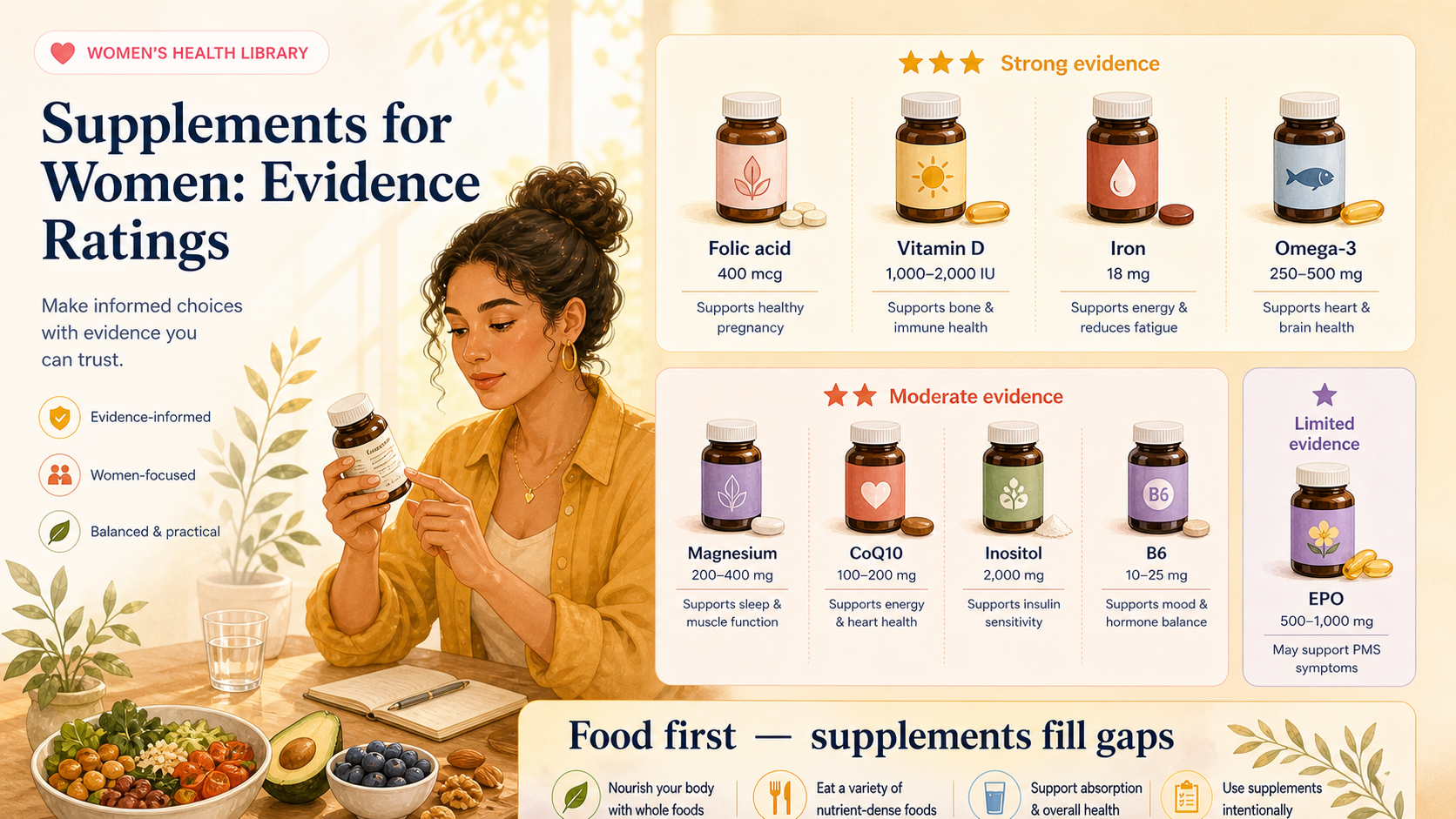
Supplements at a glance
Walk into any pharmacy or scroll any wellness feed and you'll find shelves of supplements promising more energy, better skin, easier periods and a healthier pregnancy. Some of these can genuinely help — but only when there's a real need, and only when taken safely. The truth is gentler and less glamorous than the marketing: for most women, most of the time, a varied and balanced diet provides what the body needs.
Supplements exist to fill genuine gaps — for example, folic acid around pregnancy, iron when you're deficient, or vitamin D when sunlight and diet fall short. They are not a substitute for good food, and they are not harmless simply because they're sold without a prescription. Some vitamins and minerals can be harmful in excess, several can interact with medicines you already take, and a few matter in very specific ways during pregnancy.
This guide takes a food-first, safety-forward view. It explains what supplements are, the ones women most often ask about and who may benefit, and — most importantly — why the single best step before starting anything is to talk to a doctor. We'll also flag how to steer clear of unregulated 'miracle' products that promise a lot and can quietly do harm.
Food first, always
Before reaching for a bottle, look at your plate. A varied diet — whole grains, dal and pulses, vegetables and fruit, dairy or alternatives, nuts and seeds — covers most needs for most women. Supplements are best thought of as a top-up for a genuine gap, not a daily insurance policy.
Useful tools
What Are Supplements — and What They Are Not
A dietary supplement is a concentrated source of a nutrient or other substance — a vitamin, mineral, fatty acid like omega-3, or a herbal or plant extract — taken to add to (supplement) your diet. They come as tablets, capsules, powders, gummies or liquids. Used well, they help correct or prevent a genuine deficiency. What they are not is a replacement for a balanced diet, a cure for tiredness or low mood on their own, or something that is automatically safe just because it's 'natural' or available over the counter. In many places supplements are also regulated less tightly than medicines, so quality and what's actually inside the bottle can vary — another reason to choose carefully and seek advice.
'Natural' doesn't mean 'risk-free'
Herbal and 'natural' supplements can still be potent, can interact with medicines, and can be unsafe in pregnancy or with certain conditions. Treat every supplement as something to discuss with a doctor — not as a harmless extra.
Supplements, in short
Food comes first
A varied, balanced diet meets most women's needs most of the time — supplements fill genuine gaps, not replace meals.
Pregnancy is different
Folic acid before and in early pregnancy is widely advised — start the conversation with a doctor early.
More is not better
Some vitamins and minerals can be harmful in excess. Stick to what a doctor advises and never overdo it.
They can interact
Supplements can interact with prescription medicines and with each other — your doctor needs the full picture.
Test, don't guess
A doctor can check whether you actually need a supplement, rather than taking one 'just in case'.
Skip the miracle claims
Avoid unregulated products promising quick weight loss, 'detox' or dramatic results — they can be unsafe.
Common Supplements Women Ask About
Here are the supplements women most often ask about, who may genuinely benefit, and the cautions that go with each. This is general information — whether any of these is right for you depends on your diet, health, life stage and medicines, which is exactly why a doctor's input matters. Amounts and the decision to take anything should always be guided by a professional, never by guesswork.
- Iron
- Who may benefit: women with heavy periods, those who are pregnant or recently gave birth, people eating little or no meat, and anyone diagnosed with iron-deficiency anaemia. Iron-rich foods include leafy greens, dal and pulses, jaggery, and (for those who eat them) eggs and meat; pairing plant sources with vitamin C aids absorption. Caution: only take iron if a doctor confirms you need it — too much can cause stomach upset, constipation and, in excess, real harm. It can also interact with some medicines.
- Folic acid (folate)
- Who may benefit: anyone planning a pregnancy or who could become pregnant, and especially in early pregnancy, when folic acid is widely advised to support the baby's healthy development. Folate-rich foods include leafy greens, pulses, citrus and fortified cereals. Caution: timing matters — it's most important before conception and in the first weeks, so start the conversation with a doctor early. Take it as advised rather than assuming more is better.
- Vitamin D
- Who may benefit: women who get little sunlight, cover up outdoors, spend most of the day indoors, or have darker skin; needs can also rise in pregnancy and breastfeeding. Sunlight is the main source, with smaller amounts from foods like fortified products and (for some) oily fish or eggs. Caution: vitamin D is fat-soluble and builds up in the body, so it can be harmful in excess — only supplement on a doctor's advice and don't exceed what's recommended.
- Calcium
- Who may benefit: women who eat little dairy or few calcium-rich foods, and those with higher needs (for example around pregnancy or later life, for bone health). Calcium-rich foods include dairy, ragi, sesame (til), leafy greens, tofu and fortified products. Caution: it's best obtained from food where possible; supplements should be taken only when advised, as too much can cause problems and can interfere with the absorption of other minerals like iron.
- Vitamin B12
- Who may benefit: women following a vegetarian or vegan diet, since B12 comes mainly from animal foods; older adults and some others may also absorb it less well. Sources include dairy and eggs for vegetarians, and fortified foods. Caution: if your diet is low in animal products, ask a doctor whether you need it and have your levels checked rather than self-prescribing — deficiency is best confirmed and managed medically.
- Omega-3 fatty acids
- Who may benefit: women who eat little or no oily fish may consider it for general heart and overall health; it's sometimes discussed around pregnancy. Food sources include oily fish for those who eat it, and plant sources like flaxseed (alsi), chia, walnuts and certain oils. Caution: choose reputable products, and check with a doctor first — omega-3 can interact with blood-thinning medicines, and not every product is suitable in pregnancy.
Notice the pattern
For almost every supplement above, the food-first option exists and the real question is whether you have a genuine gap. A doctor can help you answer that — often with a simple check — so you take what helps and skip what you don't need.
Safety First — Always Check With a Doctor
Supplements are easy to buy, but that doesn't make them automatically safe for you. Please talk to a doctor or qualified professional before starting any supplement — and definitely speak to one if:
- You are pregnant, breastfeeding, or planning a pregnancy — needs and safety differ, and some supplements should be avoided
- You take prescription medicines or manage a long-term condition (supplements can interact with both)
- You feel persistently tired, low, breathless or unwell — get the cause checked rather than self-treating with supplements
- You're considering iron, vitamin D, calcium or B12 — these are best confirmed with a doctor, and sometimes a simple test, before starting
- You're tempted by a product promising rapid weight loss, 'detox', or dramatic results — these are best avoided
- You're taking several supplements at once, or thinking of high amounts — the risk of getting too much rises quickly
More is not better — and 'natural' is not the same as safe
Never exceed the amount a doctor or the label recommends. Some vitamins and minerals (such as iron and the fat-soluble vitamins like vitamin D and vitamin A) can build up and become harmful in excess. Supplements can interact with prescription medicines and with each other, and several are not suitable in pregnancy — high-dose vitamin A, for example, should be avoided. Avoid unregulated 'miracle', 'detox' or rapid-weight-loss products, which may contain unsafe or undeclared ingredients. Always discuss any supplement with a doctor before starting, especially in pregnancy or if you have other health conditions.
Continue learning
Frequently Asked Questions
Do I really need to take supplements?
Often, no. A varied, balanced diet meets most women's needs most of the time, so food comes first. Supplements are useful for filling a genuine gap — for example folic acid around pregnancy, or iron and vitamin D when you're deficient. The best way to know whether you need one is to ask a doctor rather than taking something 'just in case'.
Which supplements matter most around pregnancy?
Folic acid is the one most widely advised, ideally started before you conceive and continued in early pregnancy to support the baby's healthy development. Vitamin D and iron may also be relevant for some women. Because pregnancy changes both your needs and what's safe, speak to a doctor early — and avoid high-dose vitamin A, which should not be taken in pregnancy.
Can I just take a daily multivitamin to be safe?
A general multivitamin is not automatically helpful or harmless. Taking nutrients you don't need wastes money and, with some vitamins and minerals, can push you towards harmful amounts. It can also give false reassurance instead of fixing diet or an underlying issue. If you're considering one, check with a doctor about whether it suits you.
Are 'natural' or herbal supplements safe?
Not necessarily. 'Natural' doesn't mean risk-free — herbal supplements can be potent, can interact with medicines, and can be unsafe in pregnancy or with certain conditions. They're also often less tightly regulated, so quality varies. Always discuss any herbal or 'natural' product with a doctor before taking it.
Can taking too much of a supplement be harmful?
Yes. More is not better. Some vitamins and minerals — including iron and fat-soluble vitamins like vitamin D and vitamin A — can build up in the body and cause harm in excess. Never exceed the amount your doctor or the label recommends, and be especially careful if you take several supplements at once.
What about products that promise quick weight loss or 'detox'?
Be very cautious. Unregulated 'miracle', 'detox' or rapid-weight-loss supplements can contain unsafe or undeclared ingredients and are best avoided. Real, lasting changes come from balanced food, movement and sleep — not a pill. If a product's claims sound too good to be true, they usually are.
Was this guide helpful?
Understand your cycle better with ParentVibes
- Track your period dates
- Predict your next cycle
- Understand your fertile window
- Save health notes
- Get gentle reminders
Related tools
Period Tracker
Log periods and learn your personal cycle pattern.
Open tool
Ovulation Calculator
Estimate your ovulation date and fertile window.
Open tool
Fertility Window
See your most fertile days for trying to conceive.
Open tool
Pregnancy Tracker
Follow your pregnancy week by week once you conceive.
Open tool
Due Date Calculator
Estimate your baby's due date from your last period.
Open toolShare this guide with someone who needs it 💛
Medical review
- Last reviewed
- June 2026
- Medical reviewer
- Dr. Vinika G.
- Next review due
- June 2027
- Status
- Medically reviewed by Dr. Vinika G.
References
This article is for general information and education only and is not a substitute for professional medical advice, diagnosis, or treatment. Supplements are not harmless 'extras': some can be harmful in excess, several can interact with prescription medicines and with each other, and certain ones are not suitable in pregnancy. Always consult a qualified doctor or pharmacist before starting any supplement — and never exceed recommended amounts — especially if you are pregnant, breastfeeding, planning a pregnancy, taking other medicines, or living with a health condition. Avoid unregulated 'miracle' or rapid-result products. Content reviewed against guidance from the NHS, the NIH Office of Dietary Supplements, the WHO, and MedlinePlus.
Women's Health Library journey
100%Related guides
Free resources
Start here
Your journey with ParentVibes
From your first period to your baby's vaccinations — one continuous, supported path.
Understand your cycle
Know your phases, hormones and what's normal.
Track your period
Log periods and learn your personal pattern.
Understand ovulation
Find your fertile window with the calculator.
Plan pregnancy
A calm, step-by-step start to trying to conceive.
Week-by-week pregnancy
Follow every week once you conceive.
Baby milestones
Track growth and development month by month.
Vaccination tracker
Stay on schedule and never miss a vaccine.
Medical disclaimer
This article is for educational purposes only and does not replace medical advice. If you have severe pain, heavy bleeding, missed periods, or unusual symptoms, please consult a qualified healthcare provider.