
ParentVibes
Women's Health Library · parentvibes.in
The Menstrual Cycle: A Complete Guide for Every Woman
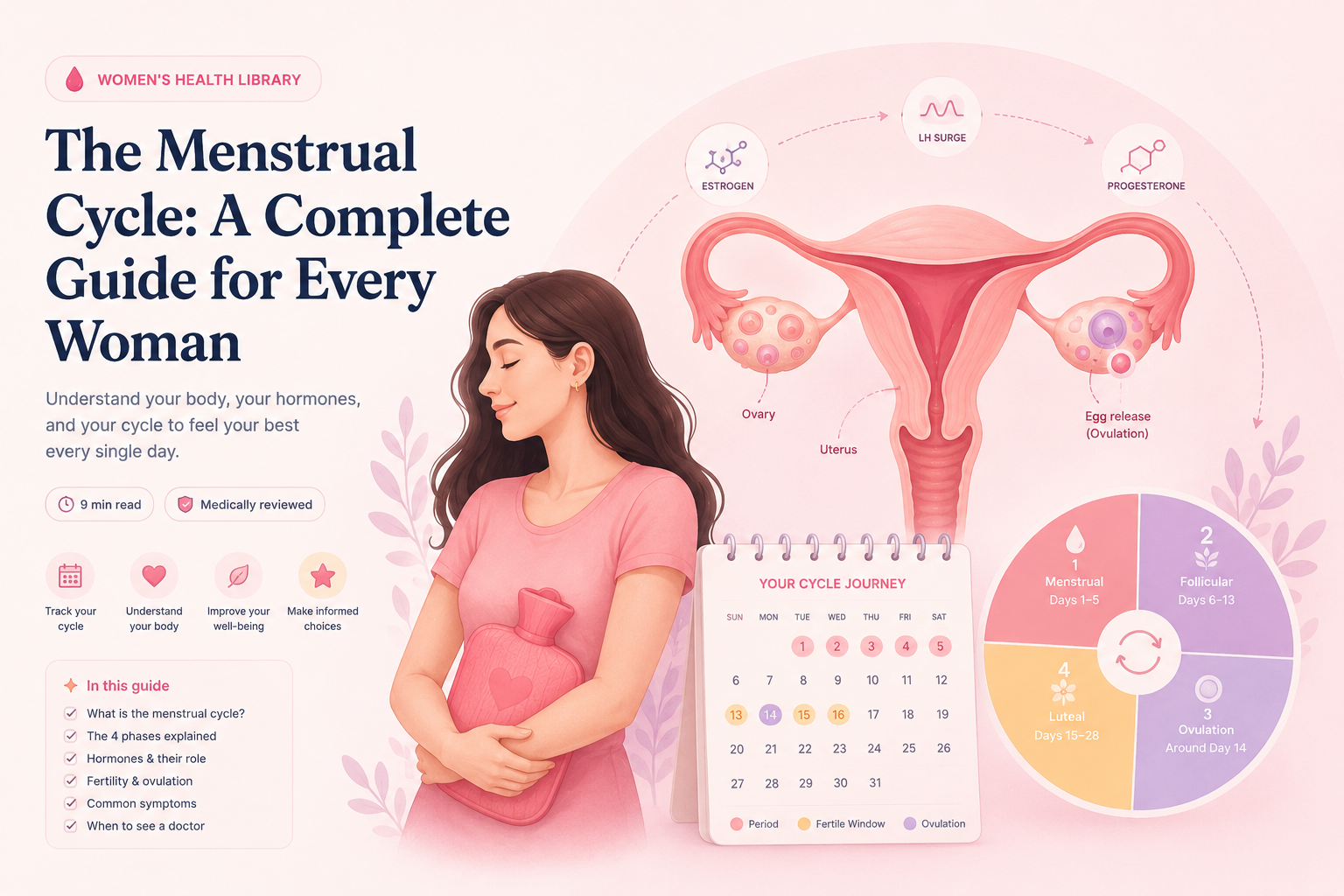
Quick Facts
The menstrual cycle is one of the most powerful indicators of a woman's overall health. Far more than just a monthly period, it is a complex hormonal rhythm that affects your energy, mood, fertility, skin, and even how you think and feel — every single day.
For millions of women in India, the menstrual cycle remains a topic surrounded by myths, silence, and misinformation. At ParentVibes, we believe every woman deserves clear, medically accurate, and judgment-free information about her own body.
Whether you're tracking your cycle to understand your health better, preparing to conceive, managing irregular periods, or simply curious — this guide covers everything you need to know, written in simple English with India-relevant context.
Did You Know?
A woman will experience approximately 450 menstrual cycles in her lifetime. Understanding your cycle is one of the most important things you can do for your long-term health.
Useful tools
Your Cycle at a Glance
Explore your cycle — tap a phase or day
Day 1: Menstrual Phase
Days 1–5The uterine lining (endometrium) sheds as your period. Oestrogen and progesterone levels are at their lowest. This is when you experience bleeding, cramps, and fatigue.
Hormones: Oestrogen — low · Progesterone — low
💡 Warm water bottles, light yoga, and iron-rich foods like spinach and lentils can help during this phase.
What Is the Menstrual Cycle?
The menstrual cycle is a monthly series of hormonal changes that prepare a woman's body for possible pregnancy. It begins on the first day of your period (menstruation) and ends the day before your next period starts.
The average cycle is 28 days long — but a healthy cycle can range anywhere from 21 to 35 days. Your cycle length, flow, and symptoms are uniquely yours. Tracking them over several months is the best way to understand what is 'normal' for your body.
Key Fact
A cycle shorter than 21 days or longer than 35 days consistently may need medical evaluation. One-off variations due to stress, travel, or illness are usually not a concern.
Things worth knowing
A period is not just bleeding
It is the visible end of a full hormonal cycle that runs all month.
Ovulation is your fertile peak
Pregnancy is only possible in the ~6 days around ovulation.
PMS is hormonal
Falling progesterone in the luteal phase drives bloating and mood shifts.
Cycle length varies
Anywhere from 21 to 35 days can be perfectly healthy for you.
Severe pain isn't normal
Pain that stops daily life deserves a doctor's review — not endurance.
Tracking helps
Three months of data reveals your personal baseline and red flags.
The 4 Phases of the Menstrual Cycle
Your menstrual cycle has four distinct phases, each controlled by a unique combination of hormones — primarily oestrogen and progesterone.
1. Menstrual Phase
Days 1–5The uterine lining (endometrium) sheds as your period. Oestrogen and progesterone levels are at their lowest. This is when you experience bleeding, cramps, and fatigue.
Tap for symptoms, food, exercise & moreShow less
1. Menstrual Phase
Days 1–5Hormones
- Oestrogen — low
- Progesterone — low
Symptoms
- Cramps
- Lower back pain
- Fatigue
- Bloating
- Headaches
Exercise
- Gentle yoga
- Walking
- Stretching
- Rest as needed
Food
- Iron-rich dal & spinach
- Vitamin-C with iron
- Warm, comforting meals
- Plenty of water
Products
- Heating pad
- Comfortable pads/cup
- Magnesium-rich snacks
Mood
Low and introspective — be kind to yourself and prioritise rest.
💡 Warm water bottles, light yoga, and iron-rich foods like spinach and lentils can help during this phase.
2. Follicular Phase
Days 1–13 (overlaps with menstruation)The pituitary gland releases Follicle-Stimulating Hormone (FSH), stimulating the ovaries to develop follicles. One dominant follicle matures and produces rising oestrogen, thickening the uterine lining.
Tap for symptoms, food, exercise & moreShow less
2. Follicular Phase
Days 1–13 (overlaps with menstruation)Hormones
- FSH — rising
- Oestrogen — rising
Symptoms
- Rising energy
- Clearer skin
- Improved focus
- Light or no discharge
Exercise
- Higher-intensity workouts
- Strength training
- Cardio
- New classes
Food
- Fresh proteins
- Fermented foods
- Leafy greens
- Complex carbs for energy
Products
- Activewear
- Cycle-tracking app
- Light panty liners
Mood
Upbeat, motivated and confident — a great time to plan and socialise.
💡 This is a great time to start new projects, exercise more intensely, and socialise.
3. Ovulatory Phase
Day 14 (in a 28-day cycle)A surge in Luteinizing Hormone (LH) triggers the release of a mature egg from the dominant follicle. This is ovulation — the only time in your cycle when you can become pregnant. The egg survives 12–24 hours; sperm can survive up to 5 days.
Tap for symptoms, food, exercise & moreShow less
3. Ovulatory Phase
Day 14 (in a 28-day cycle)Hormones
- LH — peaks
- Oestrogen — peaks
- Testosterone — small rise
Symptoms
- Egg-white cervical mucus
- Mild one-sided pelvic twinge
- Increased libido
- Slight BBT rise
Exercise
- Peak-intensity training
- HIIT
- Group sports
- Channel the energy
Food
- Antioxidant-rich fruits
- Fibre for oestrogen balance
- Zinc & B-vitamins
- Hydration
Products
- Ovulation predictor kits (OPKs)
- Fertility tracker
- BBT thermometer
Mood
Confident and outgoing, with libido often at its highest.
💡 If you're trying to conceive, the 5 days before and day of ovulation are your fertile window. Use the ParentVibes Ovulation Calculator to identify your window accurately.
4. Luteal Phase
Days 15–28The ruptured follicle becomes the corpus luteum, which produces progesterone. If fertilisation does not occur, the corpus luteum degrades, progesterone drops, and the uterine lining begins to break down — triggering the next period.
Tap for symptoms, food, exercise & moreShow less
4. Luteal Phase
Days 15–28Hormones
- Progesterone — rises then falls
- Oestrogen — secondary rise then falls
Symptoms
- Bloating
- Breast tenderness
- Mood swings
- Food cravings
- Acne
- Trouble sleeping
Exercise
- Pilates
- Moderate strength
- Walking
- Restorative yoga as PMS builds
Food
- Magnesium (banana, dark chocolate, nuts)
- Complex carbs
- Less salt & caffeine
- Calcium-rich foods
Products
- Magnesium supplement (ask your doctor)
- Comfortable bra
- Heating pad
- PMS tracker
Mood
May dip with PMS — irritability or low mood as progesterone falls.
💡 Magnesium-rich foods (banana, dark chocolate, nuts) may help reduce PMS symptoms during the luteal phase.
| Phase | Days (avg) | Key Hormone | Main Event | Energy Level |
|---|---|---|---|---|
| Menstrual | 1–5 | Low oestrogen & progesterone | Uterine lining sheds | Low |
| Follicular | 1–13 | Rising FSH & oestrogen | Follicle matures | Rising |
| Ovulatory | ~Day 14 | LH surge | Egg released | Peak |
| Luteal | 15–28 | Rising progesterone | Uterine lining thickens | Moderate → Low |
Hormones Across Your Cycle
Hormones across your cycle — tap one to explore
Tap a hormone above to see what it does and when it peaks. The dashed line marks ovulation, around day 14 in a 28-day cycle.
Illustrative curves showing relative timing, not exact measured values.
Key Hormones of the Menstrual Cycle
- Oestrogen
- Builds the uterine lining and drives follicle development. Peaks before ovulation. Supports mood, bone density, and skin health.
- Progesterone
- Prepares the uterus for pregnancy after ovulation. If no pregnancy occurs, it drops and triggers menstruation.
- FSH (Follicle-Stimulating Hormone)
- Released by the pituitary gland to stimulate ovarian follicles to grow.
- LH (Luteinizing Hormone)
- Surges mid-cycle to trigger ovulation. LH levels are what most ovulation predictor kits (OPKs) detect.
- Testosterone
- Present in small amounts in women; rises slightly around ovulation, which may increase energy and libido.
What Is a Normal Menstrual Cycle?
| Parameter | Normal Range |
|---|---|
| Cycle Length | 21–35 days |
| Period Duration | 2–7 days |
| Blood Loss | 30–80 ml per cycle |
| Clots | Occasional small clots (smaller than a 10-rupee coin) are normal |
| Colour | Bright red to dark red or brown (especially at start/end) |
| Pain | Mild to moderate cramping for 1–2 days is common |
Speak to a Doctor If:
- Your cycle is consistently shorter than 21 days or longer than 35 days
- Your period lasts more than 7 days
- You soak through a pad/tampon every 1–2 hours
- You pass clots larger than a 10-rupee coin
- You have severe pain that disrupts daily life
- You miss 3 or more periods and are not pregnant
How Your Menstrual Cycle Affects Fertility
The menstrual cycle is your body's built-in fertility calendar. Understanding it is essential whether you are trying to conceive or trying to avoid pregnancy.
The fertile window is approximately 6 days — the 5 days before ovulation and the day of ovulation itself. Ovulation typically occurs around Day 14 of a 28-day cycle, but this varies significantly based on your cycle length.
For irregular cycles, tracking basal body temperature (BBT), cervical mucus changes, and using the ParentVibes Ovulation Calculator gives a much more accurate picture of your personal fertile window.
ParentVibes Ovulation Calculator
Track your cycle, predict ovulation, and identify your fertile window. Personalised to your cycle, not a generic 28-day assumption.
Try Ovulation Calculator →Free with ParentVibes
Track your cycle for free
Get reminders, fertile window predictions, and personalised health insights — free.
- Know your fertile window
- Get period & ovulation reminders
- Predict your next period
- Plan for pregnancy
Common Menstrual Cycle Symptoms by Phase
Symptoms vary greatly between women and even between cycles. Here is what many women experience across each phase:
Menstrual Phase (Days 1–5)
- Abdominal cramping (dysmenorrhoea)
- Lower back pain
- Bloating
- Fatigue and low energy
- Headaches
- Mood changes — sadness or irritability
- Breast tenderness (reducing from previous phase)
- Nausea (in some women)
Follicular Phase (Days 1–13)
- Increasing energy levels
- Improved mood and confidence
- Clearer skin (as oestrogen rises)
- Increased motivation and mental clarity
- Lighter or no discharge
Ovulatory Phase (~Day 14)
- Egg-white cervical mucus (clear, stretchy discharge)
- Mild one-sided pelvic pain (mittelschmerz) — not all women
- Light spotting (not all women)
- Increased libido
- Slightly raised basal body temperature
Luteal Phase (Days 15–28)
- Bloating and water retention
- Breast tenderness or heaviness
- Mood swings, irritability, anxiety (PMS)
- Food cravings — especially sweets and carbohydrates
- Fatigue
- Acne or skin changes
- Difficulty sleeping
- Headaches or migraines
PMS vs PMDD — Know the Difference
Premenstrual Syndrome (PMS) refers to mild-to-moderate physical and emotional symptoms in the luteal phase. Premenstrual Dysphoric Disorder (PMDD) is a severe form that significantly disrupts daily life — including work, relationships, and mental health. If your symptoms are severe, speak to a gynaecologist. PMDD is a recognised medical condition with effective treatments.
What Drives the Menstrual Cycle — and What Can Disrupt It
The menstrual cycle is regulated by the hypothalamic-pituitary-ovarian (HPO) axis — a finely tuned hormonal communication system between your brain and ovaries. The hypothalamus releases GnRH, which signals the pituitary gland to release FSH and LH, which in turn control the ovaries' production of oestrogen and progesterone. This entire system is sensitive to internal and external factors.
- Stress
- Chronic stress raises cortisol, which can suppress GnRH and delay or prevent ovulation, leading to irregular or missed periods.
- Significant Weight Change
- Both rapid weight loss and obesity can disrupt hormonal balance. Low body fat can cause periods to stop entirely (amenorrhoea). This is common in athletes and those with eating disorders.
- PCOS (Polycystic Ovary Syndrome)
- India's most common hormonal disorder in women. PCOS causes elevated androgens (male hormones), which disrupt ovulation and cause irregular or absent periods.
- Thyroid Disorders
- Both hypothyroidism and hyperthyroidism can significantly affect cycle regularity, flow, and PMS severity. Thyroid testing is often underdiagnosed in Indian women.
- Perimenopause
- As women approach menopause (typically 40s–early 50s), cycles become irregular as ovarian reserve declines and hormones fluctuate.
- Excessive Exercise
- High-intensity training without adequate nutrition can suppress the HPO axis, leading to irregular or absent periods — known as the Female Athlete Triad.
- Uterine Conditions
- Fibroids, polyps, endometriosis, and adenomyosis can cause heavy bleeding, pain, or irregular cycles.
- Medications
- Hormonal contraceptives, antipsychotics, chemotherapy, and certain blood pressure medications can alter the cycle.
- Nutritional Deficiencies
- Iron deficiency (very common in India), Vitamin D deficiency, and low B12 can affect menstrual health and energy.
How Doctors Evaluate Your Menstrual Cycle
If you are experiencing irregular, painful, very heavy, or absent periods, your doctor will typically follow a structured evaluation process.
1. Medical & Menstrual History
- Age at first period (menarche)
- Typical cycle length and duration
- Flow heaviness (number of pads/tampons per day)
- Associated symptoms — pain, clots, PMS
- Previous pregnancies or fertility history
- Family history of PCOS, endometriosis, thyroid disease
- Current medications and supplements
2. Physical Examination
- BMI and weight assessment
- Signs of PCOS — acne, excess hair (hirsutism), hair loss
- Thyroid gland assessment
- Pelvic examination (if clinically indicated)
3. Laboratory Tests
| Test | What It Checks | When It's Ordered |
|---|---|---|
| FSH, LH, Oestradiol | Ovarian function and hormonal balance | Cycle Days 2–5 |
| Progesterone | Confirms whether ovulation occurred | ~Day 21 of cycle |
| Thyroid Function (TSH, T3, T4) | Rules out thyroid disorders | Any time |
| Prolactin | Elevated levels can suppress ovulation | Any time (fasting preferred) |
| AMH (Anti-Müllerian Hormone) | Ovarian reserve — egg supply | Any time |
| Complete Blood Count (CBC) | Checks for anaemia from heavy bleeding | Any time |
| Testosterone & DHEAS | Rules out PCOS and adrenal conditions | Cycle Days 2–5 |
| Fasting Insulin & Blood Glucose | Checks insulin resistance (common in PCOS) | Fasting |
4. Imaging
- Pelvic Ultrasound (Transvaginal or Transabdominal)
- Examines ovaries for cysts (PCOS pattern), checks uterine lining thickness, identifies fibroids or polyps. The most common first-line scan for menstrual irregularities in India.
- Follicular Monitoring Ultrasound
- A series of scans done across the cycle to track follicle development and confirm ovulation. Common in fertility evaluations.
Before Your Doctor's Appointment
Bring 3–6 months of cycle tracking data. Note cycle length, period duration, flow heaviness, pain score and any other symptoms. The ParentVibes Period Tracker helps you keep this in one place.
Treatment Options for Menstrual Cycle Irregularities
Treatment depends entirely on the underlying cause of your menstrual irregularity. There is no one-size-fits-all solution. Always consult a gynaecologist before starting any treatment.
- Irregular Cycles (no clear cause)
- Lifestyle modifications — stress reduction, weight management, sleep improvement. Cycle tracking for 3–6 months before medical intervention.
- PCOS
- Lifestyle changes (diet and exercise) as first-line. Medications may include: Metformin (insulin sensitiser), Combined Oral Contraceptive Pill (to regulate cycles), or ovulation-inducing medications (Letrozole/Clomiphene) for fertility.
- Dysmenorrhoea (Painful Periods)
- NSAIDs (ibuprofen, mefenamic acid) started 1–2 days before expected period. Hormonal contraceptives to reduce flow. If endometriosis is suspected, specialist referral needed.
- Heavy Menstrual Bleeding
- Tranexamic acid (reduces flow). NSAIDs. Hormonal IUD (Mirena). Combined pill or progesterone-only pill. Investigation for fibroids or polyps before deciding treatment.
- Absent Periods (Amenorrhoea)
- Rule out pregnancy first. Treat underlying cause — thyroid disorder, PCOS, stress, nutritional deficit. Hormone therapy may be used under specialist guidance.
- PMS / PMDD
- Lifestyle and dietary changes. Calcium and magnesium supplementation. SSRIs (antidepressants) prescribed in the luteal phase for PMDD. Combined pill in some cases.
- Thyroid-Related Irregularity
- Treating the thyroid condition (thyroxine for hypothyroidism, antithyroid drugs for hyperthyroidism) often resolves menstrual irregularity.
Medical Disclaimer
All treatment information above is for educational purposes only. Do not self-diagnose or self-treat. Consult a qualified gynaecologist or healthcare provider for personalised medical advice.
Home Care & Natural Support for a Healthy Menstrual Cycle
While medical treatment is essential for diagnosed conditions, several evidence-informed lifestyle strategies can support a healthier cycle.
Nutrition
- Eat iron-rich foods during and after your period — dal, rajma, spinach, ragi, jaggery, sesame seeds
- Increase Vitamin C alongside iron-rich foods to improve absorption — amla, guava, lemon
- Eat anti-inflammatory foods like turmeric, ginger, flaxseeds, and omega-3 rich fish
- Reduce refined sugar and ultra-processed foods, especially in the luteal phase
- Stay well hydrated — aim for 2–3 litres of water daily
- Consider magnesium-rich foods to ease PMS — banana, dark chocolate, pumpkin seeds, almonds
Exercise
- Light yoga, walking, and stretching during menstruation can reduce cramps
- Moderate-intensity exercise in the follicular phase supports oestrogen health
- Avoid extreme caloric restriction combined with intense training — this disrupts the HPO axis
- Yoga postures like Supta Baddha Konasana and Paschimottanasana may ease period pain
Stress Management
- Chronic stress is one of the leading causes of irregular cycles in India
- Practice 10–20 minutes of daily meditation or deep breathing
- Prioritise 7–9 hours of quality sleep
- Journalling, therapy, and community support (like the ParentVibes Community) can help manage stress
Heat Therapy
- A warm water bottle or heating pad on the lower abdomen can significantly reduce menstrual cramps
- Warm baths may also help with bloating and lower back pain
Supplements to Discuss with Your Doctor
- Vitamin D — deficiency is extremely common in India and linked to cycle irregularities and PCOS
- Iron — especially after heavy periods or if you are vegetarian
- Magnesium — may reduce PMS and dysmenorrhoea
- Omega-3 fatty acids — anti-inflammatory, may reduce period pain
- B-complex — supports hormone metabolism
Always consult your doctor before starting any supplement. Do not self-prescribe based on online content.
Cycle Tracking
- Track your cycle every month using a period tracker
- Note: start date, end date, flow heaviness, pain score, mood, energy levels and any unusual symptoms
- After 3 months you will have a clear personal baseline that is invaluable for doctor visits and fertility planning
ParentVibes Period Tracker
Log your period, track symptoms, and predict your next cycle — all in one place.
Start Tracking →When to See a Doctor About Your Menstrual Cycle
Most cycle variations are normal. However, the following symptoms warrant a medical evaluation sooner rather than later:
Periods that suddenly stop for 3 or more months
See a doctor within 2–4 weeks (rule out pregnancy first with a home test)
Soaking through a pad or tampon every 1–2 hours for several hours
See a doctor urgently — same week
Period pain so severe it prevents normal activity
See a doctor within 1–2 weeks (possible endometriosis or adenomyosis)
Bleeding between periods or after sex
See a doctor within 1–2 weeks
Cycles consistently shorter than 21 days or longer than 35 days
See a doctor if this persists for 3+ consecutive cycles
Severe PMS or PMDD symptoms affecting mental health and relationships
See a gynaecologist or psychiatrist within 2–4 weeks
Sudden increase in hair loss, unwanted facial or body hair, or unexplained weight gain alongside cycle changes
See a doctor — may indicate PCOS or thyroid issues
No period by age 15 (primary amenorrhoea)
Seek evaluation promptly
Reassurance
Not every irregular cycle is a problem. Occasional variations due to illness, travel, or stress are very common. Use the ParentVibes Period Tracker to build 3 months of data before deciding if there's a pattern worth investigating.
Continue learning
PCOS
India's most common hormonal disorder — signs, diagnosis and management.
Read guide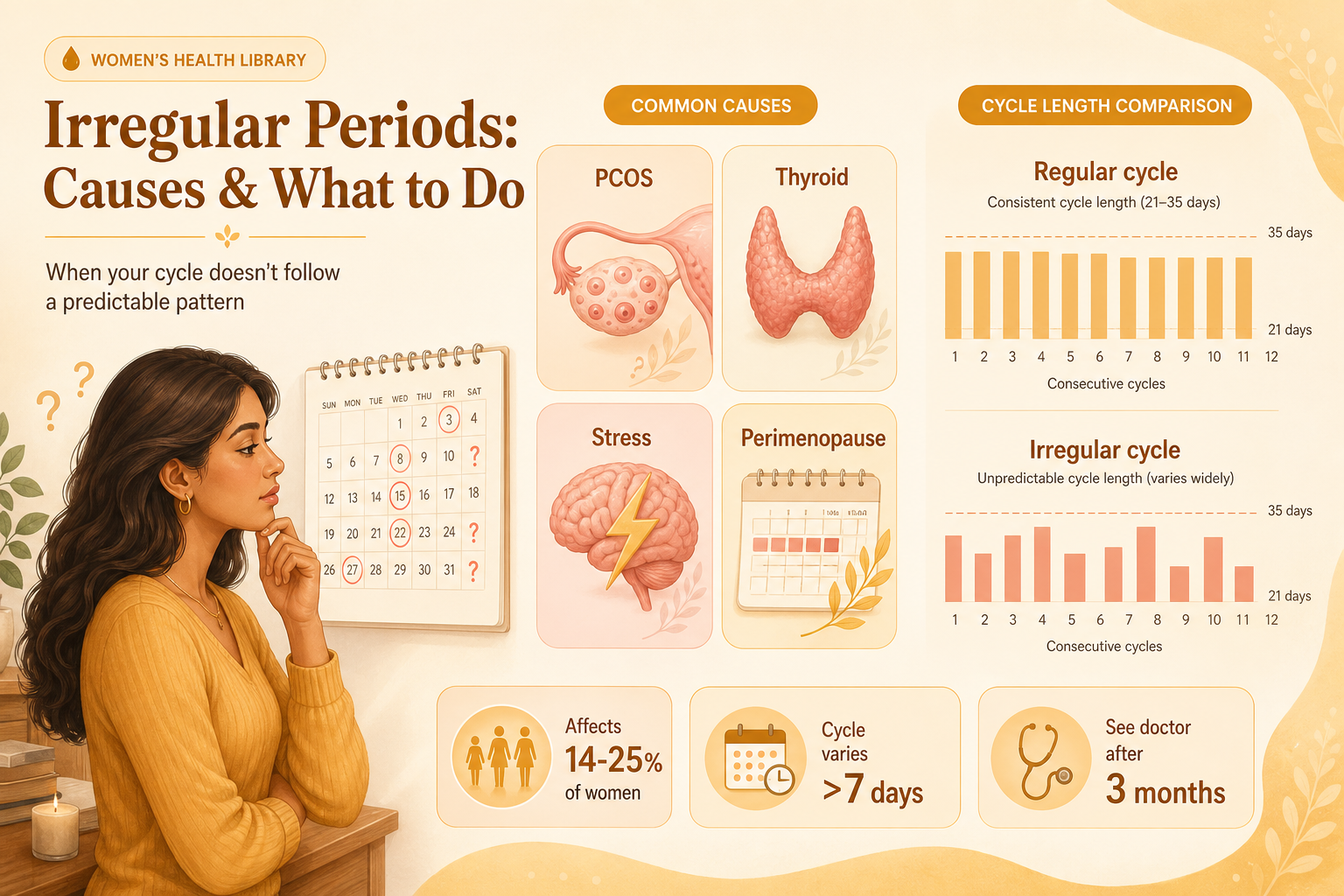
Irregular Periods
Why cycles go off-schedule and when it's worth investigating.
Read guide
Ovulation Tracking
Pinpoint your fertile window with the ParentVibes calculator.
Open tool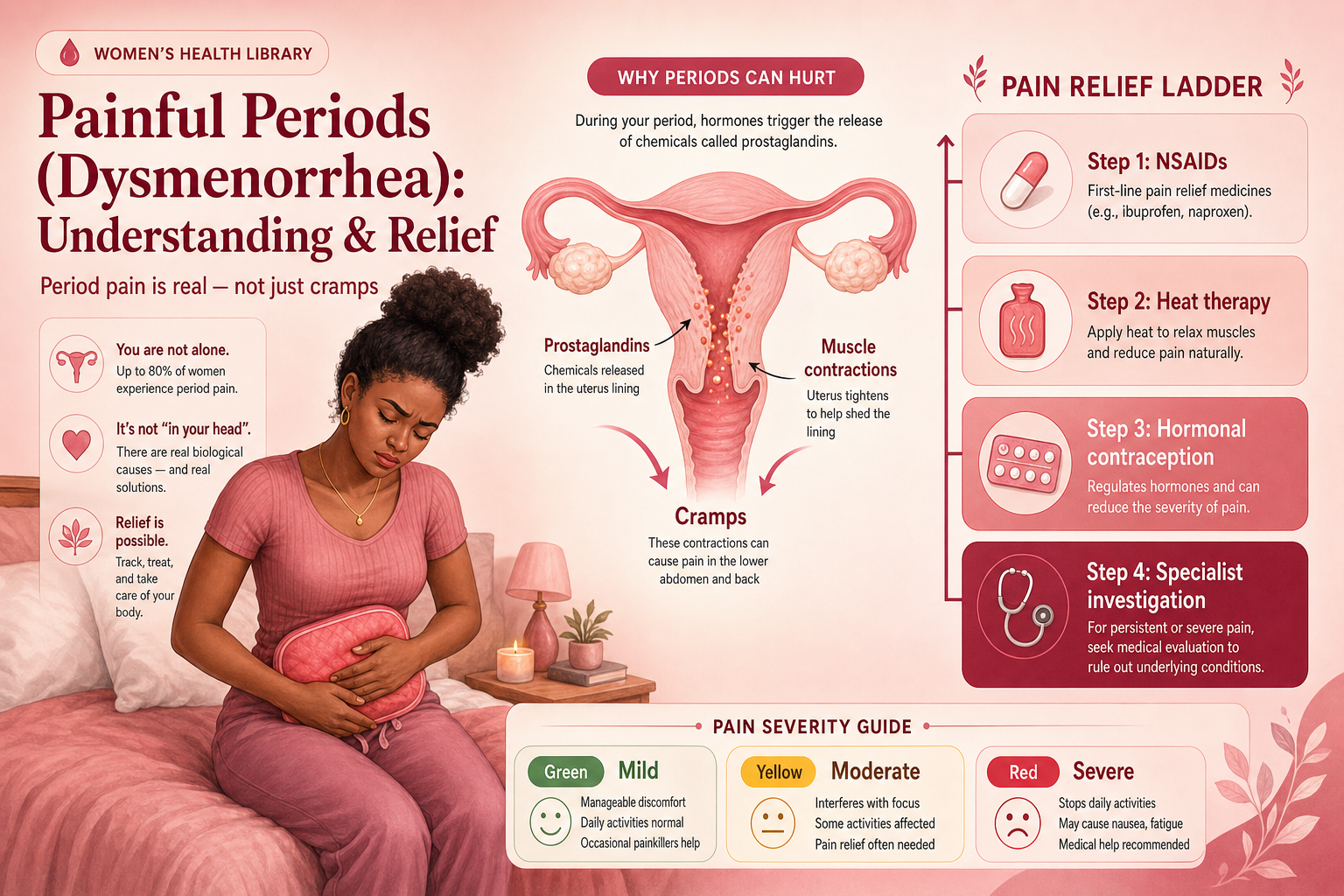
Painful Periods
What's normal, what's not, and how to ease cramps and PMS.
Read guide
Trying to Conceive
A calm, step-by-step starting point for planning pregnancy.
Read guide
Period Tracker
Log your period, track symptoms and predict your next cycle.
Open toolFrequently Asked Questions
What is a normal menstrual cycle length?
A normal menstrual cycle ranges from 21 to 35 days, counted from the first day of one period to the first day of the next. The widely cited '28-day cycle' is just an average — many healthy women have cycles that are shorter or longer. What matters most is that your cycle is consistent for you.
What are the 4 phases of the menstrual cycle?
The menstrual cycle has four phases: (1) Menstrual Phase — when your period occurs (Days 1–5), (2) Follicular Phase — when an egg follicle matures (Days 1–13), (3) Ovulatory Phase — when the egg is released (around Day 14), and (4) Luteal Phase — when your body prepares for a possible pregnancy (Days 15–28).
Can stress delay or stop my period?
Yes. Chronic or acute stress raises cortisol levels, which can interfere with the hormonal signals that trigger ovulation and menstruation. A delayed or missed period during a stressful period is very common. If your period is more than 2 weeks late and a pregnancy test is negative, consult a doctor if stress management does not resolve it within another cycle.
How do I know if I am ovulating?
Signs of ovulation include: a change in cervical mucus to a clear, slippery, egg-white consistency; a slight rise in basal body temperature (BBT) after ovulation; and in some women, mild one-sided pelvic pain (mittelschmerz). The most reliable methods are ovulation predictor kits (OPKs) that detect the LH surge, or a follicular monitoring ultrasound done by your doctor.
Why are my periods irregular?
Irregular periods can be caused by many factors including PCOS, thyroid disorders, significant weight changes, stress, excessive exercise, perimenopause, uterine conditions (fibroids, polyps), hormonal contraceptive changes, or nutritional deficiencies. Three or more consecutive irregular cycles warrant a visit to a gynaecologist for proper evaluation.
Is it normal to have clots during periods?
Small clots (smaller than a 10-rupee coin) during the first 1–2 days of a heavy flow are common and usually not concerning. Larger, frequent clots — especially with very heavy bleeding that soaks a pad or tampon every 1–2 hours — should be evaluated by a doctor as they may indicate fibroids, polyps, or other uterine conditions.
What is the difference between PMS and PMDD?
PMS (Premenstrual Syndrome) includes mild to moderate physical and emotional symptoms in the 1–2 weeks before your period — such as bloating, mood changes, and fatigue. PMDD (Premenstrual Dysphoric Disorder) is a more severe form that significantly disrupts daily life, relationships, and mental health. PMDD is a recognised medical condition that responds well to treatment including SSRIs, hormonal therapy, and lifestyle changes.
How can I track my menstrual cycle to get pregnant?
To maximise your chances of conception, track your menstrual cycle to identify your fertile window — the 5 days before and the day of ovulation. You can do this using the ParentVibes Ovulation Calculator, ovulation predictor kits (OPKs), basal body temperature (BBT) charting, or cervical mucus monitoring. For irregular cycles, these methods are even more important as ovulation timing can be unpredictable.
Can I exercise during my period?
Yes — light to moderate exercise during your period can actually help reduce cramps by releasing endorphins and improving circulation. Walking, yoga, and swimming are excellent choices. Avoid very high-intensity workouts if you are experiencing heavy bleeding or severe pain. Listen to your body and rest when needed.
At what age do periods usually start and stop?
In India, most girls experience their first period (menarche) between ages 11–14, with the average around 12–13 years. Periods continue through reproductive life and naturally stop at menopause, which typically occurs between ages 45–55. The average age of menopause in Indian women is around 46–47 years — slightly earlier than the global average.
Was this guide helpful?
Understand your cycle better with ParentVibes
- Track your period dates
- Predict your next cycle
- Understand your fertile window
- Save health notes
- Get gentle reminders
Related tools
Period Tracker
Log periods and learn your personal cycle pattern.
Open tool
Ovulation Calculator
Estimate your ovulation date and fertile window.
Open tool
Fertility Window
See your most fertile days for trying to conceive.
Open tool
Pregnancy Tracker
Follow your pregnancy week by week once you conceive.
Open tool
Due Date Calculator
Estimate your baby's due date from your last period.
Open toolShare this guide with someone who needs it 💛
Medical review
- Last reviewed
- June 2026
- Medical reviewer
- Dr. Vinika G.
- Next review due
- June 2027
- Status
- Medically reviewed by Dr. Vinika G.
References
- American College of Obstetricians and Gynecologists (ACOG) — Menstruation & the menstrual cycle
- World Health Organization (WHO) — Sexual and reproductive health
- Federation of Obstetric and Gynaecological Societies of India (FOGSI)
- Royal College of Obstetricians and Gynaecologists (RCOG) — Patient information
The content on this page is intended for general educational purposes only and is not a substitute for professional medical advice, diagnosis, or treatment. It is not individually tailored to your medical history or circumstances. Always consult a qualified gynaecologist, physician, or healthcare provider before making decisions about your health, particularly regarding symptoms, diagnoses, or treatments mentioned on this page. In case of a medical emergency, please contact your nearest hospital or emergency services immediately.
Women's Health Library journey
100%Related guides
Free resources
Start here
Your journey with ParentVibes
From your first period to your baby's vaccinations — one continuous, supported path.
Understand your cycle
You are hereKnow your phases, hormones and what's normal.
Track your period
Log periods and learn your personal pattern.
Understand ovulation
Find your fertile window with the calculator.
Plan pregnancy
A calm, step-by-step start to trying to conceive.
Week-by-week pregnancy
Follow every week once you conceive.
Baby milestones
Track growth and development month by month.
Vaccination tracker
Stay on schedule and never miss a vaccine.
Medical disclaimer
This article is for educational purposes only and does not replace medical advice. If you have severe pain, heavy bleeding, missed periods, or unusual symptoms, please consult a qualified healthcare provider.