
ParentVibes
Women's Health Library · parentvibes.in
Egg Health & Quality: What Affects It & How to Support It
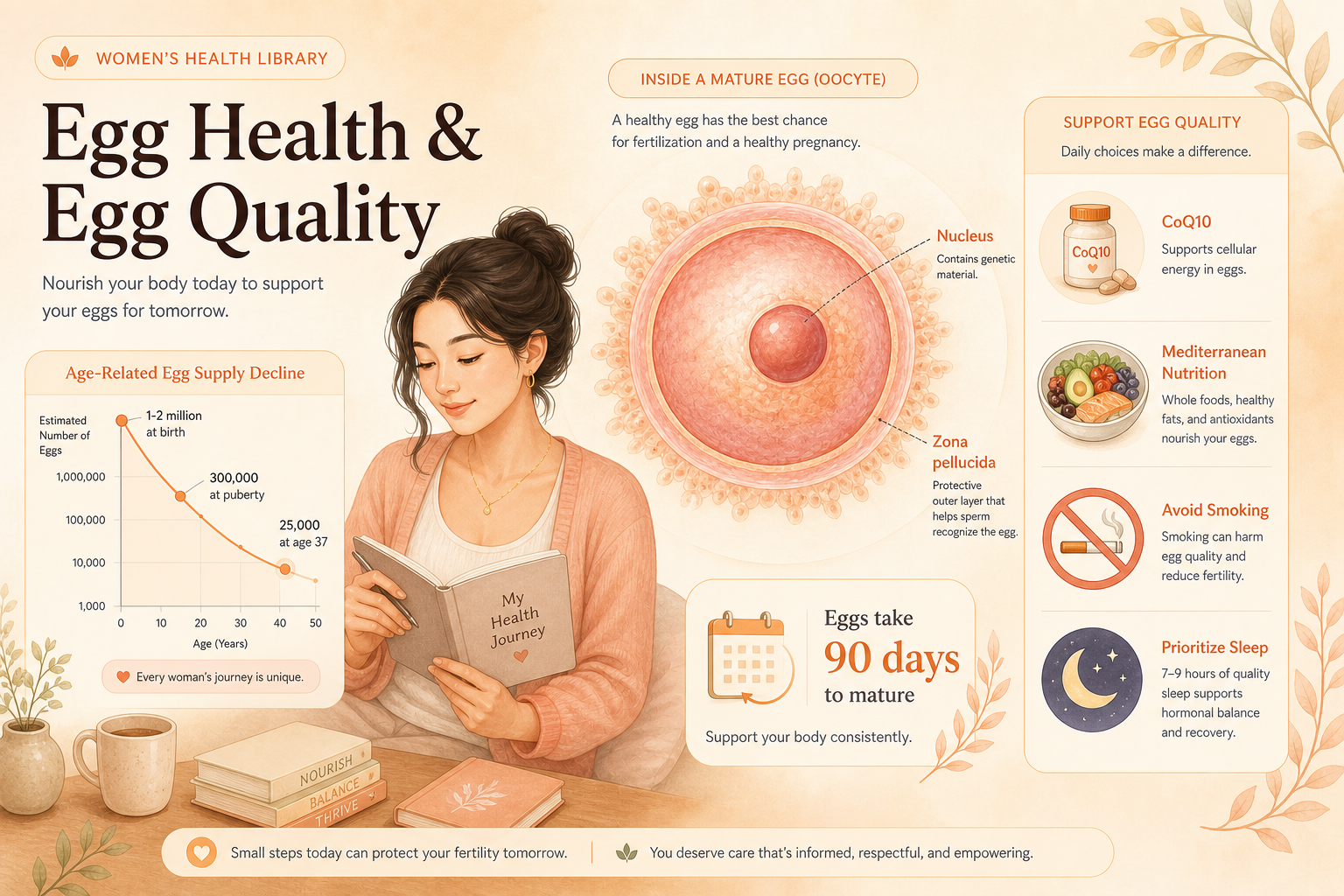
Egg health at a glance
When people talk about 'egg health' or 'egg quality', they usually mean how well an egg is able to mature, be fertilised, and go on to develop into a healthy embryo and pregnancy. It's a topic that comes up a lot when you're planning a family — and it can feel loaded with worry. The aim of this guide is to explain it honestly and gently, so you understand what truly affects egg health and what's genuinely within your control.
Here's the most important and most reassuring truth to start with: the biggest influence on egg quality is age, and that's simply biology — not anything you've done wrong. A woman is born with all the eggs she will ever have, and both their number and quality gradually decline over the years, becoming more noticeable from the mid-30s. This is normal and expected, and it happens to everyone.
Lifestyle matters too — but it's helpful to be clear-eyed about it. Healthy habits create the best possible environment for your eggs and your overall fertility; they don't reverse the effect of age or 'repair' eggs that have already changed. That doesn't make those habits pointless — far from it. It just means we won't over-promise. This guide covers what egg quality means, what affects it (especially age), the everyday steps that genuinely help, what supplements can and can't do, and when it's wise to seek fertility advice.
A kind reminder before we begin
Declining egg quality with age is universal and natural — it isn't a personal failing, and it doesn't mean pregnancy is impossible. Understanding it simply helps you make informed, unhurried choices that are right for you.
What Is Egg Quality?
Egg quality refers to an egg's potential to be fertilised and to develop into a healthy embryo. A 'good quality' egg carries the right number of chromosomes and has the cellular energy and structure needed to support early development. As eggs age, a larger proportion are more likely to have chromosomal differences, which is why both fertility and the chance of a healthy pregnancy change over time.
It helps to separate two related ideas. Egg quantity is how many eggs remain (your 'ovarian reserve'), and egg quality is how well those eggs are likely to work. The two usually decline together with age, but they're not the same thing — and neither can be measured perfectly. There's no simple test that grades an individual egg's quality before it's used; doctors instead build a picture from your age, your history, and certain fertility tests.
Quantity vs quality
Ovarian reserve tests can give a sense of how many eggs remain, but they don't directly measure quality. Age remains the best available guide to egg quality.
Read about ovarian reserve →Egg health, in short
Age matters most
Both the number and quality of eggs decline gradually with age — this is the strongest single influence.
You're born with all of them
Unlike sperm, eggs aren't made fresh — you have your full supply from birth, and it reduces over time.
Habits set the environment
A balanced diet, healthy weight and not smoking give your eggs the best surroundings to mature.
Smoking harms eggs
Smoking is linked to faster decline in egg quality and number — stopping is one of the most helpful steps.
Supplements aren't magic
No supplement can reverse age or 'repair' eggs — they support general health, not miracles.
Advice early is wise
If you're over 35, or trying for a while without success, a fertility check-in is sensible — not a failure.
What Affects Egg Quality?
Several things influence egg health, but they're not equal. Age is by far the strongest factor and isn't something lifestyle can change. The others below mostly affect the environment your eggs develop in — they're worth attending to, while keeping age in proper perspective.
- Age — the biggest factor
- Both the number and quality of eggs decline gradually with age. The change is slow at first, becomes more noticeable from the mid-30s, and is steeper in the years that follow. This is normal biology and affects everyone — it's the single most important influence on egg quality, and it can't be reversed by diet, supplements or lifestyle.
- Smoking
- Smoking is consistently linked to poorer egg health and a faster decline in egg number and quality — and exposure to others' smoke matters too. Stopping smoking is one of the most genuinely helpful steps for your eggs and your overall fertility.
- Body weight (high or low)
- Being significantly under- or over-weight can disrupt hormones and ovulation, which affects fertility. Reaching and keeping a healthy weight supports a more regular cycle and a better environment for conception.
- Underlying health conditions
- Conditions such as PCOS, endometriosis, thyroid problems or poorly controlled diabetes can affect ovulation and fertility. Managing them well, with your doctor, helps create the best conditions for your eggs.
- Alcohol and recreational substances
- Heavy alcohol use and recreational drugs can affect hormones, ovulation and overall reproductive health. Limiting alcohol — and avoiding it altogether when trying to conceive — is the safer choice.
- General health and environment
- Ongoing high stress, very poor sleep, and certain environmental exposures may affect overall reproductive health. While their direct effect on individual egg quality is less clear-cut, looking after your general health is always worthwhile.
Keep age in perspective
Lifestyle factors matter, but they sit alongside age rather than cancelling it out. The honest position is this: healthy habits give your eggs the best environment they can have — they don't turn back the clock.
How to Support Your Egg Health
These are the everyday habits that genuinely support egg health and overall fertility. Think of them as creating the best possible environment — important and worth doing — while remembering that none of them can undo the effect of age.
Eat a balanced, nourishing diet
- Build meals around whole grains, dal and pulses, vegetables, fruit, nuts and good fats
- Include sources of protein and iron, and stay well hydrated
- Limit ultra-processed foods, excess sugar and very high-salt foods
- A balanced diet supports hormones, ovulation and overall reproductive health
Don't smoke — and avoid smoke
- Stopping smoking is one of the most helpful things you can do for egg health
- Avoid second-hand smoke where you can
- If you'd like help quitting, your doctor can support you — it's never too late to benefit
Aim for a healthy weight
- Both significantly low and high weight can disrupt ovulation and hormones
- Reaching a healthy weight gradually — through balanced eating and activity — supports a more regular cycle
- Crash diets aren't helpful; steady, sustainable changes work best
Limit alcohol and avoid substances
- Keep alcohol low, and avoid it altogether when actively trying to conceive
- Avoid recreational drugs, which can affect hormones and ovulation
- Be mindful of excess caffeine — moderate intake is generally considered reasonable
Move regularly and rest well
- Aim for regular, moderate activity through the week — walking, cycling, swimming or yoga
- Protect your sleep with a consistent routine; poor sleep affects hormones over time
- Avoid extremes — very intense, excessive exercise can disrupt cycles in some women
Manage stress and existing conditions
- Make space for rest, connection and activities that calm you
- Work with your doctor to manage conditions like PCOS, thyroid issues or diabetes
- A preconception check-up is a great time to review your overall health
Supplements — discuss with a doctor first
- Folic acid before and in early pregnancy is widely recommended — speak to your doctor about it
- No supplement can reverse age, 'repair' eggs or 'make' new ones — be wary of products that promise this
- Other supplements may be discussed individually, but evidence is limited and doses matter
- Always check with a doctor before starting any supplement, especially with other conditions
What supplements can and can't do
It's worth being honest here: supplements can support general health, but there is no pill that turns back the biological clock or guarantees better egg quality. Beware of expensive products that over-promise. Folic acid is the well-established one to discuss with your doctor when planning a pregnancy.
When to Seek Fertility Advice
Seeking advice early isn't a sign that something is wrong — it's a sensible, empowering step. Please consider speaking to a doctor or fertility specialist if:
- You've had previous miscarriages or fertility treatment
- You'd like to understand your ovarian reserve or options like egg freezing
- You or your partner have concerns about your reproductive health
You're under 35 and have been trying for 12 months
Trying regularly for a year without conceiving is the usual point to seek advice
You're 35 or older and have been trying for 6 months
Because age affects fertility, earlier review is recommended from 35 onwards
Your periods are irregular, very heavy, very painful or absent
These can signal ovulation or hormonal issues worth assessing
You have a known condition that affects fertility
E.g. PCOS, endometriosis, thyroid problems, or previous pelvic surgery or infection
You're simply thinking ahead about your fertility
It's reasonable to ask for a check-in or counselling even before actively trying
Asking early is wise, not premature
A fertility specialist can review your history, arrange appropriate tests and explain your options clearly and without pressure. If age is a factor for you, an earlier conversation simply gives you more time and more choices.
Ask a Doctor →Continue learning
Frequently Asked Questions
Can I improve my egg quality?
You can support your egg health with healthy habits — a balanced diet, not smoking, a healthy weight, limiting alcohol and managing any health conditions. These create the best environment for your eggs. However, it's important to be honest: lifestyle can't reverse the effect of age or 'repair' eggs that have already changed. Healthy habits help your overall fertility, but they aren't a way to turn back the clock.
At what age does egg quality decline?
Egg quality and quantity decline gradually throughout adult life. The change is slow at first, becomes more noticeable from the mid-30s, and is steeper in the years that follow. This is normal biology and affects everyone — it doesn't mean pregnancy becomes impossible, but it does explain why fertility advice is suggested earlier from age 35.
Is there a test for egg quality?
There's no test that directly grades the quality of an individual egg before it's used. Ovarian reserve tests can give a sense of how many eggs remain, but they don't measure quality. Doctors build a picture from your age, your history and certain fertility tests — and age remains the best available guide to egg quality.
Do supplements really help egg health?
No supplement can reverse age, 'repair' eggs or make new ones — be cautious of products that promise this. Folic acid is well established when planning a pregnancy and is worth discussing with your doctor. Other supplements may be suggested individually, but evidence is limited and doses matter. Always check with a doctor before starting anything.
Does smoking affect egg quality?
Yes. Smoking is consistently linked to poorer egg health and a faster decline in both egg number and quality, and second-hand smoke matters too. Stopping smoking is one of the most genuinely helpful steps you can take for your eggs and overall fertility — and it's never too late to benefit.
I'm worried about my egg quality — when should I see a specialist?
If you're under 35 and have been trying for 12 months, or 35 or older and trying for 6 months, it's sensible to seek advice. Also see a doctor sooner if your periods are irregular, very heavy or absent, or if you have a condition like PCOS or endometriosis. Asking early isn't premature — it gives you more information and more options.
Was this guide helpful?
Understand your cycle better with ParentVibes
- Track your period dates
- Predict your next cycle
- Understand your fertile window
- Save health notes
- Get gentle reminders
Related tools
Period Tracker
Log periods and learn your personal cycle pattern.
Open tool
Ovulation Calculator
Estimate your ovulation date and fertile window.
Open tool
Fertility Window
See your most fertile days for trying to conceive.
Open tool
Pregnancy Tracker
Follow your pregnancy week by week once you conceive.
Open tool
Due Date Calculator
Estimate your baby's due date from your last period.
Open toolShare this guide with someone who needs it 💛
Medical review
- Last reviewed
- June 2026
- Medical reviewer
- Dr. Vinika G.
- Next review due
- June 2027
- Status
- Medically reviewed by Dr. Vinika G.
References
This article is for general information and education only and is not a substitute for professional medical advice, diagnosis, or treatment. Egg health and fertility are individual — always consult a qualified doctor, gynaecologist or fertility specialist about your own situation and before starting any supplement or treatment. No lifestyle change or supplement can reverse the natural effect of age on egg quality. Content reviewed against guidance from the NHS, ACOG, ASRM (ReproductiveFacts.org) and the WHO.
Planning Parenthood Library journey
100%Related guides
Free resources
Medical disclaimer
This article is for educational purposes only and does not replace medical advice. If you have severe pain, heavy bleeding, missed periods, or unusual symptoms, please consult a qualified healthcare provider.