
ParentVibes
Women's Health Library · parentvibes.in
Spotting Between Periods: Causes, Diagnosis & When to See a Doctor
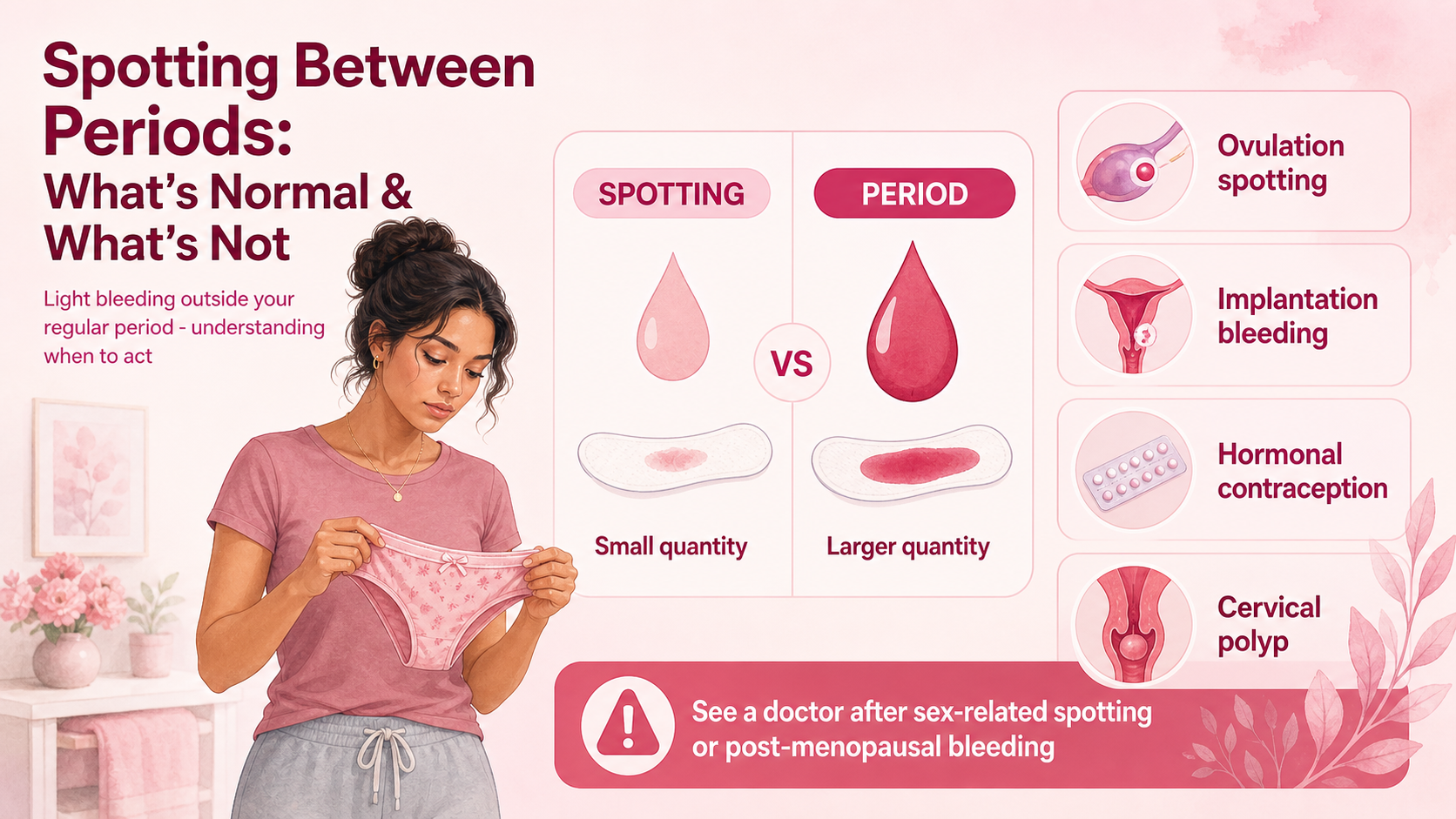
Quick Facts
Spotting means light bleeding that happens at a time other than your normal period — usually just a few drops, or light pink or brownish discharge you notice on underwear or when you wipe. It is different from your regular period flow, and it is very common.
Most of the time spotting is harmless. Many women notice a little bleeding around ovulation, when they start, stop or miss hormonal contraception, or in very early pregnancy. But spotting can also be a sign of something that needs attention — an infection, a polyp or fibroid, a hormone imbalance such as PCOS or a thyroid problem, or, less commonly, a problem with the cervix or womb lining.
Two patterns deserve special mention because they should always be checked by a doctor: bleeding after sex (postcoital bleeding) and any bleeding after you have gone through menopause. This guide explains the common and the concerning causes, how doctors work out the reason, and the clear signs that mean you should book an appointment.
Track it first
Note when the spotting happens in your cycle, how heavy it is, the colour, and anything that triggers it (like sex). A few weeks of notes in the ParentVibes Period Tracker is the most useful thing to bring to a doctor.
Track your cycle →Useful tools
Things worth knowing
Spotting is light, not a period
Usually a few drops or light pink/brown discharge between two normal periods.
Often it's harmless
A new pill, a missed pill, or ovulation can cause occasional light spotting.
Sometimes it's a signal
Infections, polyps, fibroids, PCOS or thyroid problems can all cause it.
Bleeding after sex needs review
Postcoital bleeding should always be checked, even if it happens just once.
After menopause = see a doctor
Any bleeding after periods have stopped for 12+ months needs prompt review.
Tracking helps
Logging when and how much you spot is the most useful thing to show a doctor.
Common vs Concerning Causes
Most spotting is harmless, but some patterns are red flags that always need review. Use this as a guide — not a diagnosis:
| Usually less worrying | Always get checked |
|---|---|
| Light spotting around ovulation (mid-cycle) | Bleeding after sex (any age) |
| First 3 months on a new hormonal contraceptive | Any bleeding after menopause |
| After a missed or late contraceptive pill | New spotting with pelvic pain or fever |
| Light spotting in very early pregnancy | Spotting plus unusual or smelly discharge |
| A single, brief, one-off episode | Persistent or repeated unexplained spotting |
Two rules that never change
- Bleeding after sex should always be reviewed by a doctor — even once.
- Any bleeding after menopause (no period for 12+ months) needs prompt review.
Could you be pregnant?
If you are sexually active and have missed or are due a period, do a pregnancy test. Spotting can be an early sign of pregnancy — but bleeding in pregnancy also needs a doctor's review.
What Spotting Looks Like & Signs to Note
Spotting is light bleeding between periods. The details — when it happens and what comes with it — help point to the cause. Note these to share with your doctor:
What spotting looks like
- Light bleeding far lighter than a period — often just a few drops
- Pink, red, or brown discharge noticed when wiping or on underwear
- Usually does not need a pad or tampon (or only a panty-liner)
- Happens between two otherwise normal periods
Signs that point to a cause
- Mid-cycle timing, sometimes with a little one-sided ache (may suggest ovulation)
- Started within 3 months of a new contraceptive, or after a missed pill
- Bleeding triggered by or just after sex (postcoital bleeding — needs review)
- Unusual, heavy, or smelly discharge, itching, or pelvic pain (may suggest infection)
- Heavy or longer periods alongside the spotting (may suggest polyps or fibroids)
- Hormonal signs — irregular cycles, acne, excess hair (may suggest PCOS or thyroid)
Track while you read
Tick the symptoms that apply to you. This is a self-check, not a diagnosis — saved on this device only.
Spotting after sex, or any bleeding after menopause, should always be reviewed by a doctor — even if it is light and happens only once.
Causes
There are many possible causes of spotting between periods. Most are harmless or easily treated once identified, but a few are red flags that need prompt review:
- Ovulation spotting
- A little light bleeding around the middle of the cycle, when an egg is released, is common and usually harmless.
- Hormonal contraception
- Breakthrough bleeding is common in the first few months on the combined pill, mini-pill, implant, injection, hormonal coil or patch — and after missing or taking pills late.
- Early pregnancy (implantation)
- Light spotting can occur around the time a pregnancy implants. Any bleeding in pregnancy should be reviewed by a doctor.
- Infections and STIs
- Chlamydia, gonorrhoea, pelvic inflammatory disease and other infections can inflame the cervix or womb lining and cause spotting, often with discharge or pain.
- Polyps and fibroids
- Non-cancerous growths in the womb lining or cervix (polyps) or in the muscle of the womb (fibroids) can cause spotting and heavier periods.
- PCOS
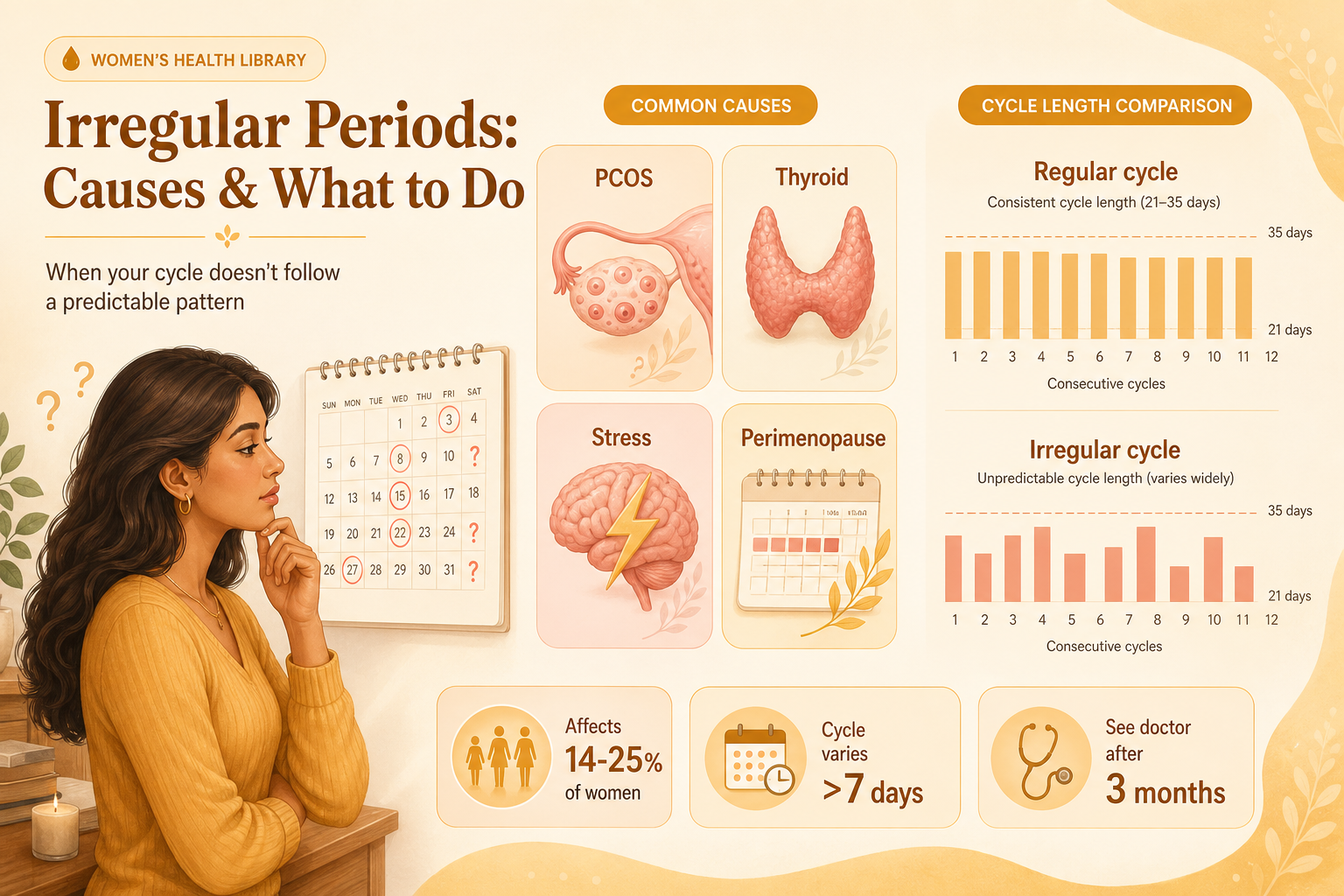
- Polycystic ovary syndrome disturbs ovulation and hormones, which can lead to irregular cycles and spotting between periods.
- Thyroid problems
- An under- or over-active thyroid affects cycle hormones and can cause irregular bleeding and spotting.
- Perimenopause
- In the years before periods stop, fluctuating hormones commonly cause irregular cycles and spotting. (After menopause, any bleeding needs review.)
- Bleeding after sex (postcoital bleeding)
- Bleeding triggered by sex can come from a sensitive or inflamed cervix, an infection, or, less often, cervical changes — it should always be checked.
- Cervical or endometrial causes (less common)
- Rarely, spotting — especially bleeding after sex or after menopause — can be an early sign of changes in the cervix or womb lining that need ruling out. This is why these patterns are always investigated.
Why the red flags matter
Bleeding after sex and bleeding after menopause are checked promptly because, although the cause is usually not serious, they are the patterns most likely to point to something that needs early treatment.
Diagnosis
There's no single test — your doctor works out the cause from your history, an examination, and some targeted tests. What's done depends on your age, your symptoms, and whether you've been through menopause.
History
- When the spotting happens in your cycle, how heavy, and the colour
- Whether it happens after sex
- Your contraception — recent starts, stops, switches, or missed pills
- Other symptoms — pain, discharge, fever, hormonal signs
- Last period, chance of pregnancy, and whether you've reached menopause (your tracker data is gold here)
Examination
- An abdominal and, where appropriate, a pelvic/internal examination
- Looking at the cervix with a speculum for inflammation, polyps, or other causes
Tests your doctor may arrange
- Pregnancy test
- Usually the first step if you could be pregnant.
- Swabs
- To check for infections and STIs such as chlamydia and gonorrhoea.
- Blood tests
- Sometimes to check thyroid, hormones, or for anaemia if bleeding is heavy.
- Pelvic ultrasound
- To look at the womb and ovaries for polyps, fibroids, or lining changes (often transabdominal for unmarried women in India, per comfort and clinician judgment).
- Cervical screening / colposcopy
- Where relevant — to check the cervix, especially with bleeding after sex; sometimes a closer look (colposcopy) is arranged.
- Endometrial assessment
- For postmenopausal bleeding or persistent unexplained bleeding, a sample of the womb lining may be taken.
Bring your history
Keep your cycle notes, scans, and results in ParentVibes so every doctor has the full picture in one place.
Treatment
There's no single treatment for spotting — the aim is to treat the cause. Sometimes no treatment is needed; in other cases, simple measures or medicines resolve it.
- Ovulation spotting
- Usually harmless and needs no treatment; just monitoring and tracking is enough.
- Contraception-related
- Often settles in the first few months; if it persists, your doctor may review or change the method.
- Infection or STI
- Treated with the right antibiotics; sexual partners may also need treatment and testing.
- Polyps or fibroids
- Depending on size and symptoms — monitoring, medication, or a minor procedure to remove them.
- PCOS or thyroid
- Treating the underlying condition (lifestyle measures, hormone or thyroid medicines) usually helps the bleeding.
- Pregnancy-related
- Reviewed by a doctor — bleeding in pregnancy always needs assessment.
- Cervical or endometrial changes
- Managed under specialist care once investigations are complete; early review gives the best outcomes.
Not sure if it's ovulation spotting?
The ParentVibes Period Tracker can show whether the spotting lines up with your fertile window, which helps you and your doctor.
Open Period Tracker →Never self-medicate
Antibiotics, hormonal contraceptives, and thyroid or other prescription medicines must be chosen and monitored by a doctor. Do not self-treat spotting — get the cause checked first.
Home Care
While you get the cause checked, these steps help you and your doctor work out what's going on:
Track and observe
- Log every episode — the date, where you are in your cycle, how heavy, and the colour
- Note any triggers, especially whether it happens after sex
- Take a pregnancy test if you're sexually active and could be pregnant
- Use a panty-liner so you can see how much bleeding there really is
- Write down other symptoms — pain, discharge, fever, tiredness — to share at your appointment
Support your cycle
- Take hormonal contraception consistently — missed or late pills are a common cause
- Practise safer sex and keep up with STI testing if you have new or multiple partners
- Aim for a healthy, stable weight, balanced meals, and regular sleep
- Manage stress, which can disturb cycle hormones
- Don't ignore bleeding after sex or after menopause — book a review
When to See a Doctor
See a doctor if you have spotting between periods and any of the following — and always for the red-flag patterns below:
- Bleeding after sex — always get this reviewed, even once
- Any bleeding after menopause (no period for 12+ months)
- New, persistent, or repeated spotting you can't explain
- Spotting with pelvic pain, fever, or unusual/smelly discharge
- Spotting alongside heavy or much longer periods
- You could be pregnant, or you're spotting during a known pregnancy
- Spotting with hormonal signs — irregular cycles, acne, excess hair
See a doctor promptly
Heavy bleeding (soaking a pad an hour for several hours), bleeding after sex, or any bleeding after menopause should be reviewed promptly. With heavy bleeding plus fainting, dizziness, or severe sudden pelvic pain, seek emergency care.
Continue learning

Frequently Asked Questions
What does spotting between periods mean?
Spotting is light bleeding — often just a few drops or pink/brown discharge — that happens between your normal periods. It's common and often harmless, but some patterns, like bleeding after sex or after menopause, always need a doctor's review.
Is spotting between periods normal?
It can be — light bleeding around ovulation, in the first months on a new contraceptive, after a missed pill, or in very early pregnancy is common. New, persistent, or unexplained spotting should be checked.
Why do I bleed after sex?
Bleeding after sex (postcoital bleeding) can come from a sensitive or inflamed cervix, an infection, or, less often, changes in the cervix. It should always be reviewed by a doctor, even if it happens only once.
I've gone through menopause and I'm bleeding — should I worry?
Any bleeding after menopause (after your periods have stopped for 12 months or more) needs prompt medical review. The cause is often not serious, but it must always be checked.
Can my contraception cause spotting?
Yes. Breakthrough bleeding is common in the first few months on the pill, implant, injection, or hormonal coil, and after missing or taking pills late. If it persists beyond a few months, see your doctor to review the method.
Could spotting be a sign of pregnancy?
It can be — light spotting can happen in early pregnancy around implantation. If you're sexually active and could be pregnant, do a pregnancy test, and have any bleeding during a known pregnancy reviewed by a doctor.
When should I worry about spotting?
See a doctor for bleeding after sex, any bleeding after menopause, new or persistent unexplained spotting, or spotting with pain, fever, or unusual discharge.
Was this guide helpful?
Understand your cycle better with ParentVibes
- Track your period dates
- Predict your next cycle
- Understand your fertile window
- Save health notes
- Get gentle reminders
Related tools
Period Tracker
Log periods and learn your personal cycle pattern.
Open tool
Ovulation Calculator
Estimate your ovulation date and fertile window.
Open tool
Fertility Window
See your most fertile days for trying to conceive.
Open tool
Pregnancy Tracker
Follow your pregnancy week by week once you conceive.
Open tool
Due Date Calculator
Estimate your baby's due date from your last period.
Open toolShare this guide with someone who needs it 💛
Medical review
- Last reviewed
- June 2026
- Medical reviewer
- Dr. Vinika G.
- Next review due
- June 2027
- Status
- Medically reviewed by Dr. Vinika G.
References
This article is for general information and education only and is not a substitute for professional medical advice, diagnosis, or treatment. Always consult a qualified doctor about bleeding between periods — and especially about bleeding after sex or after menopause — and before starting, stopping, or changing any treatment or medication. In a medical emergency, contact your doctor or local emergency services immediately. Content reviewed against guidance from the NHS, ACOG, and WHO.
Women's Health Library journey
100%Related guides
Free resources
Start here
Your journey with ParentVibes
From your first period to your baby's vaccinations — one continuous, supported path.
Understand your cycle
Know your phases, hormones and what's normal.
Track your period
Log periods and learn your personal pattern.
Understand ovulation
Find your fertile window with the calculator.
Plan pregnancy
A calm, step-by-step start to trying to conceive.
Week-by-week pregnancy
Follow every week once you conceive.
Baby milestones
Track growth and development month by month.
Vaccination tracker
Stay on schedule and never miss a vaccine.
Medical disclaimer
This article is for educational purposes only and does not replace medical advice. If you have severe pain, heavy bleeding, missed periods, or unusual symptoms, please consult a qualified healthcare provider.