
ParentVibes
Women's Health Library · parentvibes.in
Depression in Women: Signs, Causes & Getting Support
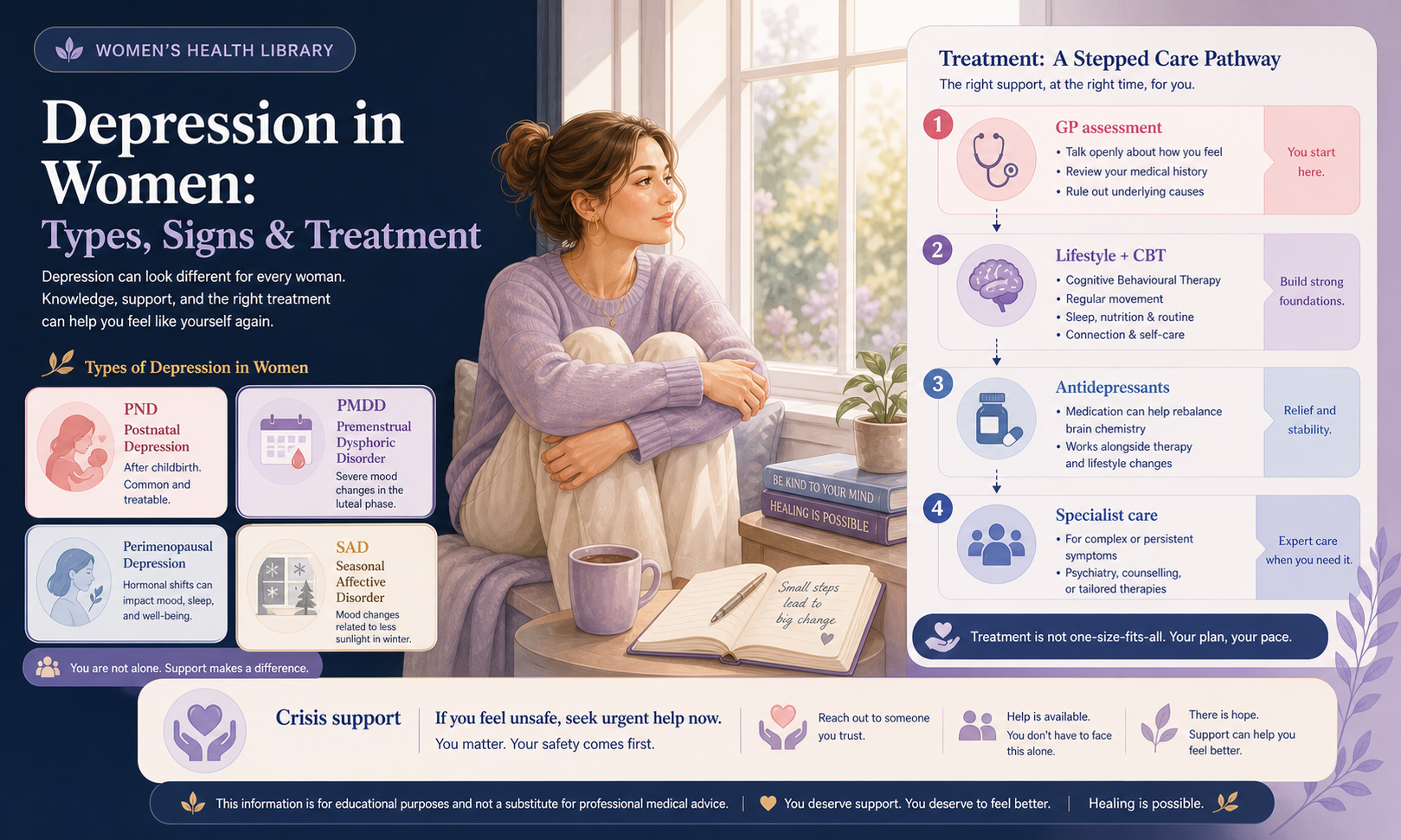
Depression at a glance
Depression is far more than feeling sad, stressed or 'low' for a few days. It is a persistent low mood and a loss of interest or pleasure in things you usually enjoy, lasting most of the day, nearly every day, for two weeks or more. It can change how you sleep and eat, drain your energy, cloud your thinking, and make even small tasks feel overwhelming. It affects how you feel about yourself and the world around you — and it is a real, recognised health condition, not a character flaw or a weakness.
Depression is one of the most common health conditions in the world, and it affects women somewhat more often than men. There are also particular times in a woman's life when depression is more likely — including the days before a period in its severe form (PMDD), during pregnancy and after having a baby (perinatal and postnatal depression), and around the menopause transition (perimenopause). Hormonal shifts, life changes, caregiving and social pressures can all play a part.
If any of this sounds like you, please know two things. First, it is not your fault, and you have nothing to be ashamed of — depression is an illness, not a failing. Second, it is very treatable. With the right support — talking therapy, sometimes medication, and caring self-care — most people recover and feel like themselves again. This guide explains what depression is, why it happens, the signs to look out for, what helps, and how to reach out for support.
You deserve support — and it works
Depression is common and very treatable. Reaching out — to someone you trust, your doctor, or a counsellor — is a brave and important first step, not a sign of weakness. You don't have to cope with this alone.
Ask a Doctor →Useful tools
What Is Depression?
Depression (sometimes called clinical depression or major depression) is a mood disorder marked by a persistent low mood and a loss of interest or pleasure that lasts most of the day, on most days, for at least two weeks. It is different from the ordinary ups and downs of life or the natural sadness that follows a loss. With depression, the low mood lingers and starts to affect your sleep, appetite, energy, concentration and ability to function in everyday life.
Depression sits on a spectrum from mild to severe. It can appear once or come back at different times, and it often shows up alongside anxiety. Importantly, it isn't something you can simply will away or 'be strong' through — it has real effects on the brain and body, and it responds to proper care. Recognising it for what it is — a treatable health condition — is the first step towards feeling better.
Sadness vs depression
Sadness usually has a clear cause and lifts with time or comfort. Depression lingers for two weeks or more, affects daily life, and often comes with loss of interest, low energy and changed sleep or appetite — even when there's no obvious reason. If that pattern sounds familiar, it's worth talking to a doctor.
Depression, in short
It's a real condition
Depression is a recognised health condition with a genuine biological and emotional basis — not a mood you can simply 'snap out of'.
More than sadness
It's a lasting low mood and loss of interest that affects sleep, appetite, energy, focus and how you cope day to day.
You're not alone
Depression is one of the most common health conditions in the world, and it affects women somewhat more often than men.
Women face particular contexts
PMDD, pregnancy and after birth, and the perimenopause are times when women may be more vulnerable to depression.
It's not a weakness
Reaching out for help takes courage and is a sign of strength — depression is never a personal failing or something to feel ashamed of.
It's very treatable
With talking therapy, sometimes medication, and supportive care, most people feel better. Recovery is genuinely possible.
Signs & Symptoms
Depression can show up in how you feel, how you think, and in your body. Everyone is different, and you don't need to have every symptom. The key pattern is that these feelings are present most of the day, nearly every day, for two weeks or more — and they affect your daily life.
Emotional and mental signs
- Persistent low, sad or 'empty' mood
- Loss of interest or pleasure in things you used to enjoy
- Feeling hopeless, helpless or that things won't get better
- Feelings of guilt, worthlessness or being a burden
- Irritability, tearfulness or feeling on edge
- Trouble concentrating, remembering or making decisions
- Anxiety or constant worry alongside the low mood
Physical and behavioural signs
- Tiredness, low energy or feeling slowed down
- Sleeping too much or too little, or waking very early
- Changes in appetite — eating much more or much less
- Unexplained aches, pains or digestive discomfort
- Withdrawing from friends, family or usual activities
- Neglecting yourself or finding everyday tasks overwhelming
- Reduced interest in sex or in closeness with others
Women-specific contexts to notice
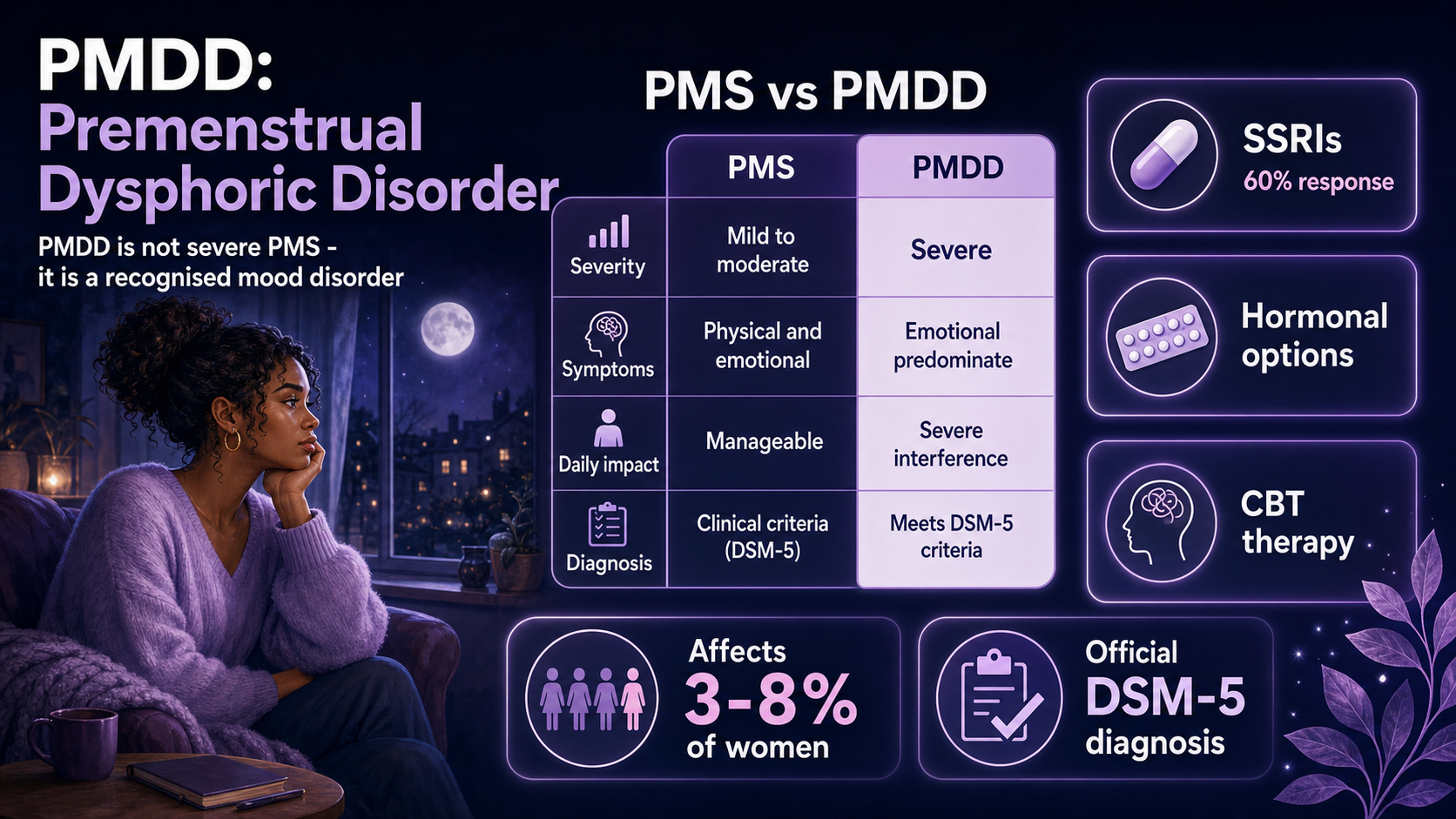
- Severe low mood and despair in the days before a period (possible PMDD)
- Low mood, tearfulness or struggling to bond during pregnancy or after birth (perinatal/postnatal depression)
- Mood changes alongside hot flushes and sleep disruption around the menopause transition (perimenopause)
Track while you read
Tick the symptoms that apply to you. This is a self-check, not a diagnosis — saved on this device only.
If you have thoughts of harming yourself
If you are having thoughts of harming yourself or that life isn't worth living, please reach out right now — to someone you trust, a mental-health professional, your local emergency services, or India's Tele-MANAS helpline on 14416 (or 1-800-891-4416), available 24/7. You are not alone, and immediate support is available.
What Causes Depression in Women?
There is rarely a single cause. Depression usually results from a combination of biological, psychological and social factors that build up over time. Understanding this helps make sense of why it happens — and why it is no one's fault.
- Hormonal and reproductive life stages
- Women face particular hormone-related windows. PMDD (a severe premenstrual condition) brings marked low mood before a period; perinatal and postnatal depression can occur during pregnancy and after birth; and the perimenopause can affect mood as hormones fluctuate. These transitions can make some women more vulnerable to depression.
- Life stress and circumstances
- Difficult or ongoing stress — relationship problems, financial worry, the demands of caregiving, work pressure, isolation, or major life changes — can contribute to depression, especially when support is limited.
- Past experiences and trauma
- Earlier difficult experiences, including trauma, loss, abuse or neglect, can increase vulnerability to depression later in life.
- Family history and biology
- Depression can run in families, and differences in brain chemistry — including how chemical messengers like serotonin work — are thought to play a part. This is part of why depression is a genuine medical condition.
- Physical health and other factors
- Some physical illnesses, long-term pain, thyroid problems, certain medicines, poor sleep, and alcohol or substance use can contribute to or worsen low mood. A doctor can help check for and address these.
It is not a weakness
Because depression grows out of biology, life circumstances and experiences — not character — it is never a personal failing. You did not bring this on yourself, and you deserve compassion and support.
How Depression Is Treated
Depression is very treatable, and the right approach depends on how severe it is and what's going on in your life. Treatment is decided together with a doctor or mental-health professional — it's not one-size-fits-all, and many people get better with the right support.
- Mild depression
- A doctor may suggest talking therapy (such as counselling or cognitive behavioural therapy, CBT), supportive self-care, regular activity, and staying connected — with follow-up to see how you're doing. Medication isn't usually the first step here.
- Moderate to severe depression
- A combination of talking therapy and antidepressant medication is often recommended. Antidepressants (such as SSRIs) are prescribed and monitored by a doctor, take a little time to work, and should never be started or stopped on your own.
- PMDD (severe premenstrual mood symptoms)
- A doctor may discuss specific options for PMDD, including certain antidepressants and/or hormonal treatments alongside lifestyle support. See our PMDD guide for more.
- Perinatal / postnatal depression
- Support during pregnancy and after birth is available and effective — including talking therapy and, where appropriate, medication chosen carefully with a doctor. Reaching out early helps both you and your baby.
- Talking therapy
- Therapies such as CBT, interpersonal therapy or counselling help you understand and work through low mood, build coping skills, and feel supported. They can be used alone or alongside medication.
Recovery is the goal — and it's realistic
Most people with depression feel better with the right support. Treatment can take a little time, and it's normal to try more than one approach before finding what works for you. The important thing is to start the conversation.
Ask a Doctor →Medication is prescription-only and individual
Antidepressants and other prescription treatments must be assessed, prescribed and monitored by a doctor — never started, changed or stopped on your own, as stopping suddenly can cause problems. If you are pregnant, breastfeeding or have other health conditions, your doctor will help choose the safest option for you.
Supportive Self-Care That Helps Recovery
Self-care doesn't replace professional treatment — but alongside it, these gentle steps genuinely support recovery. Be kind to yourself: on harder days, even one small step is enough. You're not failing if some of this feels difficult right now.
Reach out and stay connected
- Tell someone you trust how you're feeling — sharing the weight really helps
- Stay in touch with friends or family, even in small ways, when isolation feels easier
- Consider a support group or counsellor; you don't have to carry this alone
Gentle movement
- Even a short daily walk can lift mood — start small and be patient with yourself
- Gentle yoga, stretching or time outdoors can ease tension and low energy
- Aim for 'a little, often' rather than pushing hard; any movement counts
Sleep and routine
- Try to keep regular sleep and wake times, even when motivation is low
- Wind down without screens; a calm, dark, cool room helps rest
- A simple daily routine — small, manageable tasks — can bring a sense of steadiness
Nourish your body
- Eat regular, balanced meals — whole grains, dal, vegetables, fruit and protein
- Try to limit alcohol, which can deepen low mood, and don't rely on it to cope
- Stay hydrated; appetite changes are common, so gentle, regular eating helps
Be gentle with yourself
- Lower expectations on harder days and celebrate small wins
- Try breathing exercises, meditation, prayer or time in nature to soothe stress
- Notice and challenge harsh self-talk — you are not a burden, and this is an illness, not a flaw
Small steps count
When you're low, even basic tasks can feel huge. Doing one small thing — a short walk, a message to a friend, a glass of water — is a real achievement. Self-care supports recovery; professional help drives it.
When to Reach Out for Help
Please speak to a doctor or mental-health professional if any of these apply — reaching out early makes recovery easier:
- You've felt low, or lost interest in things, most days for two weeks or more
- Your mood is affecting your sleep, appetite, energy, work, study or relationships
- You're withdrawing from people, or everyday tasks feel overwhelming
- You feel hopeless, worthless, or like a burden to others
- You're pregnant or have recently had a baby and are struggling with low mood
- Self-care hasn't helped, or your mood is getting worse
Please seek help right away
If you are having thoughts of harming yourself, that life isn't worth living, or you feel unable to keep yourself safe, please reach out now — to someone you trust, a mental-health professional, your local emergency services, or India's Tele-MANAS helpline on 14416 (or 1-800-891-4416), available 24/7. You don't have to wait until things feel 'bad enough'. You are not alone, and immediate, compassionate support is available.
Continue learning
Frequently Asked Questions
Is depression just feeling sad?
No. Sadness is a normal emotion that usually passes. Depression is a persistent low mood and loss of interest lasting two weeks or more, which affects your sleep, appetite, energy, concentration and daily life — often without an obvious cause. It's a recognised health condition, not simply a bad mood.
Is depression a sign of weakness or a personal failing?
Absolutely not. Depression is a genuine health condition that arises from a mix of biology, life circumstances and experiences — not character. You did not bring it on yourself. Reaching out for help takes real courage and is a sign of strength.
Why does depression affect women in particular ways?
Women face some specific contexts — the severe premenstrual condition PMDD, depression during pregnancy and after birth (perinatal and postnatal), and mood changes around the perimenopause. Hormonal shifts, caregiving demands and social pressures can all play a part. This doesn't mean it's 'just hormones' — it's real and deserves support.
Can depression be treated?
Yes — depression is very treatable. Most people feel better with the right support, which may include talking therapy (such as CBT or counselling), sometimes medication, and supportive self-care. It can take a little time to find what works, but recovery is genuinely possible.
Do I need medication, or can therapy help on its own?
It depends on the person and how severe the depression is. Mild depression often improves with talking therapy and self-care. Moderate to severe depression may be helped by combining therapy with antidepressant medication. A doctor will discuss the right approach with you — medication is always individual and prescription-only.
What should I do if I have thoughts of harming myself?
Please reach out immediately. Tell someone you trust, contact a mental-health professional or your local emergency services, or call India's Tele-MANAS helpline on 14416 (or 1-800-891-4416), available 24/7. You don't have to wait until things feel severe — support is available right now, and you are not alone.
Was this guide helpful?
Understand your cycle better with ParentVibes
- Track your period dates
- Predict your next cycle
- Understand your fertile window
- Save health notes
- Get gentle reminders
Related tools
Period Tracker
Log periods and learn your personal cycle pattern.
Open tool
Ovulation Calculator
Estimate your ovulation date and fertile window.
Open tool
Fertility Window
See your most fertile days for trying to conceive.
Open tool
Pregnancy Tracker
Follow your pregnancy week by week once you conceive.
Open tool
Due Date Calculator
Estimate your baby's due date from your last period.
Open toolShare this guide with someone who needs it 💛
Medical review
- Last reviewed
- June 2026
- Medical reviewer
- Dr. Vinika G.
- Next review due
- June 2027
- Status
- Medically reviewed by Dr. Vinika G.
References
This article is for general information and education only and is not a substitute for professional medical advice, diagnosis, or treatment. Always consult a qualified doctor or mental-health professional about your symptoms and before starting, changing or stopping any treatment. Antidepressants and other prescription medicines must be prescribed and monitored by a doctor. If you are having thoughts of self-harm or suicide, or feel unable to keep yourself safe, please contact someone you trust, a mental-health professional, your local emergency services, or India's Tele-MANAS helpline on 14416 (or 1-800-891-4416), available 24/7. You are not alone, and help is available. Content reviewed against guidance from the World Health Organization (WHO), the NHS, the National Institute of Mental Health (NIMH) and MedlinePlus.
Women's Health Library journey
100%Related guides
Free resources
Start here
Your journey with ParentVibes
From your first period to your baby's vaccinations — one continuous, supported path.
Understand your cycle
Know your phases, hormones and what's normal.
Track your period
Log periods and learn your personal pattern.
Understand ovulation
Find your fertile window with the calculator.
Plan pregnancy
A calm, step-by-step start to trying to conceive.
Week-by-week pregnancy
Follow every week once you conceive.
Baby milestones
Track growth and development month by month.
Vaccination tracker
Stay on schedule and never miss a vaccine.
Medical disclaimer
This article is for educational purposes only and does not replace medical advice. If you have severe pain, heavy bleeding, missed periods, or unusual symptoms, please consult a qualified healthcare provider.