
ParentVibes
Women's Health Library · parentvibes.in
Unexplained Weight Gain in Women: Hormones, Thyroid & Lifestyle
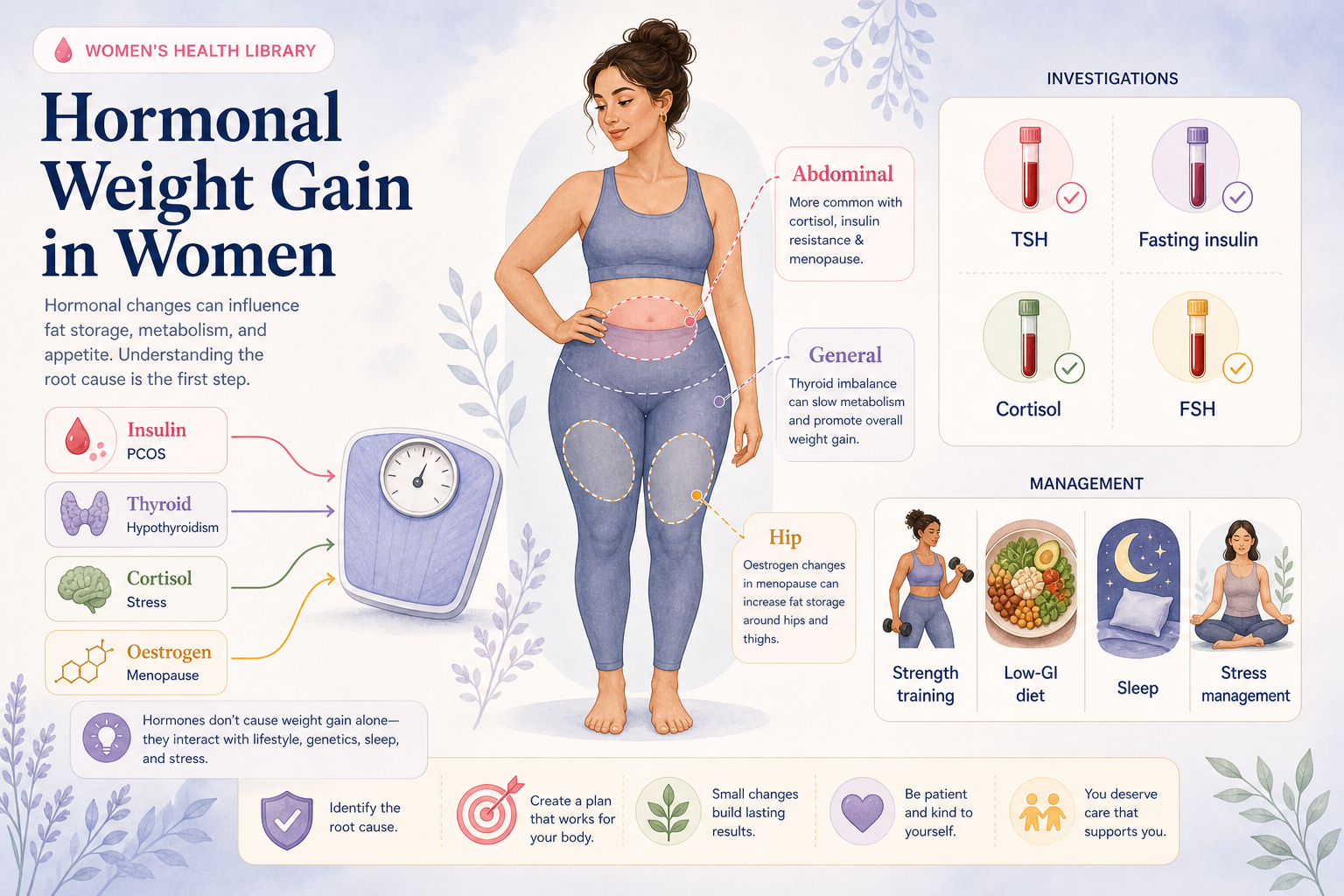
Unexplained weight gain at a glance
If your weight has crept up without an obvious change in how you eat or move, you are not imagining it — and you are certainly not alone. Weight is shaped by far more than willpower: hormones, thyroid function, sleep, stress, medicines, life stage and genetics all play a part. So when the scales climb 'for no reason', it usually means there is a reason worth gently looking for.
This guide takes a kind, body-respectful approach. There is no shaming here, and no crash diets. Bodies naturally change across life — after pregnancy, through busy and stressful years, and especially around the perimenopause transition. A changing body is not a failing.
What helps is curiosity rather than criticism: understanding the common causes (including hormonal ones like PCOS, an underactive thyroid and the menopause transition), supporting your body with steady everyday habits, and knowing when to ask a doctor for simple checks such as a thyroid test. This guide walks through all of that — so you can focus on health and feeling well, not on a single number.
Be kind to yourself first
Unexplained weight gain is common and often has a real, treatable cause. The most useful first step is not self-blame — it's curiosity. Notice the pattern, support your body gently, and ask for the right checks if something doesn't add up.
Ask a Doctor →Useful tools
What Counts as 'Unexplained' Weight Gain?
Weight naturally moves up and down a little from day to day, and gradual changes across life are normal. 'Unexplained' or unintentional weight gain usually means a noticeable, ongoing increase that isn't explained by eating more or moving less — sometimes alongside other changes like tiredness, low mood, irregular periods, or feeling puffy and bloated. When weight gain is sudden, rapid, or comes with other symptoms, it's worth understanding what's behind it rather than simply trying to eat less. The aim isn't a perfect number — it's good health and feeling like yourself.
Patterns are more useful than the scale
How your clothes fit, your energy, your sleep, your mood and your cycle often tell you more than a single weighing. Notice the pattern over weeks, not the number on any one day.
What's worth knowing
It's not a willpower problem
Weight is shaped by hormones, sleep, stress, medicines and genetics — not just effort. Self-blame doesn't help; understanding does.
There's often a real cause
Conditions like an underactive thyroid or PCOS can drive weight gain. Many are easily checked and treatable.
Sleep and stress matter
Broken sleep and ongoing stress (and the cortisol that comes with it) can nudge appetite, cravings and where the body stores weight.
Midlife changes things
Around perimenopause and menopause, shifting hormones often change body shape and how easily weight is gained.
Health, not a number
Steady, nourishing habits and how you feel matter far more than chasing a number on the scale.
Checks can give clarity
If weight gain is sudden or unexplained, simple tests — including thyroid — can help find the reason.
Signs Worth Noticing Alongside Weight Gain
Weight gain rarely travels alone. The symptoms it comes with are often the biggest clue to what's behind it — and what to mention to a doctor. These are grouped roughly by the kind of cause they point toward.
Possible thyroid signs
- Feeling unusually tired or sluggish
- Feeling the cold more than usual
- Dry skin, brittle hair or hair thinning
- Constipation
- Low mood
- Puffiness or fluid retention
Possible hormonal / PCOS signs
- Irregular, infrequent or missed periods
- Acne or oily skin
- Excess hair growth on the face or body
- Difficulty losing weight despite steady effort
- Weight gain concentrated around the middle
Possible stress / sleep signs
- Feeling wired, tense or overwhelmed much of the time
- Strong cravings for sugary or comforting foods
- Trouble falling or staying asleep
- Waking unrefreshed and hungrier the next day
- Energy and appetite swinging through the day
Track while you read
Tick the symptoms that apply to you. This is a self-check, not a diagnosis — saved on this device only.
Jot down what changed and when
A short note on when the weight gain started and any symptoms alongside it — energy, mood, periods, sleep — helps you and your doctor spot the cause far faster.
Common Causes of Weight Gain in Women
Several things can drive weight gain that isn't down to eating more or moving less. Often more than one is at play. Understanding which apply to you points the way to what actually helps — and to which checks are worth asking for.
- PCOS (Polycystic Ovary Syndrome)
- PCOS is a common hormonal condition that can make weight gain easier and weight loss harder, partly through insulin resistance. It often comes with irregular periods, acne or excess hair growth. It's manageable, and addressing it can make weight feel more responsive to everyday changes.
- An underactive thyroid (hypothyroidism)
- The thyroid sets the pace of your metabolism. When it's underactive, things slow down — leading to weight gain (often with fluid retention), tiredness, feeling the cold, dry skin and low mood. It's diagnosed with a simple blood test and is very treatable, which is why a thyroid check is often one of the first things a doctor considers.
- Perimenopause and menopause
- As hormones shift in the years around menopause, many women notice weight gain — particularly around the middle — along with changes in body shape, sleep and mood. This is a normal life transition, not a personal failing, though it can feel frustrating.
- Chronic stress and cortisol
- Ongoing stress keeps the hormone cortisol elevated, which can increase appetite and cravings (especially for sugary, comforting foods) and influence where the body stores fat — often around the abdomen. Stress also disrupts sleep, which compounds the effect.
- Poor or broken sleep
- Too little or poor-quality sleep upsets the hormones that govern hunger and fullness, leaving you hungrier and more drawn to high-energy foods the next day. Disrupted sleep is an under-recognised driver of weight gain.
- Certain medicines
- Some medicines — including certain steroids, some treatments for diabetes, some antidepressants and antipsychotics, and some hormonal contraceptives — can cause weight gain in some people. Never stop a prescribed medicine on your own; if you're concerned, talk to your doctor about it.
- Life stage and everyday changes
- Pregnancy, the months after birth, a less active job or routine, recovering from illness, and the natural shifts of getting older can all change weight. These are normal — and a kind, gradual approach works far better than drastic dieting.
Because weight is shaped by hormones, sleep, stress, medicines and life stage — not just effort — gaining weight is not a sign of weakness or failure. Finding the cause is far more useful than blame.
Addressing the Underlying Cause
The most effective approach isn't a one-size-fits-all diet — it's treating whatever is driving the weight gain, alongside steady, supportive habits. These options are individual and need a doctor's guidance.
- Underactive thyroid
- Diagnosed with a simple blood test and usually treated effectively with thyroid hormone replacement, prescribed and monitored by a doctor. Treating it often improves energy and the symptoms that came with it.
- PCOS
- Managed with a combination of lifestyle support and, where appropriate, medical options a doctor may discuss (such as treatments that improve insulin sensitivity or regulate the cycle). Addressing PCOS can make weight more responsive to everyday changes.
- Perimenopause / menopause
- A doctor can talk through symptom support — including, for some women, menopause-related treatments — and gentle, sustainable habits suited to this life stage. Strength and resistance activity becomes especially valuable here.
- Stress and sleep
- Stress care and protecting sleep are genuine, evidence-based parts of weight and metabolic health — not optional extras. Counselling or talking therapy can help where stress is persistent.
- Medication-related weight gain
- If you think a prescribed medicine is contributing, talk to your doctor — never stop it on your own. They may review the dose or discuss alternatives where suitable.
Treat the cause, support the body
Crash diets rarely work and can backfire. Finding and treating the underlying cause, while supporting your body with steady habits, is kinder and far more effective.
Ask a Doctor →Medicines and hormonal treatments are prescription-only
Thyroid medication, PCOS treatments, menopause-related treatments and any change to an existing prescription must be assessed, prescribed and monitored by a doctor — never started, stopped or adjusted on your own. Avoid unregulated 'weight-loss' pills, slimming teas and crash plans; discuss any supplement with a doctor first, especially during pregnancy or with other health conditions.
Supporting Your Body, Kindly
These everyday habits support health, energy and a comfortable weight — without dieting or punishment. They work best done gently and consistently, with care rather than criticism. The goal is feeling well, not chasing a number.
Eat to nourish, not to punish
- Build balanced plates — vegetables, dal and pulses, whole grains, protein and healthy fats keep you full and energy steady
- Eat regular meals rather than skipping and then over-hungry; this steadies appetite and blood sugar
- Go easy on sugary drinks, refined snacks and very large portions of fried foods — without labelling any food 'bad' or off-limits
- Avoid crash and fad diets; they rarely last and can slow your metabolism and harm your relationship with food
Move in ways you enjoy
- Aim for regular activity you actually like — brisk walking, dancing, cycling, swimming or yoga
- Add some strength or resistance work (bodyweight, bands or weights) — it supports metabolism, bone health and mood, and matters more around midlife
- Build movement into the day: stairs, walking calls, household chores all count
- Consistency beats intensity — gentle, regular movement is more sustainable than punishing workouts
Protect your sleep
- Aim for a consistent sleep and wake time; most adults need around 7–9 hours
- Wind down without screens, in a calm, dark, cool room
- Better sleep helps regulate the hormones that govern hunger and cravings
Care for stress
- Make space for things that calm you — breathing, meditation, prayer, time in nature or with people you love
- Lower the pressure on harder days; rest is part of health, not a reward for it
- If stress feels constant or overwhelming, reaching out for support is a strength, not a weakness
Be kind to your body
- Speak to yourself as you would to a friend — shame and harsh diets rarely lead anywhere good
- Focus on how you feel, your energy and your health markers, not just the scale
- Celebrate non-scale wins: better sleep, steadier mood, more strength, easier breathing on the stairs
A gentle reminder
Your worth is not a number on a scale. Health is about how your body feels and functions — and a kind, patient approach lasts far longer than any crash plan.
When to See a Doctor
It's worth speaking to a doctor — and asking about a thyroid and other relevant checks — if:
- The weight gain is unexplained, sudden or rapid
- It comes with other symptoms — tiredness, feeling cold, low mood, dry skin, hair changes
- Your periods have become irregular, very heavy or stopped
- You think a prescribed medicine may be contributing
- You feel distressed about your weight, or it's affecting your mood or wellbeing
Sudden or rapid weight gain
Especially without any change in how you eat or move
Weight gain with marked tiredness, feeling cold, dry skin or low mood
These can point to an underactive thyroid
Irregular, missed or changed periods with weight gain
May point to PCOS or other hormonal causes
Rapid swelling or fluid retention
Sudden puffiness or swelling in the legs, ankles or abdomen needs prompt review
Weight gain after starting a new medicine
So your doctor can review it — don't stop it on your own
Don't wait if it's sudden or worrying
Rapid weight gain, sudden swelling or fluid retention, or weight gain alongside breathlessness should be checked promptly. A simple set of tests — including thyroid — can often explain what's going on and point to treatment.
Ask a Doctor →Continue learning

Frequently Asked Questions
Why am I gaining weight without changing how I eat or move?
Weight is shaped by far more than diet and exercise. Hormonal conditions like PCOS or an underactive thyroid, the perimenopause transition, ongoing stress, poor sleep and certain medicines can all cause weight gain. If it's unexplained or sudden, it's worth asking a doctor for simple checks, including a thyroid test.
Can a thyroid problem cause weight gain?
Yes. An underactive thyroid (hypothyroidism) slows your metabolism and can cause weight gain — often with tiredness, feeling cold, dry skin and low mood. It's diagnosed with a simple blood test and is very treatable, which is why a thyroid check is often one of the first things a doctor considers.
Does stress really make you gain weight?
It can. Ongoing stress keeps the hormone cortisol elevated, which can increase appetite and cravings — especially for sugary, comforting foods — and influence where the body stores fat. Stress also disrupts sleep, which adds to the effect. Caring for stress and sleep is a real part of weight health.
Why is it harder to manage weight around menopause?
As hormones shift in the years around menopause, many women notice weight gain — particularly around the middle — along with changes in body shape, sleep and mood. This is a normal life transition. Steady habits, including strength and resistance activity, become especially helpful at this stage.
Should I go on a crash diet to lose the weight quickly?
Crash and fad diets rarely work in the long run and can backfire — slowing your metabolism, harming your relationship with food, and often leading to regaining the weight. A kinder, more effective path is to find any underlying cause and support your body with steady, nourishing habits.
Can my contraception or other medicine cause weight gain?
Some medicines — including certain steroids, some diabetes and mental-health treatments, and some hormonal contraceptives — can contribute to weight gain in some people. If you think a medicine is involved, talk to your doctor; never stop a prescribed medicine on your own.
Was this guide helpful?
Understand your cycle better with ParentVibes
- Track your period dates
- Predict your next cycle
- Understand your fertile window
- Save health notes
- Get gentle reminders
Related tools
Period Tracker
Log periods and learn your personal cycle pattern.
Open tool
Ovulation Calculator
Estimate your ovulation date and fertile window.
Open tool
Fertility Window
See your most fertile days for trying to conceive.
Open tool
Pregnancy Tracker
Follow your pregnancy week by week once you conceive.
Open tool
Due Date Calculator
Estimate your baby's due date from your last period.
Open toolShare this guide with someone who needs it 💛
Medical review
- Last reviewed
- June 2026
- Medical reviewer
- Dr. Vinika G.
- Next review due
- June 2027
- Status
- Medically reviewed by Dr. Vinika G.
References
This article is for general information and education only and is not a substitute for professional medical advice, diagnosis, or treatment. Always consult a qualified doctor or gynaecologist about unexplained, sudden or rapid weight gain, especially when it comes with other symptoms — and before starting any treatment, diet or supplement. Thyroid medication, hormonal treatments and any change to an existing prescription must be prescribed and monitored by a doctor; never stop a prescribed medicine on your own. Avoid unregulated weight-loss products and crash diets. If weight or body image is causing significant distress, please reach out to a doctor or mental-health professional — support is available. Content reviewed against guidance from the NHS, the WHO, ACOG and MedlinePlus.
Women's Health Library journey
100%Related guides
Free resources
Start here
Your journey with ParentVibes
From your first period to your baby's vaccinations — one continuous, supported path.
Understand your cycle
Know your phases, hormones and what's normal.
Track your period
Log periods and learn your personal pattern.
Understand ovulation
Find your fertile window with the calculator.
Plan pregnancy
A calm, step-by-step start to trying to conceive.
Week-by-week pregnancy
Follow every week once you conceive.
Baby milestones
Track growth and development month by month.
Vaccination tracker
Stay on schedule and never miss a vaccine.
Medical disclaimer
This article is for educational purposes only and does not replace medical advice. If you have severe pain, heavy bleeding, missed periods, or unusual symptoms, please consult a qualified healthcare provider.