
ParentVibes
Women's Health Library · parentvibes.in
Heavy Periods (Menorrhagia): Causes, Treatment & When to Worry
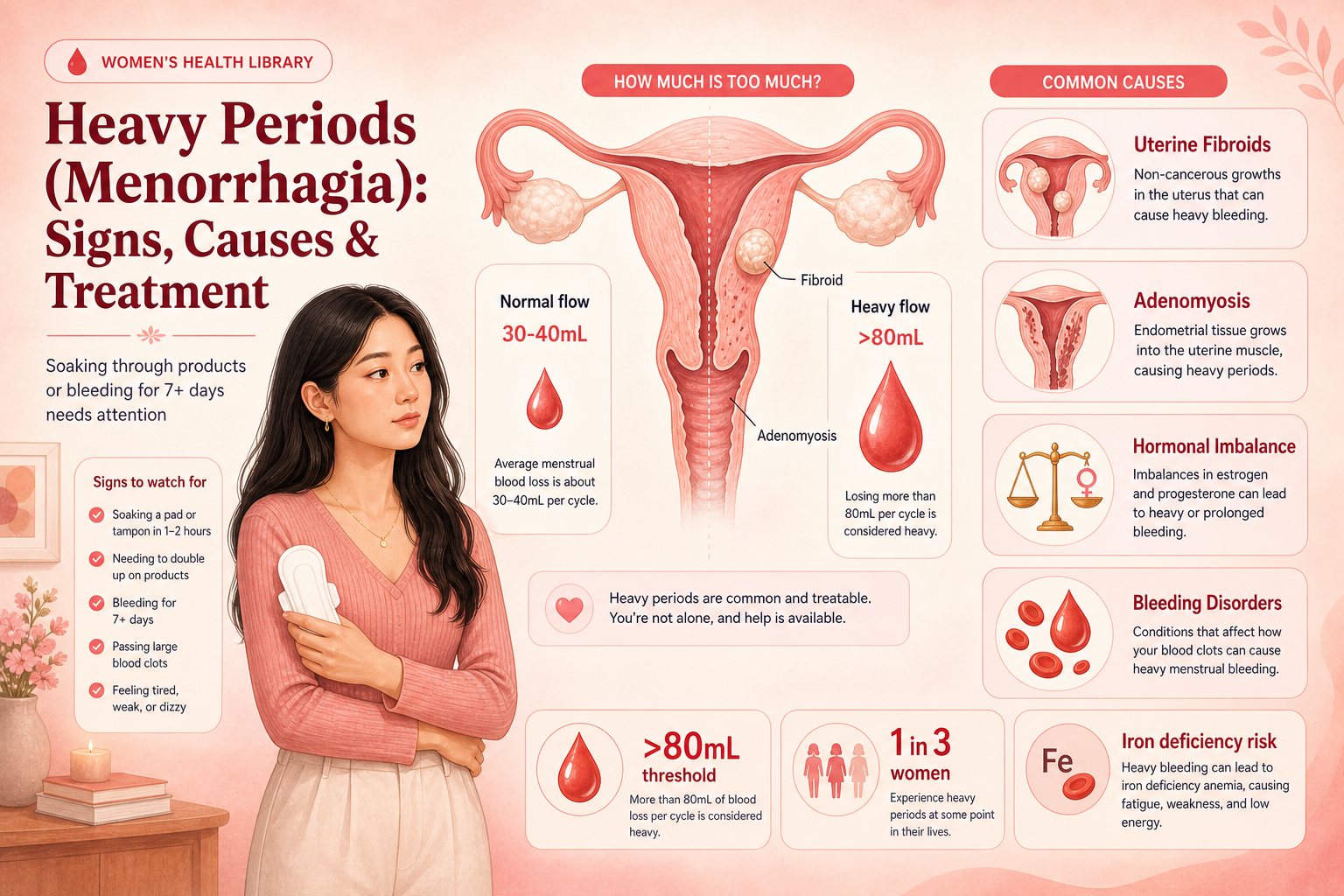
Quick Facts
A period is considered heavy when the bleeding is enough to disrupt your daily life — you're changing pads or tampons very often, doubling up on protection, passing large clots, leaking through onto clothes or bedding, or feeling worn out. The medical name is menorrhagia, also called heavy menstrual bleeding.
Normal menstrual blood loss is roughly 20–80 ml over a whole period, but you'll never measure this at home — and you don't need to. What matters is the impact on you. Many people lose more than they realise and assume it's just how their periods are, when in fact it can be reduced.
Heavy periods are common and usually treatable. Sometimes there's no specific underlying cause; other times it's due to conditions like fibroids, polyps, adenomyosis, hormonal imbalance (including PCOS), thyroid problems, or a bleeding disorder. This guide explains what counts as heavy, why it happens, how it's diagnosed, and the treatments that genuinely help.
Track your flow
Logging how often you change protection, how long bleeding lasts, and any clots in the ParentVibes Period Tracker gives you and your doctor a clear picture of what's really happening.
Track your period →Things worth knowing
It's measured by impact, not millilitres
You won't measure blood loss at home — what matters is whether it's disrupting your life.
Hourly soaking is a flag
Needing to change a pad or tampon every hour for several hours is a sign of heavy bleeding.
Big clots matter
Passing clots larger than a 2-rupee coin is one of the common signs of heavy periods.
Tiredness can be anaemia
Heavy periods are a leading cause of low iron — breathlessness and fatigue deserve a blood test.
It's very treatable
Tranexamic acid, NSAIDs and hormonal options can dramatically reduce bleeding.
Tracking helps your doctor
Logging how often you change protection and how long periods last shows the real picture.
What Counts as Heavy vs Normal
Since you can't measure blood loss at home, doctors judge heaviness by everyday signs:
| Typical / normal | Possibly heavy (worth checking) | |
|---|---|---|
| Blood loss | About 20–80 ml across the whole period | More than 80 ml — but you won't measure this; go by the signs below |
| Changing protection | Every few hours; not waking at night to change | Soaking a pad or tampon every hour for several hours in a row |
| Clots | Small clots, especially on heavier days, are normal | Passing clots larger than a 2-rupee coin |
| Protection | One pad or tampon at a time is enough | Doubling up (e.g. pad plus tampon) to control flow |
| Leaks and nights | Rarely leaks; sleeps through without changing | Flooding through clothes or bedding, or waking to change protection |
| Duration | Bleeding lasts about 2–7 days | Bleeding regularly lasting longer than 7 days |
| How you feel | Periods don't stop you doing normal activities | Tiredness, breathlessness, or planning life around your period |
It's about impact
There's no single 'normal' — what counts is whether the bleeding is disrupting your life or affecting your health. If you're restricting activities, doubling up on protection, or feeling drained, that's worth a doctor's review.
Heavy periods are a common cause of iron-deficiency anaemia. If you also feel unusually tired, breathless, dizzy or look pale, ask about a blood test (full blood count and ferritin).
Symptoms
Heavy bleeding shows up in everyday ways, and may bring symptoms of low iron.
Signs your period may be heavy
- Soaking through one or more pads or tampons every hour for several hours
- Needing to change protection during the night
- Doubling up on protection (e.g. a pad plus a tampon)
- Passing blood clots larger than a 2-rupee coin
- Bleeding through to clothes or bedding (flooding)
- Periods lasting longer than 7 days
- Planning daily activities around your flow
Symptoms of anaemia from blood loss (get checked)
- Unusual tiredness or low energy
- Breathlessness, especially on exertion
- Looking pale, dizziness or light-headedness
- Fast or pounding heartbeat
- Headaches
Track while you read
Tick the symptoms that apply to you. This is a self-check, not a diagnosis — saved on this device only.
Unticked boxes are worth a doctor's review — Ask a Doctor on ParentVibes can help you decide what to do next.
Causes
Sometimes no specific cause is found, and the bleeding can still be treated. Often, though, there's an underlying reason worth identifying:
- Fibroids
- Non-cancerous growths in or on the wall of the womb — a very common cause of heavy and prolonged bleeding.
- Polyps
- Small, usually non-cancerous growths in the lining of the womb or cervix that can cause heavier or irregular bleeding.
- Adenomyosis
- Womb-lining tissue growing into the muscle wall of the uterus, often causing heavy, painful periods.
- Hormonal imbalance (including PCOS)
- When ovulation is irregular — as in PCOS or around the start of periods and the menopause transition — the lining can build up and shed heavily.
- Thyroid problems
- An underactive thyroid (hypothyroidism) can be associated with heavier periods.
- Bleeding disorders
- Conditions that affect blood clotting (such as von Willebrand disease) can cause heavy bleeding, especially if periods have been heavy since they first started.
- IUD (copper coil)
- A non-hormonal copper IUD can make periods heavier, particularly in the first few months after fitting.
- Medicines and other conditions
- Blood-thinning medicines, pelvic infection, and (rarely) pre-cancerous or cancerous changes of the womb can cause heavy or abnormal bleeding — which is why new or changing heavy bleeding should be assessed.
In many people no single cause is found — this is sometimes called dysfunctional or idiopathic heavy bleeding, and it still responds well to treatment.
Diagnosis
A doctor works out how heavy the bleeding really is and looks for any underlying cause through your history, an exam, and tests.
History and examination
- History — how often you change protection, clots, flooding, how many days you bleed, cycle length, pain, bleeding between periods or after sex, and any symptoms of anaemia
- Family and bleeding history — heavy periods since they first started, easy bruising or bleeding may point to a clotting disorder
- Examination — an abdominal and, where appropriate, a pelvic exam
Blood tests
- Full blood count (CBC)
- Checks for anaemia caused by blood loss.
- Ferritin / iron studies
- Measures iron stores, which heavy bleeding can deplete even before anaemia shows.
- Thyroid function
- Checks for an underactive thyroid if it's suspected.
- Clotting tests
- Considered if a bleeding disorder is suspected (e.g. heavy bleeding since the very first period).
Imaging and further tests
- Pelvic ultrasound — to look for fibroids, polyps or adenomyosis (often transabdominal for unmarried women in India, per comfort and clinician judgment)
- Sometimes a hysteroscopy (a thin camera to view inside the womb) or a small sample of the womb lining (biopsy), especially with risk factors or persistent abnormal bleeding
Tracking your cycle and flow before the appointment makes diagnosis quicker — bring a record of how often you change protection and how long bleeding lasts.
Treatment
Treatment aims to reduce bleeding, correct any anaemia, and address the cause. Several options work well, and the choice depends on the cause, your symptoms, and whether you want contraception or to conceive.
- Tranexamic acid
- A non-hormonal tablet taken only during your period that can substantially reduce blood loss by helping the blood clot. It doesn't affect fertility or your cycle.
- NSAIDs (e.g. mefenamic acid, ibuprofen)
- Taken during the period, these can reduce both bleeding and cramps by lowering prostaglandins — useful when heavy periods are also painful (only if safe for you).
- Hormonal IUS (e.g. Mirena)
- A progestogen-releasing intrauterine system is one of the most effective treatments for heavy periods, thinning the womb lining so bleeding becomes much lighter. It also provides contraception.
- Combined pill or other hormonal options
- The combined oral contraceptive pill or cyclical progestogen tablets can regulate and lighten periods.
- Iron for anaemia
- If blood tests show low iron or anaemia, your doctor may advise iron supplements and iron-rich foods to rebuild your stores alongside treating the bleeding.
- Treating the underlying cause
- Fibroids, polyps, adenomyosis, thyroid disease or a bleeding disorder are treated directly — which may include procedures or specialist referral. Surgery (such as removing a fibroid or polyp, or endometrial ablation) is considered when medicines don't help.
Keep a flow record
The ParentVibes Period Tracker helps you log how heavy each period is, so you and your doctor can see whether treatment is working.
Open Period Tracker →Use medicines safely
Tranexamic acid, hormonal treatments and iron supplements should be used only as advised by a doctor — they aren't suitable for everyone, and the right choice depends on the cause and your health. Never start, stop or change treatment without medical advice.
Home Care
Self-care can't fix an underlying cause, but it helps you cope and protects against low iron while you get assessed:
Managing heavy days
- Use the right protection — higher-absorbency pads, period pants or a menstrual cup, and change regularly
- Track your flow so you can plan around your heaviest days and show your doctor the pattern
- Take NSAIDs for pain only as directed, and only if they're safe for you
- Rest when you need to — heavy bleeding can be genuinely tiring
- Keep a small kit of spare protection and a change of clothes for flooding days
Protecting your iron
- Eat iron-rich foods — leafy greens, dals and beans, jaggery, eggs, and lean meat or fish if you eat them
- Pair plant iron with vitamin C (lemon, amla, citrus, tomato) to absorb it better
- Take iron supplements only if your doctor advises, based on your blood results
- Stay hydrated, especially on heavy days
If you're regularly soaking through protection, passing large clots, or feeling drained and breathless, home care isn't enough — see a doctor for tests and treatment.
When to See a Doctor
See a doctor if:
- Your periods are heavy enough to disrupt your daily life
- You soak through pads or tampons every hour for several hours, or need to change at night
- You pass clots larger than a 2-rupee coin, or have to double up on protection
- Your periods regularly last longer than 7 days
- You feel tired, breathless, dizzy or look pale (possible anaemia)
- Heavy bleeding is new, getting worse, or started after the menopause
- You bleed between periods, after sex, or after the menopause
Seek urgent care
Get same-day or emergency help if you are flooding or soaking through a pad or tampon every hour for several hours and it isn't stopping, you feel faint, dizzy or your heart is racing, you have severe pelvic pain, or you have signs of significant blood loss. These need immediate assessment.
Continue learning

Frequently Asked Questions
What counts as a heavy period?
A period is heavy if the bleeding disrupts your life — for example soaking a pad or tampon every hour for several hours, passing clots bigger than a 2-rupee coin, needing to double up on protection, flooding through clothes, or bleeding longer than 7 days. Normal blood loss is about 20–80 ml, but you won't measure this at home; go by the impact on you.
Are blood clots during my period normal?
Small clots, especially on the heaviest days, are usually normal. Passing clots larger than a 2-rupee coin, or lots of large clots, can be a sign of heavy bleeding and is worth discussing with a doctor.
Can heavy periods make me anaemic?
Yes. Heavy periods are one of the most common causes of iron-deficiency anaemia. If you feel unusually tired, breathless, dizzy or look pale, ask your doctor for a full blood count and ferritin (iron) test.
What causes heavy periods?
Common causes include fibroids, polyps, adenomyosis, hormonal imbalance such as PCOS, thyroid problems, bleeding disorders, and a copper IUD. Sometimes no specific cause is found — and it can still be treated effectively.
How are heavy periods treated?
Options include tranexamic acid (a non-hormonal tablet taken during your period), NSAIDs, hormonal treatments such as the hormonal IUS or the combined pill, iron for anaemia, and treating any underlying cause. A doctor will help you choose based on the cause and whether you want contraception or to conceive.
Can I stop a heavy period quickly?
Tranexamic acid and NSAIDs taken during the period can reduce flow, but they need a doctor's or pharmacist's advice. If you're flooding, soaking through protection every hour and it won't stop, or feel faint, seek urgent care rather than trying to manage it at home.
Will heavy periods go away on their own?
Sometimes heavy bleeding around the start of periods or the menopause transition settles by itself, but you shouldn't assume it will. Persistent heavy periods deserve assessment, because the cause is often treatable and untreated bleeding can lead to anaemia.
Was this guide helpful?
Understand your cycle better with ParentVibes
- Track your period dates
- Predict your next cycle
- Understand your fertile window
- Save health notes
- Get gentle reminders
Related tools
Period Tracker
Log periods and learn your personal cycle pattern.
Open tool
Ovulation Calculator
Estimate your ovulation date and fertile window.
Open tool
Fertility Window
See your most fertile days for trying to conceive.
Open tool
Pregnancy Tracker
Follow your pregnancy week by week once you conceive.
Open tool
Due Date Calculator
Estimate your baby's due date from your last period.
Open toolShare this guide with someone who needs it 💛
Medical review
- Last reviewed
- June 2026
- Medical reviewer
- Dr. Vinika G.
- Next review due
- June 2027
- Status
- Medically reviewed by Dr. Vinika G.
This article is for general information and education only and is not a substitute for professional medical advice, diagnosis, or treatment. New, worsening, or very heavy menstrual bleeding — and any bleeding after the menopause — should be assessed by a doctor. Always consult a qualified doctor or pharmacist before taking any medicine, and before starting, stopping, or changing any treatment. In a medical emergency, or if bleeding is uncontrollable or you feel faint, contact your doctor or local emergency services immediately. Content reviewed against guidance from ACOG, the NHS, and the WHO.
Women's Health Library journey
100%Related guides
Free resources
Start here
Your journey with ParentVibes
From your first period to your baby's vaccinations — one continuous, supported path.
Understand your cycle
Know your phases, hormones and what's normal.
Track your period
Log periods and learn your personal pattern.
Understand ovulation
Find your fertile window with the calculator.
Plan pregnancy
A calm, step-by-step start to trying to conceive.
Week-by-week pregnancy
Follow every week once you conceive.
Baby milestones
Track growth and development month by month.
Vaccination tracker
Stay on schedule and never miss a vaccine.
Medical disclaimer
This article is for educational purposes only and does not replace medical advice. If you have severe pain, heavy bleeding, missed periods, or unusual symptoms, please consult a qualified healthcare provider.