
ParentVibes
Women's Health Library · parentvibes.in
PMDD (Premenstrual Dysphoric Disorder): Symptoms, Causes, Diagnosis & Support
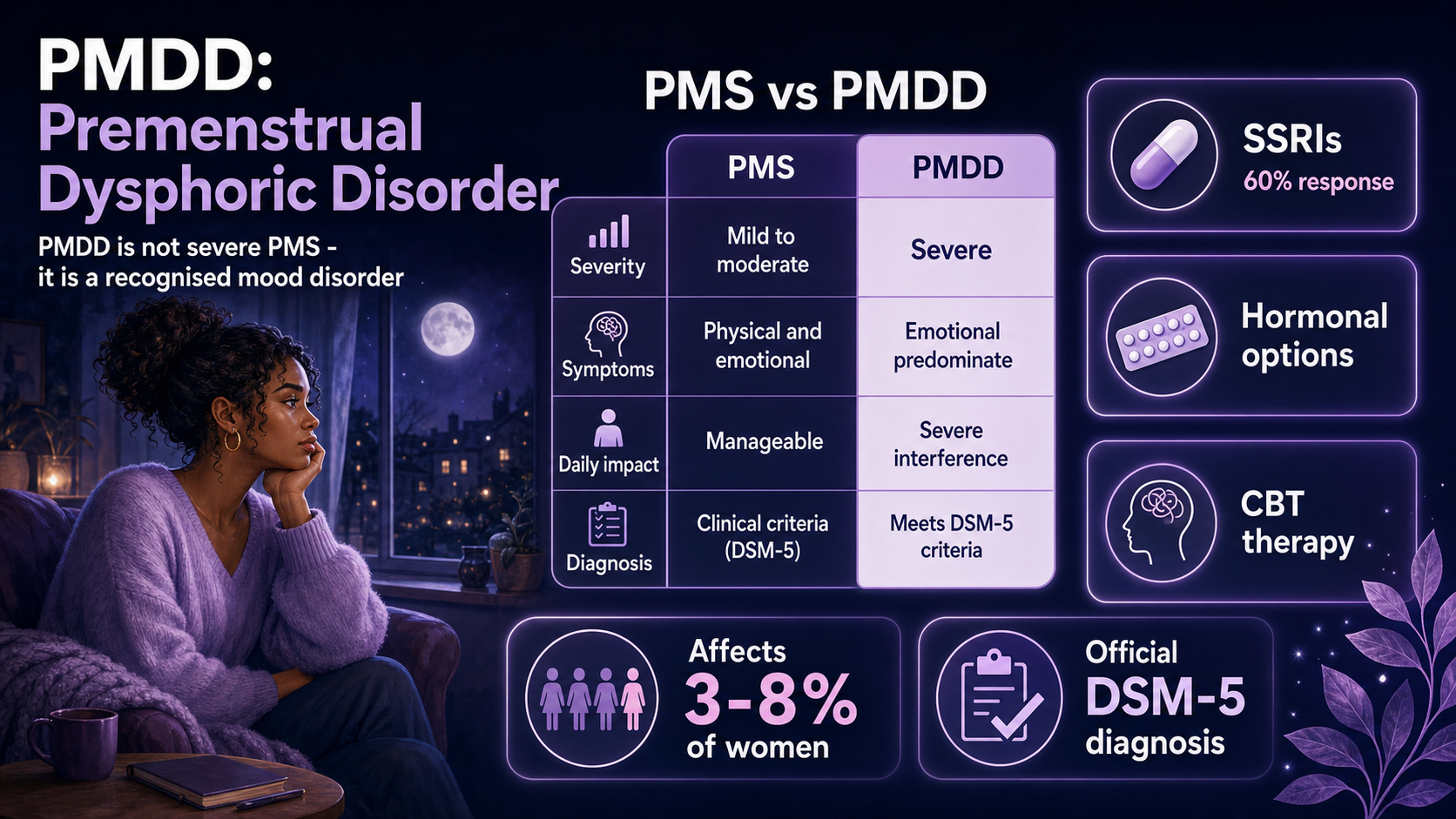
Quick Facts
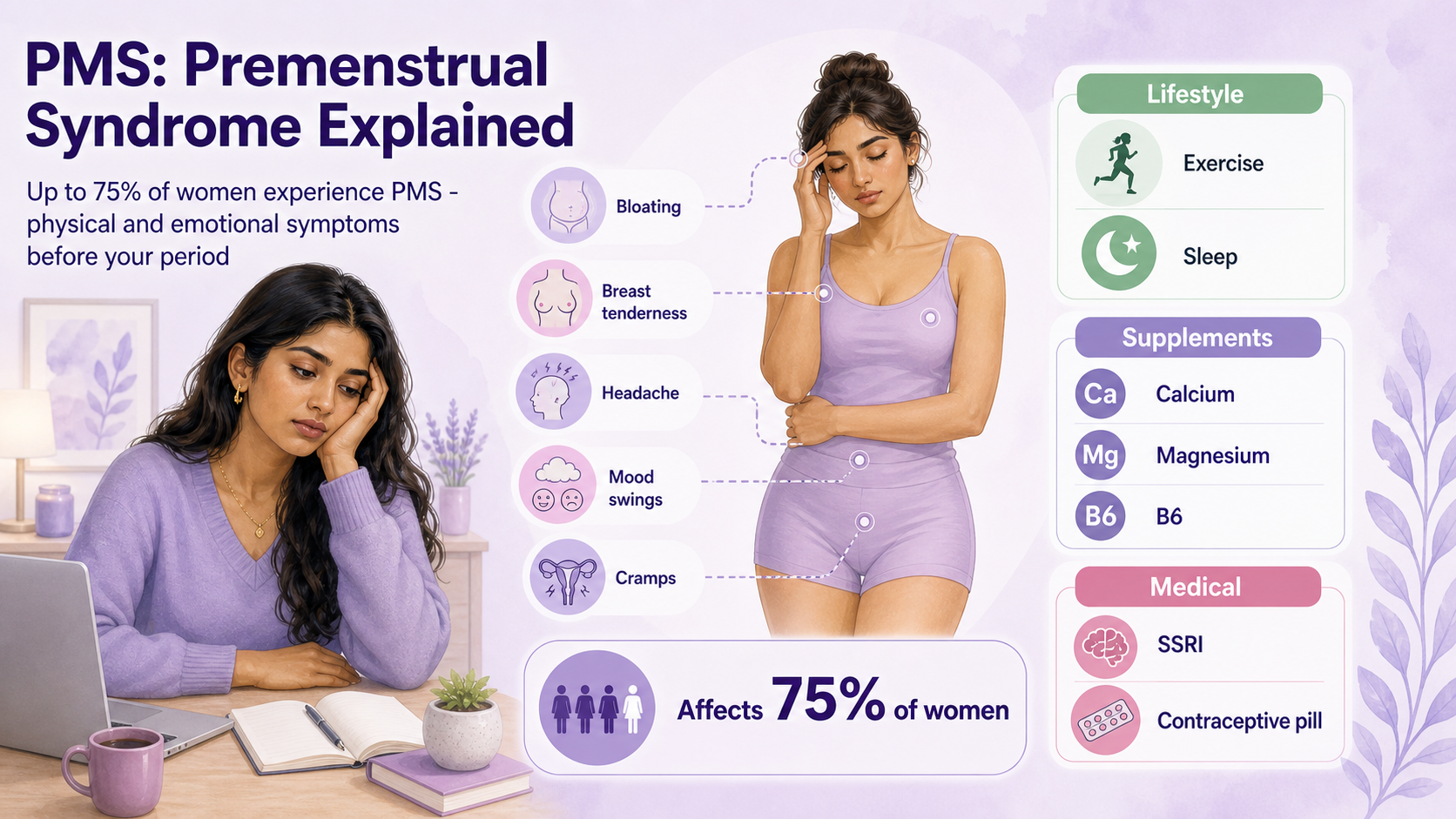
Most people who menstruate notice some changes in mood, energy or comfort before their period — that's premenstrual syndrome (PMS), and it's very common. But for a smaller group, these premenstrual symptoms are severe: intense enough to disrupt work, study, relationships and everyday life. This is PMDD — premenstrual dysphoric disorder.
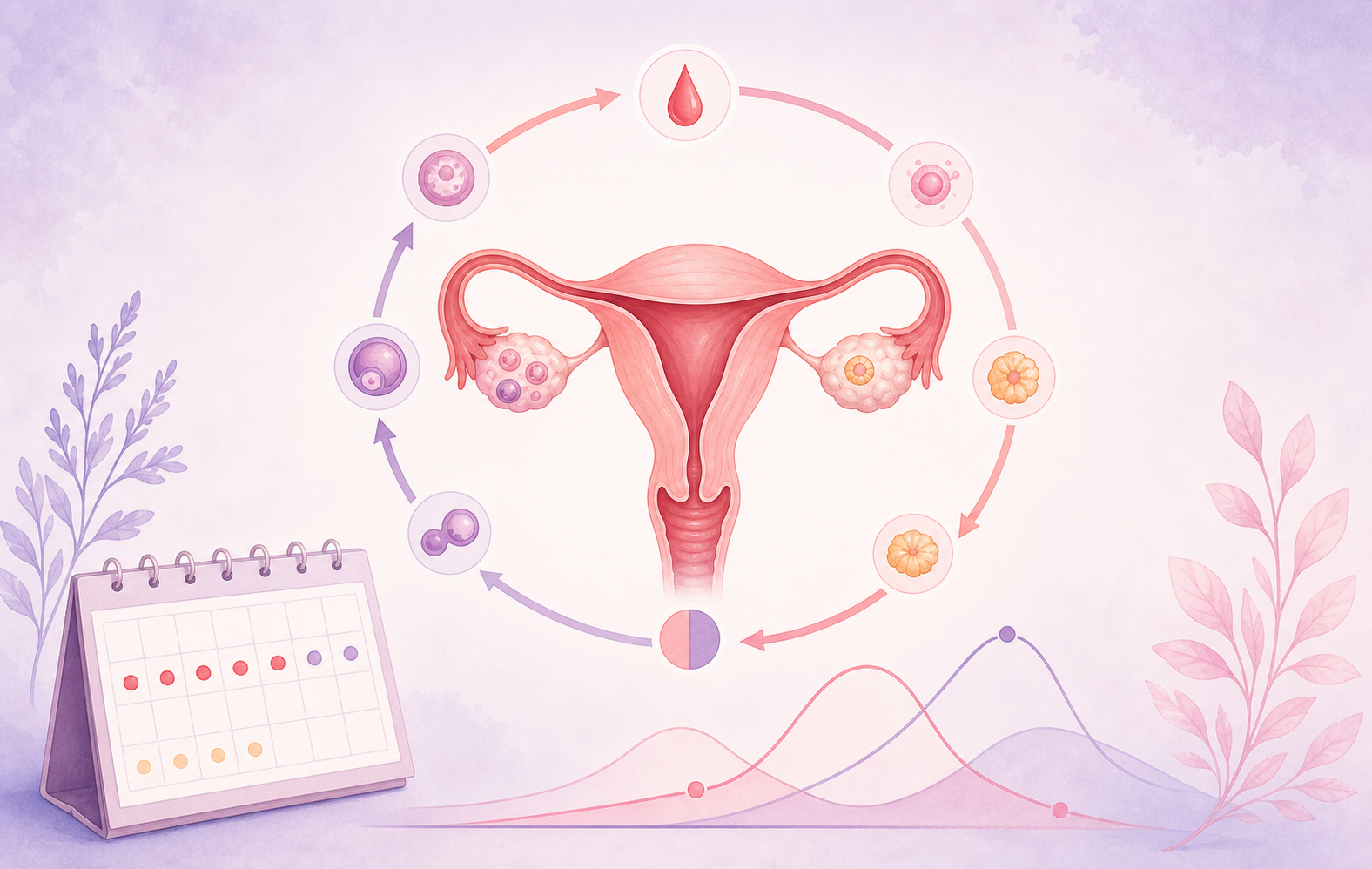
PMDD affects an estimated 2–5% of women of reproductive age. Its hallmark is timing: symptoms appear in the week or two before a period (the luteal phase) and then ease within a few days of the period starting. That cyclical, predictable pattern is what sets PMDD apart, and it's also what makes it recognisable and treatable.
If this sounds like you, please know two things. First, PMDD is a real, recognised medical condition — not "being too sensitive" or "making a fuss." Second, it responds well to treatment. This guide explains how PMDD differs from PMS, what the symptoms and causes are, how it's diagnosed, and the support options that genuinely help. If you're struggling, you're not alone — and help is available.
You deserve support
If the days before your period feel overwhelming, you don't have to manage it alone. The ParentVibes Ask a Doctor feature can help you take a first step toward the right care.
Ask a Doctor →PMDD at a Glance
Cyclical by nature
Symptoms reliably follow the cycle — building before the period, lifting after it starts.
It's real
PMDD is a recognised condition, not a character flaw or an overreaction.
Sensitivity, not excess
It's linked to a heightened sensitivity to normal hormone shifts, not abnormal hormone levels.
Tracking is key
Diagnosis relies on rating symptoms daily across at least two cycles.
Very treatable
Medication, therapy and lifestyle steps help most people feel meaningfully better.
You're not alone
Support exists — and reaching out is a strong, healthy step.
PMS vs PMDD — What's the Difference?
PMS and PMDD share the same cyclical timing, but they differ in severity and impact. PMS is uncomfortable yet manageable; PMDD is severe enough to disrupt daily life. Understanding the difference helps you respond with self-compassion and seek the right support.
| PMS (premenstrual syndrome) | PMDD (premenstrual dysphoric disorder) | |
|---|---|---|
| How common | Very common — most people who menstruate notice some symptoms | An estimated 2–5% of women of reproductive age |
| Severity | Mild to moderate; uncomfortable but manageable | Severe; markedly affects mood and functioning |
| Main symptoms | Bloating, breast tenderness, irritability, mild mood changes | Intense low mood, anxiety, anger, feeling overwhelmed or out of control |
| Impact on life | Generally doesn't stop daily activities | Disrupts work, study, relationships and daily life |
| Timing | Before the period, easing as it starts | The 1–2 weeks before the period, lifting within days of it starting |
| Treatment | Lifestyle measures often help; sometimes medical support | Usually needs medical treatment (e.g. SSRIs, hormonal options) plus support |
The key difference is impact
Both follow the cycle, but PMDD symptoms are severe and reliably interfere with daily life — and they consistently appear premenstrually and ease after the period begins. That predictable, disruptive pattern is the signal to seek assessment.
Symptoms of PMDD
PMDD symptoms appear in the luteal phase (the 1–2 weeks before a period) and ease soon after the period starts. They include emotional, physical and behavioural changes — at least one of which is a strong mood symptom.
Emotional & mood symptoms
- Marked low mood, sadness or feelings of hopelessness
- Strong anxiety, tension or feeling "on edge"
- Noticeable irritability, anger or increased conflict with others
- Mood swings, sudden tearfulness or feeling overwhelmed
- Feeling out of control or unable to cope
- Loss of interest in usual activities, work or relationships
Physical & behavioural symptoms
- Trouble concentrating or feeling mentally foggy
- Tiredness, low energy or feeling drained
- Sleep changes — sleeping too much or too little
- Appetite changes or food cravings
- Bloating, breast tenderness, headaches or joint and muscle aches
- Feeling withdrawn or wanting to avoid people
Track while you read
Tick the symptoms that apply to you. This is a self-check, not a diagnosis — saved on this device only.
Please read — if you ever feel unsafe
PMDD can sometimes bring very dark thoughts, including thoughts of self-harm, especially in the days before a period. If you ever have thoughts of harming yourself or feel unable to stay safe, please reach out right away — to someone you trust, a mental-health professional, your local emergency services, or India's Tele-MANAS helpline on 14416 (or 1-800-891-4416), available 24/7. These feelings are part of a treatable condition, not the truth about your future. You deserve immediate support, and help is available.
What Causes PMDD?
PMDD is not caused by abnormal hormone levels. In PMDD, hormone levels are usually normal — but the brain appears to be unusually sensitive to the natural rise and fall of hormones across the menstrual cycle. This heightened sensitivity is thought to affect brain chemicals that regulate mood. Several factors are involved:
- Sensitivity to normal hormone shifts
- The key factor: in PMDD the body's normal cyclical changes in oestrogen and progesterone trigger an exaggerated response in the brain — even though the hormone levels themselves are normal.
- Serotonin and brain chemistry
- These hormone shifts are thought to affect serotonin, a brain chemical involved in mood, sleep and appetite. This helps explain why medicines that act on serotonin (SSRIs) can help.
- Genetics and individual biology
- Some people are simply more biologically sensitive to these changes, and a personal or family history of mood difficulties can play a part.
- Stress and life factors
- High stress and a history of difficult experiences can make symptoms feel harder to manage, though they don't "cause" PMDD.
This matters: PMDD is a real biological response to normal hormone changes — not a personal weakness or something you can simply "think your way out of." Understanding the cause is the first step toward effective treatment.
How PMDD Is Diagnosed
There's no single blood test for PMDD. Because the timing of symptoms is everything, diagnosis depends on tracking how you feel day by day — and on ruling out other conditions that can look similar.
Prospective daily symptom tracking
- Rate your symptoms (mood, energy, physical changes) each day, ideally using a simple daily chart
- Track for at least two consecutive cycles — this "prospective" record is the cornerstone of diagnosis
- PMDD is confirmed when symptoms reliably appear in the luteal phase (before the period) and clearly ease within a few days of it starting
- A clear symptom-free stretch after the period each cycle is a key feature
Ruling out other conditions
- Depression or anxiety that is present all month (not just premenstrually) — these can also worsen before a period
- Thyroid problems, anaemia or other conditions that affect mood and energy (simple tests may be done)
- PMS, which shares the timing but is milder and less disruptive than PMDD
- Premenstrual worsening of an existing condition, which is treated differently
Your ParentVibes period and mood logs make excellent prospective records to share at your appointment — they can save weeks and help your doctor reach a clear answer sooner.
Treatment & Support Options
PMDD is very treatable. Care is tailored to you and usually combines medical treatment with therapy and lifestyle support. All medicines below must be discussed with, prescribed by, and monitored by a doctor — they are never started or stopped on your own.
- SSRIs (first-line medication)
- Selective serotonin reuptake inhibitors are the first-line, evidence-based medical treatment for PMDD. A doctor may prescribe them every day, or only during the luteal phase (luteal-phase dosing — taken in the second half of the cycle). They often help mood symptoms quickly. Prescribed and monitored by a doctor.
- Combined hormonal contraception
- The combined oral contraceptive pill can help some people by steadying hormone fluctuations, particularly certain formulations. Suitability is assessed individually by a doctor.
- Cognitive behavioural therapy (CBT) & talking therapy
- CBT and other talking therapies help you understand patterns, build coping strategies and reduce distress — effective on their own or alongside medication.
- Lifestyle & self-care
- Regular movement, balanced meals, good sleep, stress management and reduced caffeine and alcohol can ease symptoms and support other treatments. Best used alongside, not instead of, professional care when symptoms are severe.
- Specialist options for severe PMDD
- For severe PMDD that hasn't responded to other treatments, a specialist may discuss further hormonal approaches. These are individualised, less common, and always doctor-led.
The most important step is reaching out
A GP, gynaecologist or mental-health professional can help you find the right combination of treatments. Ask a Doctor on ParentVibes can help you begin the conversation.
Ask a Doctor →Medication is prescription-only and individual
SSRIs, the contraceptive pill and any hormonal treatment must be assessed, prescribed and monitored by a doctor — never started, changed or stopped on your own. What works varies from person to person, and finding the right plan can take a little time. Talking therapy and lifestyle steps are safe first measures for everyone.
Looking After Yourself at Home
These everyday steps can ease PMDD symptoms and support medical treatment — they work best alongside, not instead of, professional help when symptoms are severe:
Plan around your cycle
- Track your cycle so you can anticipate the harder days and plan lighter commitments around them
- Be gentle with yourself premenstrually — adjust expectations and allow more rest
- Tell a trusted person what to expect so they can support you during the luteal phase
Daily habits that help
- Regular movement — a daily walk, gentle yoga or any activity you enjoy can lift mood
- Balanced, regular meals — fibre, protein and healthy fats help steady energy and mood
- Limit caffeine, alcohol and excess sugar, especially in the second half of your cycle
- Protect your sleep with a consistent routine — poor sleep strongly affects mood
- Practise stress care — breathing exercises, meditation, time in nature or hobbies
Stay connected
- Talk to trusted friends, family or a support community — reducing isolation really helps
- Practise self-compassion: PMDD is a condition, not a fault, and harder days will pass
- Note what helps each cycle, so you build a personal toolkit over time
A note on coping
Healthy coping builds you up. Please avoid anything that harms you. If you ever feel the urge to cope in harmful ways, reach out to a professional or someone you trust — support is available and you deserve it.
When to See a Doctor
Please reach out to a doctor or mental-health professional if:
- Premenstrual symptoms are severe and disrupt your work, study, relationships or daily life
- You notice intense low mood, anxiety or anger in the days before your period, easing afterwards
- Symptoms follow your cycle and have happened across more than one month
- Self-care steps aren't enough on their own
- You feel unable to cope, or that you need support
Please seek help right away
If you have thoughts of harming yourself or feel unable to stay safe, reach out now — to someone you trust, a mental-health professional, your local emergency services, or India's Tele-MANAS helpline on 14416 (or 1-800-891-4416), available 24/7. PMDD-related thoughts can feel very real but are part of a treatable condition. You are not alone, and immediate support is available.
Continue learning
Frequently Asked Questions
Is PMDD a real medical condition?
Yes. PMDD (premenstrual dysphoric disorder) is a recognised condition with a real biological basis — it's linked to the brain's heightened sensitivity to normal hormone changes. It is not "being dramatic," and it affects an estimated 2–5% of women of reproductive age.
What's the difference between PMS and PMDD?
Both follow the cycle, but PMS is mild to moderate and manageable, while PMDD is severe — with intense mood symptoms that significantly disrupt daily life. PMDD symptoms appear premenstrually and ease within days of the period starting, and they usually need medical treatment.
How is PMDD diagnosed?
There's no single blood test. Diagnosis relies on rating your symptoms daily across at least two cycles to confirm the cyclical pattern, plus ruling out other conditions such as depression, anxiety or thyroid problems that can look similar.
Can PMDD be treated?
Yes — PMDD responds well to treatment. Options include SSRIs (the first-line medication, sometimes taken only in the luteal phase), the combined contraceptive pill, CBT and talking therapy, and lifestyle measures. All medicines are prescribed and monitored by a doctor, and most people improve with the right plan.
Are antidepressants (SSRIs) safe for PMDD, and can I take them only part of the month?
For many people, yes — SSRIs are a well-established treatment for PMDD and a doctor may prescribe them daily or only during the second half of the cycle (luteal-phase dosing). They must be prescribed and monitored by a doctor, who will discuss benefits, side effects and what's right for you.
What can I do at home to help with PMDD?
Tracking your cycle to anticipate harder days, regular movement, balanced meals, good sleep, stress care, limiting caffeine and alcohol, and staying connected all help. These work best alongside professional care when symptoms are severe.
Will PMDD go away on its own?
PMDD tends to continue through the reproductive years and often eases after menopause, but it doesn't usually resolve on its own in the meantime. The good news is that effective treatment is available — you don't have to wait it out alone.
Was this guide helpful?
Understand your cycle better with ParentVibes
- Track your period dates
- Predict your next cycle
- Understand your fertile window
- Save health notes
- Get gentle reminders
Related tools
Period Tracker
Log periods and learn your personal cycle pattern.
Open tool
Ovulation Calculator
Estimate your ovulation date and fertile window.
Open tool
Fertility Window
See your most fertile days for trying to conceive.
Open tool
Pregnancy Tracker
Follow your pregnancy week by week once you conceive.
Open tool
Due Date Calculator
Estimate your baby's due date from your last period.
Open toolShare this guide with someone who needs it 💛
Medical review
- Last reviewed
- June 2026
- Medical reviewer
- Dr. Vinika G.
- Next review due
- June 2027
- Status
- Medically reviewed by Dr. Vinika G.
References
This article is for general information and education only and is not a substitute for professional medical or mental-health advice, diagnosis, or treatment. If you think you may have PMDD, please consult a qualified doctor or mental-health professional. Medications such as SSRIs and hormonal treatments must be prescribed and monitored by a doctor. This is a sensitive topic — if you are experiencing thoughts of self-harm or feel unable to stay safe, please contact someone you trust, a mental-health professional, your local emergency services, or India's Tele-MANAS helpline on 14416 (or 1-800-891-4416), available 24/7. You are not alone, and help is available. Content reviewed against guidance from ACOG, the NHS, the WHO, and peer-reviewed literature.
Women's Health Library journey
100%Related guides
Free resources
Start here
Your journey with ParentVibes
From your first period to your baby's vaccinations — one continuous, supported path.
Understand your cycle
Know your phases, hormones and what's normal.
Track your period
Log periods and learn your personal pattern.
Understand ovulation
Find your fertile window with the calculator.
Plan pregnancy
A calm, step-by-step start to trying to conceive.
Week-by-week pregnancy
Follow every week once you conceive.
Baby milestones
Track growth and development month by month.
Vaccination tracker
Stay on schedule and never miss a vaccine.
Medical disclaimer
This article is for educational purposes only and does not replace medical advice. If you have severe pain, heavy bleeding, missed periods, or unusual symptoms, please consult a qualified healthcare provider.