
ParentVibes
Women's Health Library · parentvibes.in
Teen Library
Puberty in Teens: What's Normal, the Usual Sequence & When to See a Doctor
Puberty is when a child's body matures into an adult body, driven by hormones over several years.
Quick Facts
Puberty is the stage when a child's body matures into an adult body that is capable of reproduction. It's driven by hormones and brings a series of physical, emotional and social changes that usually unfold over several years. Every young person moves through it at their own pace — there is a wide range of "normal," and starting earlier or later than friends is very common.
In girls, puberty usually begins between about 8 and 13 years, often with breast development as the first sign, followed by pubic hair, a growth spurt and, later, the first period. In boys, it usually begins between about 9 and 14 years, starting with growth of the testicles, then the penis and pubic hair, a growth spurt, voice changes and facial hair. Doctors describe these stages using a scale called Tanner staging, which assesses physical development from stage 1 (before puberty) to stage 5 (adult).
This guide explains what's normal, the usual order of changes, how to look after body and mind during this time, and the signs that mean it's worth talking to a doctor — for example, puberty starting very early or being noticeably delayed. It's general guidance; a paediatrician can give advice tailored to your teen.
Track it
Note growth, periods and any concerns in ParentVibes to share at check-ups.
Useful tools
Things worth knowing
Bodies mature at their own pace
There's a wide range of normal — starting earlier or later than friends is very common.
Girls usually start first
Often around 8–13, beginning with breast development, then hair, a growth spurt and periods.
Boys follow a clear order too
Around 9–14, starting with the testicles enlarging, then penis growth, hair, height and voice changes.
Doctors use Tanner staging
A scale from stage 1 (before puberty) to stage 5 (adult) to describe how far development has progressed.
Mood changes are part of it
Hormone and brain changes bring stronger feelings and a need for more independence and privacy.
Some timing needs a check
Signs before 8 in girls or 9 in boys, or none by ~13/~14, are worth a doctor's review.
Everything You Need to Know (The Changes & Sequence)
Girls usually move through puberty from around ages 8–13 onward; boys from around ages 9–14 onward. Tanner staging is the medical scale (stages 1–5) clinicians use to describe how far puberty has progressed — based on breast and pubic-hair development in girls, and genital and pubic-hair development in boys. The table below shows the usual sequence for each.
| Stage | Girls (≈ ages 8–13 onward) | Boys (≈ ages 9–14 onward) |
|---|---|---|
| First sign | Breast "buds" begin to develop | Testicles enlarge |
| Then | Pubic and underarm hair appears | Penis grows; pubic, underarm and later facial hair |
| Voice | — | Deepens (may "break" or crack for a while) |
| Growth spurt | Rapid increase in height | Rapid increase in height and muscle |
| Body shape | Hips widen; body fat redistributes | — |
| Periods (menarche) | Usually starts later in the sequence, often ~2 years after breast development | — |
| Skin/sweat | Oilier skin, acne, more body odour | Oilier skin, acne, more body odour; erections/wet dreams are normal |
There's a wide normal range
Friends will develop at different rates — earlier or later than the "average" is usually still healthy.
Symptoms / Signs (What to Expect)
Physical
- Growth spurts
- Breast development (girls); testicular and penile growth (boys)
- Pubic, underarm and facial hair; voice deepening
- Acne and more body odour
- Periods (girls); erections and wet dreams (boys)
Emotional
- Mood swings and stronger feelings
- Wanting more independence and privacy — normal as the brain and hormones change
Social
- Caring more about appearance, friendships and fitting in
- Body-image worries are common
Track while you read
Tick the symptoms that apply to you. This is a self-check, not a diagnosis — saved on this device only.
Flag for a doctor
Signs of puberty in girls before age 8 or boys before age 9 (possible early/precocious puberty), or no signs of puberty by ~13 in girls / ~14 in boys (possible delayed puberty), should be reviewed.
Causes / Why These Changes Happen
- Hormones switch on
- The brain signals the body to produce sex hormones (oestrogen in girls, testosterone in boys), driving physical change.
- Growth hormones
- Fuel the growth spurt in height and muscle.
- Brain development
- The teenage brain is still maturing, which affects mood, risk-taking and emotions.
- Genetics & nutrition
- Family patterns and overall health/nutrition influence timing.
- Individual variation
- There is no single "right" time; a wide range is normal.
Diagnosis / Assessment
How doctors assess puberty
- Most early or "different" puberty is a normal variation and needs no tests — the majority of young children with apparent early signs have normal variations of growth and don't require lab tests, bone-age X-rays or treatment
- When review is warranted (very early, very rapid, or delayed), a paediatrician may assess growth charts, Tanner stage, bone age (an X-ray), and blood tests for hormones
- Referral to a paediatric endocrinologist may be made for genuine early/precocious or delayed puberty
Treatment / Guidance
- Normal-range puberty
- Reassurance, education, healthy lifestyle — no treatment needed.
- Early (precocious) puberty
- Specialist assessment; treatment only if a cause is found or to address rapid progression.
- Delayed puberty
- Specialist assessment; often a normal "late bloomer" pattern, sometimes treatable if a cause is found.
- Acne, body odour
- Gentle skin care, washing, deodorant; see a doctor for severe acne.
- Period problems
- Reviewed by a doctor if very painful, very heavy or very irregular.
Not sure if it needs a check-up?
ParentVibes Ask a Doctor can help you decide whether a concern needs a check-up.
Ask a Doctor →Specialist-led only
Any medication or hormone treatment is specialist-led and prescription-only. Most teens need only reassurance and healthy-lifestyle support.
Home Care / Supporting Your Teen Through Puberty
Talk openly and early
- Explain changes before they happen so they're not frightening
- Answer questions honestly and age-appropriately
Hygiene & skin
- Support daily washing, deodorant, and gentle skin care for acne
Eating & activity
- Encourage balanced eating and activity — important during growth
Sleep
- Teens need plenty of sleep; keep a consistent routine
Body image & mood
- Emphasise that bodies change at different rates and all are normal
- Watch for low mood and stay available while respecting privacy
Puberty home-care checklist
- Honest, age-appropriate conversations
- Good hygiene routine
- Balanced diet + activity
- Enough sleep
- Body-image and mood support
When to See a Doctor
See a doctor if your teen has:
- Signs of puberty before age 8 (girls) or 9 (boys) — possible early/precocious puberty
- No signs of puberty by ~13 (girls) or ~14 (boys) — possible delayed puberty
- Very rapid progression of changes
- Severe acne, or distress about appearance
- Period problems — very heavy, very painful or very irregular (girls)
- Persistent low mood, anxiety or distress about the changes
Use Ask a Doctor on ParentVibes, or book a paediatric appointment, if you're unsure.
Continue learning
Frequently Asked Questions
At what age does puberty normally start?
In girls, usually between about 8 and 13; in boys, usually between about 9 and 14. There is a wide normal range.
What is the first sign of puberty?
In girls it's usually breast development; in boys it's usually enlargement of the testicles.
What are Tanner stages?
A medical scale (stages 1–5) doctors use to describe how far puberty has progressed, based on breast/genital and pubic-hair development.
Is it normal to start earlier or later than friends?
Yes — developing earlier or later than peers is common and usually still healthy.
When is early puberty a concern?
If signs appear before age 8 in girls or 9 in boys, it's worth a doctor's review.
When is delayed puberty a concern?
If there are no signs by about 13 in girls or 14 in boys, see a doctor.
Are mood swings normal during puberty?
Yes — hormone and brain changes can cause stronger emotions and mood swings, but persistent low mood should be checked.
Was this guide helpful?
Understand your cycle better with ParentVibes
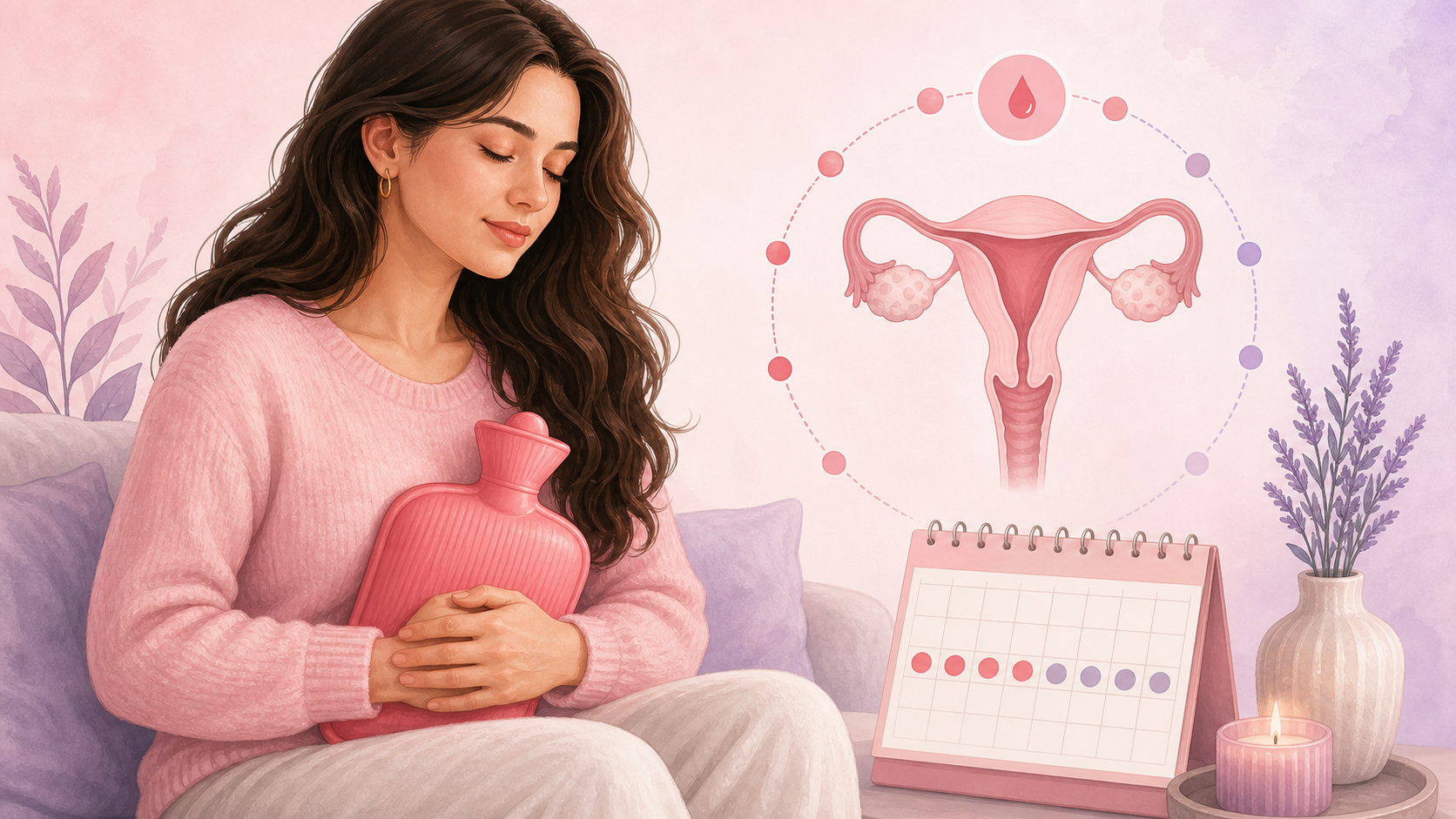
- Track your period dates
- Predict your next cycle
- Understand your fertile window
- Save health notes
- Get gentle reminders
Related tools

Period Tracker
Log periods and learn your personal cycle pattern.
Open tool
Ovulation Calculator
Estimate your ovulation date and fertile window.
Open tool
Fertility Window
See your most fertile days for trying to conceive.
Open tool
Pregnancy Tracker
Follow your pregnancy week by week once you conceive.
Open tool
Due Date Calculator
Estimate your baby's due date from your last period.
Open toolShare this guide with someone who needs it 💛
Medical review
- Last reviewed
- June 2026
- Medical reviewer
- Dr. Vinika G.
- Next review due
- June 2027
- Status
- Medically reviewed by Dr. Vinika G.
References
This article is for general information and education only and is not a substitute for professional medical advice. Puberty timing and experience vary widely. If you have concerns about early or delayed puberty, rapid changes, severe acne, period problems, or your teen's mood, consult a paediatrician or doctor. In a medical emergency, contact local emergency services immediately. Content reviewed against guidance from the AAP and NHS.
Teen Library journey
100%Related guides
Free resources
Medical disclaimer
This article is for educational purposes only and does not replace medical advice. If you have severe pain, heavy bleeding, missed periods, or unusual symptoms, please consult a qualified healthcare provider.