
ParentVibes
Women's Health Library · parentvibes.in
Sleep & Women's Health: Why It Matters & How to Sleep Better
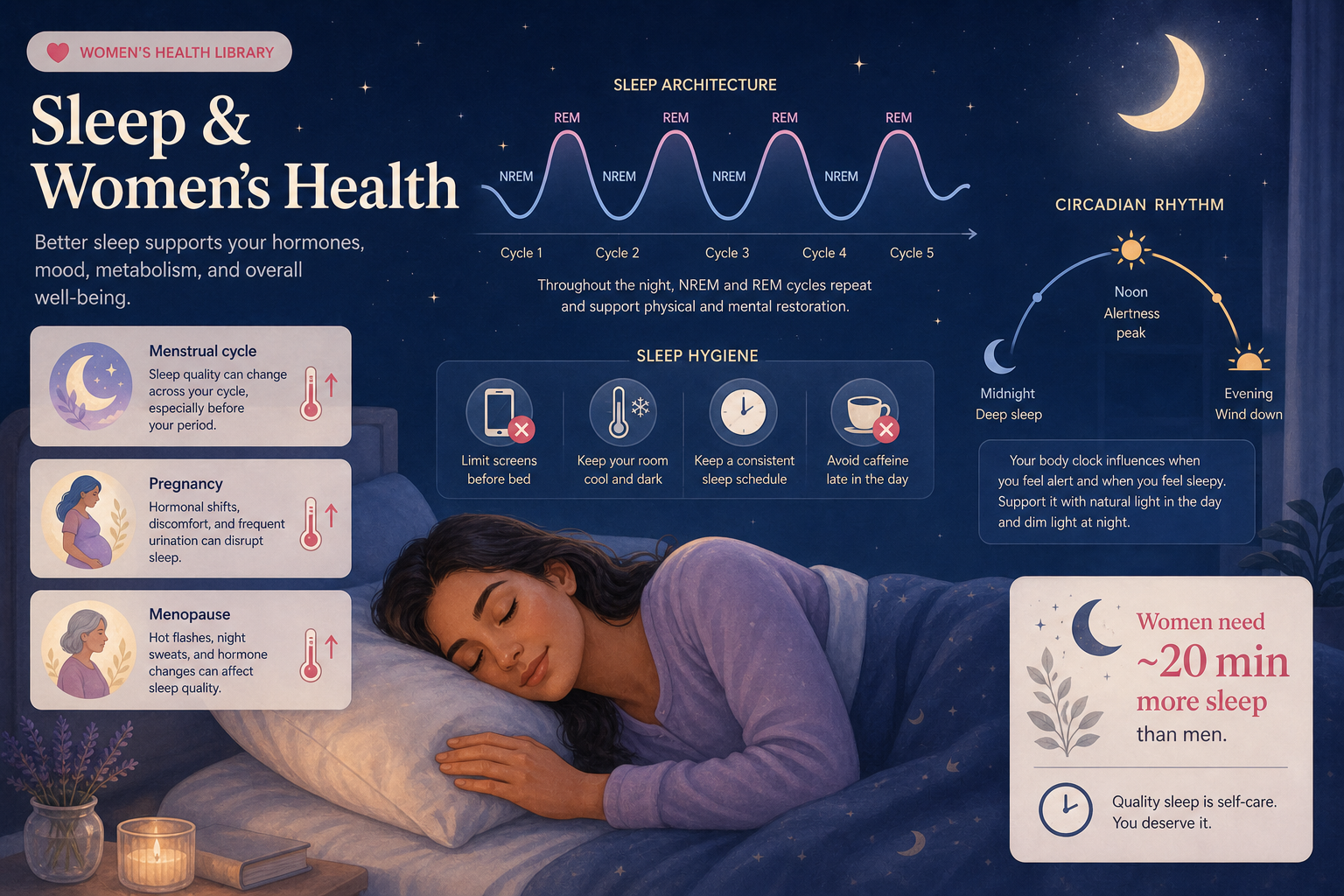
Sleep at a glance
Sleep can feel like the first thing to go when life is busy — a late shift, a new baby, exam stress, household responsibilities or simply scrolling on your phone a little too long. Yet sleep is not a luxury. It is one of the foundations of good health, and for women it is closely tied to hormones, mood, weight, the menstrual cycle and overall energy.
When you sleep well, your body restores itself: your brain processes the day, your hormones settle into a healthy rhythm, your appetite and blood-sugar regulation stay balanced, and your immune system does important repair work. When sleep is short or broken — night after night — you may notice low mood, irritability, brain fog, cravings, low energy and a harder time coping with stress. Over time, persistently poor sleep can affect your overall wellbeing.
Many women also find that their sleep changes across the month and across life stages — in the days before a period, around ovulation, during pregnancy, and especially around perimenopause. This is normal, and understanding it helps you respond kindly to your body rather than blaming yourself. This guide explains why sleep matters for women, what gets in the way, the everyday habits that help most, and the signs that mean it's time to see a doctor.
Sleep is a health behaviour, not a willpower test
Poor sleep usually has real, identifiable causes — and most of them respond to small, consistent changes. If your nights have been difficult, it isn't a personal failing, and there's a lot you can do.
Track your cycle and symptoms →Useful tools
Why Sleep Matters So Much for Women
Sleep is when your body and brain do essential maintenance. Across the night you move through lighter and deeper stages, and through dreaming (REM) sleep — each plays a part in memory, emotional balance and physical repair. For women, good sleep matters in some specific ways:
Hormones: Sleep helps regulate the hormones that control appetite, stress, blood sugar and reproduction. Disrupted sleep can unsettle this balance, while a steady sleep routine helps keep it on an even keel.
Mood and mental wellbeing: Sleep and mood are deeply linked. Too little sleep makes anxiety, low mood and irritability more likely — and feeling low or anxious can, in turn, make sleep harder. Protecting sleep is one of the kindest things you can do for your mental wellbeing.
Weight and appetite: Short sleep can increase hunger and cravings, especially for sugary, energy-dense foods, and can make it harder to maintain a healthy weight. Good sleep supports the body's natural appetite signals.
Cycle and energy: Sleep interacts with the menstrual cycle, and many women notice their sleep and energy shift across the month. Consistent rest helps you feel more resilient through these natural changes.
How much sleep is enough?
Most adults feel and function best with around 7–9 hours a night, though needs vary from person to person. A good sign you're getting enough is waking feeling reasonably refreshed and staying alert through the day without relying on constant caffeine.
Sleep, in short
Hormones and sleep talk to each other
Sleep helps regulate the hormones that govern mood, appetite and your cycle — and those same hormones affect how you sleep.
Your cycle changes your sleep
Many women sleep less soundly in the days before a period, when PMS, cramps and a warmer body temperature get in the way.
Pregnancy reshapes rest
Nausea, a growing bump, frequent loo trips and aches can all interrupt sleep, especially in the first and third trimesters.
Perimenopause disrupts nights
Hot flushes, night sweats and mood changes around perimenopause are a very common reason sleep becomes broken.
Habits do the heavy lifting
A steady routine, a dark cool room, less caffeine and a calm wind-down genuinely improve most sleep problems.
Some sleep problems need a doctor
Insomnia that lasts weeks, or loud snoring with daytime sleepiness, deserves proper medical attention.
How Your Cycle & Life Stages Affect Sleep
Women's sleep naturally changes with hormonal shifts across the month and across life. Recognising these patterns can help you plan a little extra rest and self-kindness when you need it.
Across your menstrual cycle
- Before a period (luteal phase): PMS, cramps, breast tenderness, anxiety and a slightly higher body temperature can make it harder to fall and stay asleep
- Around ovulation: some women notice lighter or more restless sleep
- During a period: cramps, heavier flow and discomfort can interrupt sleep, especially on the first couple of nights
- After a period: many women find sleep settles and energy returns in the days that follow
Pregnancy
- First trimester: nausea, frequent loo trips and feeling unusually tired can disrupt the usual rhythm
- Second trimester: sleep often improves for a while as early symptoms ease
- Third trimester: a growing bump, back and hip aches, heartburn, leg cramps and frequent waking are very common
- Restless legs and vivid dreams are also common in pregnancy
Perimenopause & beyond
- Hot flushes and night sweats are a leading cause of broken sleep around perimenopause
- Mood changes, anxiety and a racing mind at night become more common
- Falling asleep and staying asleep can both become harder
- Sleep often improves with the right support — this stage is worth talking through with a doctor
Track while you read
Tick the symptoms that apply to you. This is a self-check, not a diagnosis — saved on this device only.
Notice your own pattern
Logging sleep alongside your cycle and mood for a couple of months often reveals a clear pattern — for example, lighter sleep before each period. That insight helps you plan rest and shows a doctor what's going on.
Log sleep and mood in the Period Tracker →What Causes Poor Sleep?
Poor sleep usually comes from a mix of habits, environment, mind and body — rather than a single cause. The good news is that most of these are things you can influence. Understanding what's driving your difficult nights is the first step to better ones.
- Stress, worry and a busy mind
- A racing mind is one of the most common reasons for trouble falling or staying asleep. Work pressure, family responsibilities, money worries or anxiety can keep the brain switched on when it should be winding down.
- An irregular routine
- Going to bed and waking at very different times — including big lie-ins or late nights at the weekend — confuses your body clock and makes consistent, restful sleep harder.
- Caffeine, alcohol and heavy late meals
- Tea, coffee, cola and energy drinks late in the day can keep you wired. Alcohol may help you drop off but disrupts sleep later in the night, and a heavy or spicy meal close to bedtime can cause discomfort and reflux.
- Screens and light at night
- Bright screens and overhead lights in the evening signal to your brain that it's still daytime, delaying the natural wind-down. Scrolling in bed also keeps the mind alert.
- Hormonal changes
- Premenstrual changes, pregnancy and perimenopause all affect sleep, as can thyroid problems. These shifts are real and not within your control — but their impact can often be eased.
- Environment and disruptions
- A room that's too warm, noisy or bright, an uncomfortable bed, or caring for young children or unwell family members can all break up the night.
- Health conditions and medicines
- Pain, breathing problems, frequent urination, low mood, anxiety, and some medicines can all interfere with sleep. A possible sleep disorder such as sleep apnoea is worth ruling out where snoring and daytime sleepiness are present.
Because most poor sleep comes from everyday, changeable factors, small consistent adjustments often make a real difference — usually over a couple of weeks rather than overnight.
How to Sleep Better — Sleep Hygiene That Works
'Sleep hygiene' simply means the habits and surroundings that help you sleep well. These work best when done consistently — give changes a couple of weeks, and be patient and kind with yourself as your body clock resets.
Keep a steady routine
- Go to bed and wake up at roughly the same time every day — including weekends — to anchor your body clock
- Get some natural daylight in the morning, which helps set a healthy sleep-wake rhythm
- If you nap, keep it short (around 20 minutes) and earlier in the day, not late afternoon
Create a restful wind-down
- Build a calming pre-sleep routine — a warm bath, light reading, gentle stretching, prayer or quiet music
- Dim the lights in the hour before bed to cue your body that it's time to rest
- Try slow breathing or a short relaxation practice if your mind is racing
Make your bedroom sleep-friendly
- Keep the room cool, dark and quiet — use curtains, an eye mask or earplugs if needed
- Reserve the bed mainly for sleep and intimacy, so your mind links it with rest
- Make sure your mattress, pillow and bedding are comfortable for the climate
Mind food, drink and stimulants
- Avoid tea, coffee, cola and energy drinks from the afternoon onwards
- Keep evening meals lighter and earlier; limit very spicy or heavy food close to bedtime
- Be cautious with alcohol — it disrupts sleep later in the night even if it helps you nod off
Move during the day
- Regular activity — a brisk walk, cycling, swimming or yoga — supports deeper, more restful sleep
- Try to finish vigorous exercise a few hours before bed so your body has time to settle
- Even gentle daily movement helps lift mood and ease tension that can keep you awake
Switch off screens
- Put phones, tablets and laptops away at least 30–60 minutes before bed
- Keep the phone away from your pillow, or on silent, to avoid late-night scrolling and notifications
- If you can't sleep after about 20 minutes, get up, do something calm in low light, and return when sleepy
Be patient with yourself
New sleep habits take a couple of weeks to settle, and the odd bad night is normal. Lying in bed frustrated tends to make things worse — getting up briefly and resetting is kinder and often more effective.
When to See a Doctor
Occasional poor sleep is normal. But please speak to a doctor if your sleep problems are persistent or affecting your daily life — there is real help available.
- Poor sleep continues for several weeks despite good sleep habits
- You regularly feel exhausted during the day, or fall asleep unintentionally
- A partner notices loud snoring, gasping or pauses in breathing while you sleep
- Hot flushes, night sweats or perimenopausal symptoms are repeatedly disrupting your nights
- Sleep problems started or worsened with a new medicine or health condition
- Persistent fatigue isn't explained by sleep alone — it may be worth checking for other causes
Insomnia that lasts weeks
You've had trouble falling or staying asleep most nights for several weeks despite trying better sleep habits
Loud snoring with daytime sleepiness
You snore loudly, gasp or stop breathing in your sleep (often noticed by a partner), and feel very sleepy by day — this needs assessment for possible sleep apnoea
Sleep that disrupts daily life
Tiredness is affecting your work, study, mood, relationships or safety (for example, feeling drowsy while driving)
Low mood or anxiety alongside poor sleep
You feel persistently low, anxious or unable to cope, especially most days rather than only premenstrually
Don't self-medicate for sleep
Sleeping tablets and many supplements (including melatonin) should only be used under a doctor's guidance — they have side effects, can interact with other medicines, and aren't a long-term fix. If poor sleep is affecting your wellbeing, a doctor can look for the cause and suggest safe, effective options. If you feel persistently low, anxious or unable to cope, please reach out — to someone you trust, a mental-health professional, or India's Tele-MANAS helpline on 14416 (or 1-800-891-4416), available 24/7.
Continue learning
Frequently Asked Questions
How many hours of sleep do women need?
Most adults feel and function best with around 7–9 hours a night, though individual needs vary. A good sign you're getting enough is waking reasonably refreshed and staying alert through the day without relying on constant caffeine. Quality matters as much as quantity — broken sleep can leave you tired even after enough hours in bed.
Why do I sleep worse before my period?
In the days before a period, hormonal changes, PMS symptoms, cramps, anxiety and a slightly higher body temperature can all make sleep lighter or more broken. This is common and usually eases once your period begins. Tracking your sleep alongside your cycle helps you anticipate it and plan a little extra rest.
Does poor sleep affect weight and hormones?
Yes. Short or broken sleep can increase appetite and cravings — especially for sugary, energy-dense foods — and can make a healthy weight harder to maintain. Sleep also helps regulate the hormones that influence stress, blood sugar and your cycle, so a steady sleep routine supports overall hormonal balance.
How can I sleep better naturally?
Focus on sleep hygiene: keep a steady bed and wake time, get morning daylight, build a calm wind-down, keep the bedroom cool, dark and quiet, switch off screens before bed, limit afternoon caffeine and late alcohol, and stay active during the day. These habits work best done consistently — give them a couple of weeks to take effect.
Is it normal to sleep badly during pregnancy and perimenopause?
Yes, very. In pregnancy, nausea, a growing bump, aches, heartburn and frequent loo trips commonly disrupt sleep. Around perimenopause, hot flushes, night sweats and mood changes are a leading cause of broken nights. Both are normal — and both can usually be eased, so it's worth talking to a doctor if sleep is really suffering.
When should I see a doctor about my sleep?
See a doctor if poor sleep lasts several weeks despite good habits, if it's affecting your daytime functioning, mood or safety, or if you snore loudly and feel very sleepy by day (which may suggest sleep apnoea). Avoid self-medicating with sleeping tablets or supplements such as melatonin — these should only be used under a doctor's guidance.
Was this guide helpful?
Understand your cycle better with ParentVibes
- Track your period dates
- Predict your next cycle
- Understand your fertile window
- Save health notes
- Get gentle reminders
Related tools
Period Tracker
Log periods and learn your personal cycle pattern.
Open tool
Ovulation Calculator
Estimate your ovulation date and fertile window.
Open tool
Fertility Window
See your most fertile days for trying to conceive.
Open tool
Pregnancy Tracker
Follow your pregnancy week by week once you conceive.
Open tool
Due Date Calculator
Estimate your baby's due date from your last period.
Open toolShare this guide with someone who needs it 💛
Medical review
- Last reviewed
- June 2026
- Medical reviewer
- Dr. Vinika G.
- Next review due
- June 2027
- Status
- Medically reviewed by Dr. Vinika G.
References
This article is for general information and education only and is not a substitute for professional medical advice, diagnosis, or treatment. Always consult a qualified doctor about persistent sleep problems, suspected sleep apnoea, or before starting any sleep medicine or supplement (including melatonin). Sleeping tablets and supplements can have side effects and interactions and should only be used under medical guidance. If you feel persistently low, anxious or unable to cope, please contact someone you trust, a mental-health professional, your local emergency services, or India's Tele-MANAS helpline on 14416 (or 1-800-891-4416), available 24/7. You are not alone, and help is available. Content reviewed against guidance from the NHS, the WHO, MedlinePlus and the Sleep Foundation.
Women's Health Library journey
100%Related guides
Free resources
Start here
Your journey with ParentVibes
From your first period to your baby's vaccinations — one continuous, supported path.
Understand your cycle
Know your phases, hormones and what's normal.
Track your period
Log periods and learn your personal pattern.
Understand ovulation
Find your fertile window with the calculator.
Plan pregnancy
A calm, step-by-step start to trying to conceive.
Week-by-week pregnancy
Follow every week once you conceive.
Baby milestones
Track growth and development month by month.
Vaccination tracker
Stay on schedule and never miss a vaccine.
Medical disclaimer
This article is for educational purposes only and does not replace medical advice. If you have severe pain, heavy bleeding, missed periods, or unusual symptoms, please consult a qualified healthcare provider.