
ParentVibes
Women's Health Library · parentvibes.in
Exercise for Women: How Much You Need, the Best Types & Why It Matters
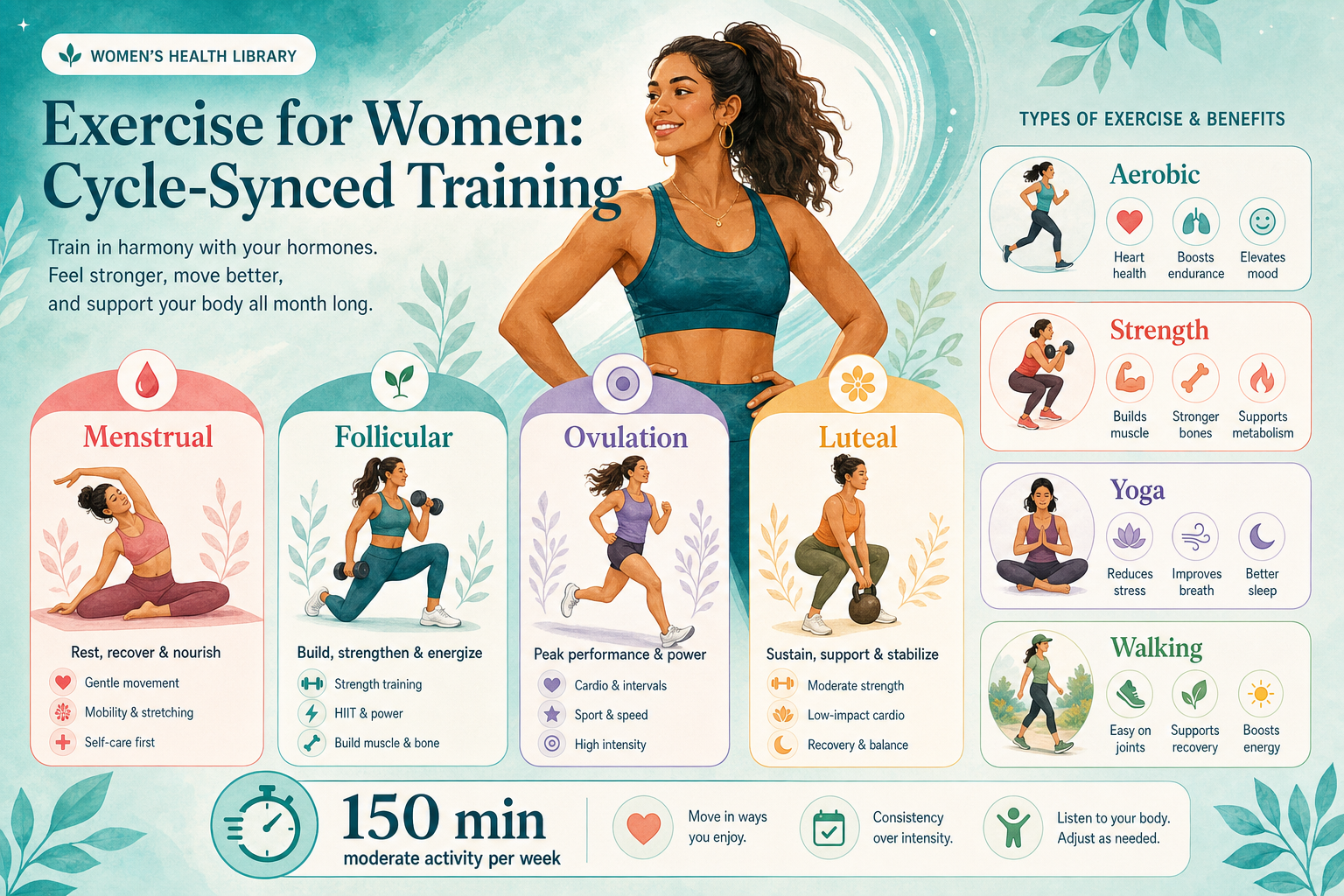
Regular physical activity is one of the most powerful things you can do for your health — and for women specifically, it supports a healthy cycle, better hormonal and metabolic health, stronger bones, easier weight management, and a real lift in mood and sleep.
The World Health Organization recommends that adults do 150–300 minutes of moderate-intensity activity per week (or 75–150 minutes of vigorous-intensity, or a mix), plus muscle-strengthening activities on 2 or more days a week. That's roughly 30 minutes on most days — and it doesn't have to happen in a gym. Walking, household chores, dancing, cycling and active commuting all count.
This guide breaks down exactly how much, what types, and how to build a routine that fits real Indian life — whatever your starting point.
Track your movement
Logging activity in ParentVibes alongside your cycle and symptoms helps you see how movement affects your energy, mood and periods.
Open the tracker →Useful tools
Everything You Need to Know (How Much & What Type)
The WHO weekly targets for adults, made simple:
| Activity type | Weekly target | Everyday examples |
|---|---|---|
| Moderate-intensity aerobic | 150–300 min (≈30 min, 5 days) | Brisk walking, cycling, dancing, household chores, swimming |
| OR vigorous-intensity aerobic | 75–150 min | Running, fast cycling, aerobics, sports |
| Muscle-strengthening | 2+ days/week | Bodyweight (squats, push-ups), resistance bands, weights, yoga |
| Reduce sitting | Throughout the day | Break up long sitting; move regularly |
More is better, within reason
Pushing toward 300 minutes/week of moderate activity brings extra health benefits. And any activity counts — start where you are and build up gradually.
Balance matters
Very intense or excessive training combined with under-eating can disrupt periods and ovulation. The goal is consistent, sustainable activity — not extremes.
How Movement Helps — and Overtraining Warning Signs
Benefits you may notice with regular activity — and signs you may be overdoing it.
Benefits of regular activity
- More energy and better sleep
- Improved mood; less stress and anxiety
- Easier weight management and better insulin sensitivity (helpful in PCOS)
- Reduced period pain for many (gentle movement eases cramps)
- Stronger bones and muscles
Signs you may be overdoing it (ease back / seek advice)
- Periods becoming irregular or stopping
- Persistent fatigue, frequent injuries, or poor recovery
- Low mood, disrupted sleep, or loss of appetite linked to heavy training
Track while you read
Tick the symptoms that apply to you. This is a self-check, not a diagnosis — saved on this device only.
If exercise is causing your periods to stop, that's a red flag (possible "relative energy deficiency") — speak to a doctor.
Why Exercise Works for Women's Health
Movement benefits the body through several mechanisms:
- Improves insulin sensitivity
- Helping blood-sugar control and supporting conditions like PCOS.
- Supports hormone balance and a healthy weight
- Both linked to regular cycles and ovulation.
- Builds bone density
- Weight-bearing and strength work protect against later osteoporosis (especially important for women).
- Boosts mood chemistry
- Activity releases endorphins and reduces stress hormones, easing anxiety and low mood.
- Improves circulation and reduces inflammation
- Supporting heart health and easing period cramps for many.
Assessing Your Starting Point
You don't need a diagnosis to start moving, but a quick self-assessment (and, for some, a doctor's check) helps you start safely.
Consider a doctor's check before intense exercise if you
- Have a heart condition, very high blood pressure, or chest pain
- Are pregnant or recently gave birth
- Have a chronic condition (e.g. diabetes, joint problems)
- Have been very inactive and want to start vigorous activity
- Have periods that have stopped with exercise
Self-assessment
- Current activity level (sedentary → active)
- Any pain, injuries or conditions
- Your goals (energy, mood, weight, cycle/PCOS, strength)
Note any conditions in ParentVibes Medical Records, and use Ask a Doctor if unsure where to start.
Building a Routine
A simple, balanced weekly plan you can adapt:
- Most days
- 30-minute brisk walk (counts toward your 150–300 min).
- 2–3 days
- Strength work: bodyweight or resistance (20–30 min).
- 1–2 days
- Yoga or stretching (flexibility, stress relief).
- Daily
- Reduce sitting — short movement breaks.
For specific goals
- PCOS / insulin resistance: mix cardio + strength; consistency matters most.
- Mood & stress: any regular activity helps; yoga and walking are gentle wins.
- Bone health: include weight-bearing and strength work.
Start gradually
Progress slowly to avoid injury. If you have a health condition or are pregnant, get tailored advice from a doctor or qualified trainer.
Making It Stick (India-Friendly)
Practical tips to keep movement realistic and enjoyable:
Keep it realistic
- Build it into daily life — walk for errands, take stairs, do active housework; it all counts
- No gym needed — bodyweight exercises, resistance bands, yoga and home workouts work well
- Beat the heat — exercise early morning or evening; stay hydrated
- Make it social — walk with family/friends, join a class, or use community groups
- Work with your cycle — gentler movement during your period if you prefer; you may feel strongest mid-cycle
- Consistency over intensity — short, regular sessions beat occasional intense ones
Stick-with-it checklist
- A realistic weekly plan
- Activities I actually enjoy
- A regular time that fits my day
- Comfortable footwear & hydration
- Progress logged
When to See a Doctor
See a doctor before or during an exercise programme if you:
- Have chest pain, breathlessness, palpitations or dizziness with activity
- Have a heart condition, very high blood pressure, or a chronic illness
- Are pregnant or postpartum and want tailored guidance
- Notice your periods stop or become irregular with training
- Have joint pain or recurring injuries
- Are very inactive and want to begin vigorous exercise
Stop and seek urgent care
For chest pain, severe breathlessness, fainting, or sudden severe pain during exercise.
Continue learning
Frequently Asked Questions
How much exercise do women need per week?
The WHO recommends 150–300 minutes of moderate activity (or 75–150 minutes vigorous), plus muscle-strengthening on 2 or more days a week.
Is walking enough?
Brisk walking is excellent moderate-intensity activity and counts fully toward your weekly target — add some strength work for extra benefits.
Can exercise help with PCOS?
Yes — regular activity improves insulin sensitivity and supports weight and cycle management in PCOS.
Does exercise help period pain?
For many women, gentle movement and stretching reduce cramps.
Can too much exercise stop my periods?
Yes — very intense training, especially with under-eating, can disrupt periods and ovulation. If your periods stop, see a doctor.
Do I need a gym?
No — home workouts, walking, yoga and bodyweight exercises are very effective.
Can I exercise on my period?
Yes — activity is safe and can ease symptoms; adjust intensity to how you feel.
Was this guide helpful?
Understand your cycle better with ParentVibes
- Track your period dates
- Predict your next cycle
- Understand your fertile window
- Save health notes
- Get gentle reminders
Related tools
Period Tracker
Log periods and learn your personal cycle pattern.
Open tool
Ovulation Calculator
Estimate your ovulation date and fertile window.
Open tool
Fertility Window
See your most fertile days for trying to conceive.
Open tool
Pregnancy Tracker
Follow your pregnancy week by week once you conceive.
Open tool
Due Date Calculator
Estimate your baby's due date from your last period.
Open toolShare this guide with someone who needs it 💛
Medical review
- Last reviewed
- June 2026
- Medical reviewer
- Dr. Vinika G.
- Next review due
- June 2027
- Status
- Medically reviewed by Dr. Vinika G.
References
This article is for general information and education only and is not a substitute for professional medical advice. Exercise needs vary by individual and health status. Consult a qualified doctor before starting a new programme if you have a health condition, are pregnant or postpartum, or have been very inactive. Stop and seek medical help if you experience chest pain, severe breathlessness, or fainting. In a medical emergency, contact your doctor or local emergency services immediately. Content reviewed against guidance from the WHO and peer-reviewed literature.
Women's Health Library journey
100%Related guides
Free resources
Start here
Your journey with ParentVibes
From your first period to your baby's vaccinations — one continuous, supported path.
Understand your cycle
Know your phases, hormones and what's normal.
Track your period
Log periods and learn your personal pattern.
Understand ovulation
Find your fertile window with the calculator.
Plan pregnancy
A calm, step-by-step start to trying to conceive.
Week-by-week pregnancy
Follow every week once you conceive.
Baby milestones
Track growth and development month by month.
Vaccination tracker
Stay on schedule and never miss a vaccine.
Medical disclaimer
This article is for educational purposes only and does not replace medical advice. If you have severe pain, heavy bleeding, missed periods, or unusual symptoms, please consult a qualified healthcare provider.