
ParentVibes
Women's Health Library · parentvibes.in
Preconception Health: How to Prepare Your Body Before Pregnancy
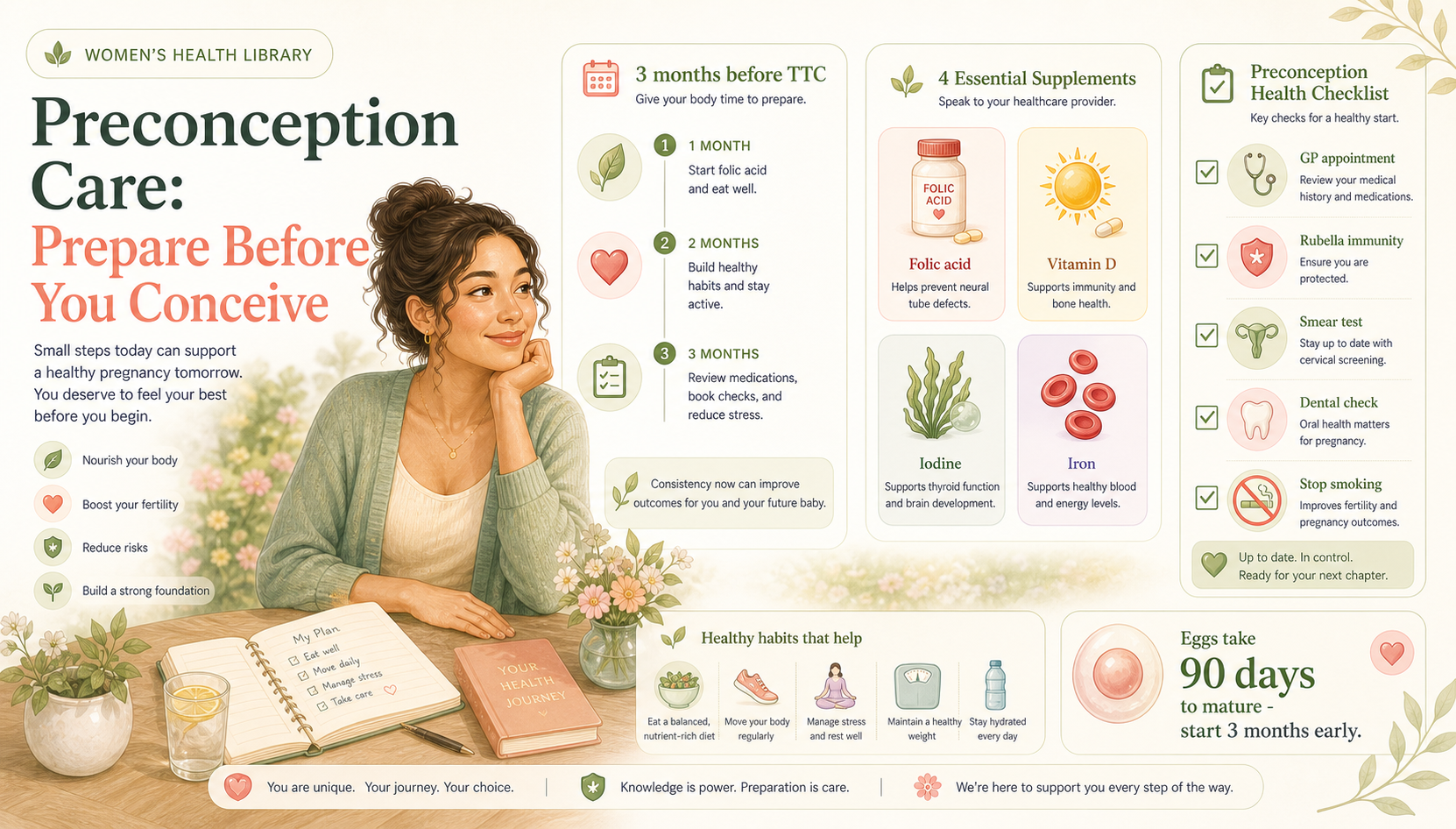
Quick Facts
Some of the most important things for a healthy pregnancy happen before you conceive. A baby's brain and spine begin forming in the very first weeks — often before many people even realise they're pregnant — which is why preparing your health in advance matters so much.
Health bodies recommend starting preconception steps at least three months before trying, and some changes (like quitting smoking, reaching a healthy weight, or reviewing medicines) ideally even earlier. The single most evidence-backed step is taking folic acid — 400 to 800 micrograms daily, starting at least a month before conception — which significantly lowers the risk of serious birth defects of the brain and spine (neural-tube defects).
This guide is your practical pre-pregnancy checklist: folic acid and nutrition, health checks and vaccinations, lifestyle changes, and steps for both partners.
Get organised
Use ParentVibes to track folic acid, appointments and health checks as you prepare.
Open the tracker →Useful tools
Things worth knowing
Development starts early
A baby's brain and spine begin forming in the first weeks — often before you know you're pregnant.
Folic acid is the top step
400–800 mcg daily from a month before conception lowers the risk of neural-tube defects.
Three months is the rule of thumb
Eggs and sperm mature over roughly that time, and some health changes take a while.
Get conditions controlled first
Well-managed diabetes, thyroid and blood pressure make for a safer pregnancy.
Both partners prepare
Sperm and egg health both benefit from a healthy weight, no smoking and less alcohol.
Review your medicines
Some aren't pregnancy-safe — but never stop prescribed medicines on your own.
Everything You Need to Know (The Preconception Checklist)
Here's what to put in place before trying:
| Area | What to do |
|---|---|
| Folic acid | 400–800 mcg daily, from ≥1 month before conception (higher dose only if a doctor advises) |
| Health check | See a doctor for a pre-pregnancy review; ensure any condition (diabetes, thyroid, BP, epilepsy) is well-controlled |
| Medicines review | Ask your doctor which medicines are safe to continue — don't stop prescribed medicines on your own |
| Vaccinations | Check you're up to date (e.g. rubella/MMR) before pregnancy, as advised |
| Healthy weight | Aim for a healthy weight — affects fertility and pregnancy |
| Stop smoking, limit alcohol | Both partners; avoid recreational drugs |
| Nutrition | A balanced diet; review iron, calcium, vitamin D |
| Both partners | Many steps apply to the partner too (health, smoking, weight) |
Why three months?
Eggs and sperm mature over roughly that timeframe, and some health changes take time — so starting early gives the best foundation.
Readiness & Things to Address
Preconception isn't about symptoms, but about spotting things to optimise:
Things to optimise
- Uncontrolled conditions — high blood sugar, blood pressure, thyroid or other issues that need stabilising first
- Medicines that may need reviewing or switching before pregnancy
- Lifestyle factors — smoking, alcohol, weight, very high stress
- Cycle irregularity — may flag conditions like PCOS worth addressing
- Nutrition gaps — e.g. low iron, especially with heavy periods
Track while you read
Tick the symptoms that apply to you. This is a self-check, not a diagnosis — saved on this device only.
If you have a chronic condition or take regular medicines, see your doctor before trying — some plans need adjusting in advance.
Why Preconception Care Matters
Preparing early improves outcomes because:
- Early development is critical
- The neural tube forms in the first ~4 weeks; folic acid must be on board before and around conception.
- Controlled conditions = safer pregnancy
- Well-managed diabetes, thyroid and blood pressure reduce risks.
- Lifestyle shapes fertility and pregnancy
- Smoking, alcohol, weight and nutrition affect conception and the baby.
- Some medicines aren't pregnancy-safe
- Reviewing them early prevents problems.
- Both partners contribute
- Sperm and egg health both benefit from preparation.
The Pre-Pregnancy Health Check
A preconception visit is a proactive check-up, not a test for illness.
What it may cover
- History — your health, conditions, medicines, family history, previous pregnancies, periods/cycle
- Checks — blood pressure, weight/BMI; blood tests as relevant (e.g. blood group, rubella immunity, anaemia, thyroid, diabetes screening)
- Genetic considerations — discussion if there's a relevant family history (in India, e.g. thalassaemia carrier screening may be advised)
- Personalised advice — folic acid dose, vaccinations, and managing any condition before pregnancy
Store results and your plan in ParentVibes Medical Records.
Optimising Health Before Pregnancy
"Treatment" here means getting things in the best shape before conceiving:
- Folic acid / nutrients
- Start folic acid; correct deficiencies (e.g. iron, vitamin D).
- Chronic conditions
- Optimise control (diabetes, thyroid, blood pressure, epilepsy) before trying.
- Medicines
- Switch any unsafe medicines to pregnancy-safe alternatives (doctor-guided).
- Vaccinations
- Update before pregnancy as advised.
- Lifestyle
- Stop smoking, limit/stop alcohol, reach a healthy weight.
- Dental & general health
- Address oral health and any outstanding issues.
Never change prescription medicines on your own
When planning pregnancy, always do this with your doctor. Folic acid is available over the counter, but higher doses need medical advice.
Everyday Preparation (Both Partners)
Day-to-day steps that build a healthy foundation:
Build a healthy foundation
- Take folic acid daily (her) and eat a balanced diet (both)
- Reach/maintain a healthy weight — gradual, sustainable changes
- Stop smoking and avoid alcohol/recreational drugs — both partners
- Move regularly
- Manage stress and sleep well
- Reduce harmful exposures — certain chemicals, pesticides; for pregnancy, avoid handling cat litter/rodent waste
- Limit excess caffeine
Daily preconception habits
- Folic acid taken
- Balanced meals
- No smoking/alcohol
- Movement & good sleep
- Stress care
When to See a Doctor
See a doctor before trying to conceive if you:
- Have a chronic condition (diabetes, thyroid, high blood pressure, epilepsy, heart disease, etc.)
- Take regular medicines (to check they're pregnancy-safe)
- Have a family history of genetic conditions, or belong to a group where carrier screening is advised
- Have had previous pregnancy complications or losses
- Are over 35, or have irregular periods/PCOS or known fertility concerns
- Are unsure about vaccinations or folic acid dose
Use Ask a Doctor on ParentVibes, or book a pre-pregnancy review via Doctor Visits & Appointments.
Continue learning
Frequently Asked Questions
When should I start preparing for pregnancy?
Ideally at least three months before trying — and some changes (quitting smoking, weight, medicine reviews) even earlier.
How much folic acid should I take?
400–800 micrograms daily, starting at least a month before conception; higher doses only if your doctor advises (e.g. certain conditions).
Does my partner need to prepare too?
Yes — sperm health benefits from a healthy weight, not smoking, limiting alcohol, and managing stress.
Do I need a doctor's visit before trying?
A preconception check is recommended, especially if you have a health condition, take medicines, or are over 35.
Which vaccinations matter before pregnancy?
Being up to date (e.g. rubella immunity) is important; your doctor will advise what to do before conceiving.
Can I keep taking my regular medicines?
Check with your doctor — some need switching to pregnancy-safe options, but don't stop prescribed medicines on your own.
What should I eat when preparing for pregnancy?
A balanced diet plus folic acid; address iron and vitamin D if low.
Was this guide helpful?
Understand your cycle better with ParentVibes
- Track your period dates
- Predict your next cycle
- Understand your fertile window
- Save health notes
- Get gentle reminders
Related tools
Period Tracker
Log periods and learn your personal cycle pattern.
Open tool
Ovulation Calculator
Estimate your ovulation date and fertile window.
Open tool
Fertility Window
See your most fertile days for trying to conceive.
Open tool
Pregnancy Tracker
Follow your pregnancy week by week once you conceive.
Open tool
Due Date Calculator
Estimate your baby's due date from your last period.
Open toolShare this guide with someone who needs it 💛
Medical review
- Last reviewed
- June 2026
- Medical reviewer
- Dr. Vinika G.
- Next review due
- June 2027
- Status
- Medically reviewed by Dr. Vinika G.
References
This article is for general information and education only and is not a substitute for professional medical advice, diagnosis, or treatment. Preconception needs vary, especially with medical conditions or medicines. Consult a qualified doctor before trying to conceive, and never start, stop or change prescription medicines on your own. In a medical emergency, contact your doctor or local emergency services immediately. Content reviewed against guidance from the CDC, NHS, and WHO.
Planning Parenthood Library journey
100%Related guides
Free resources
Medical disclaimer
This article is for educational purposes only and does not replace medical advice. If you have severe pain, heavy bleeding, missed periods, or unusual symptoms, please consult a qualified healthcare provider.