
ParentVibes
Women's Health Library · parentvibes.in
Gut Health for Women: The Microbiome, Digestion & How to Support It
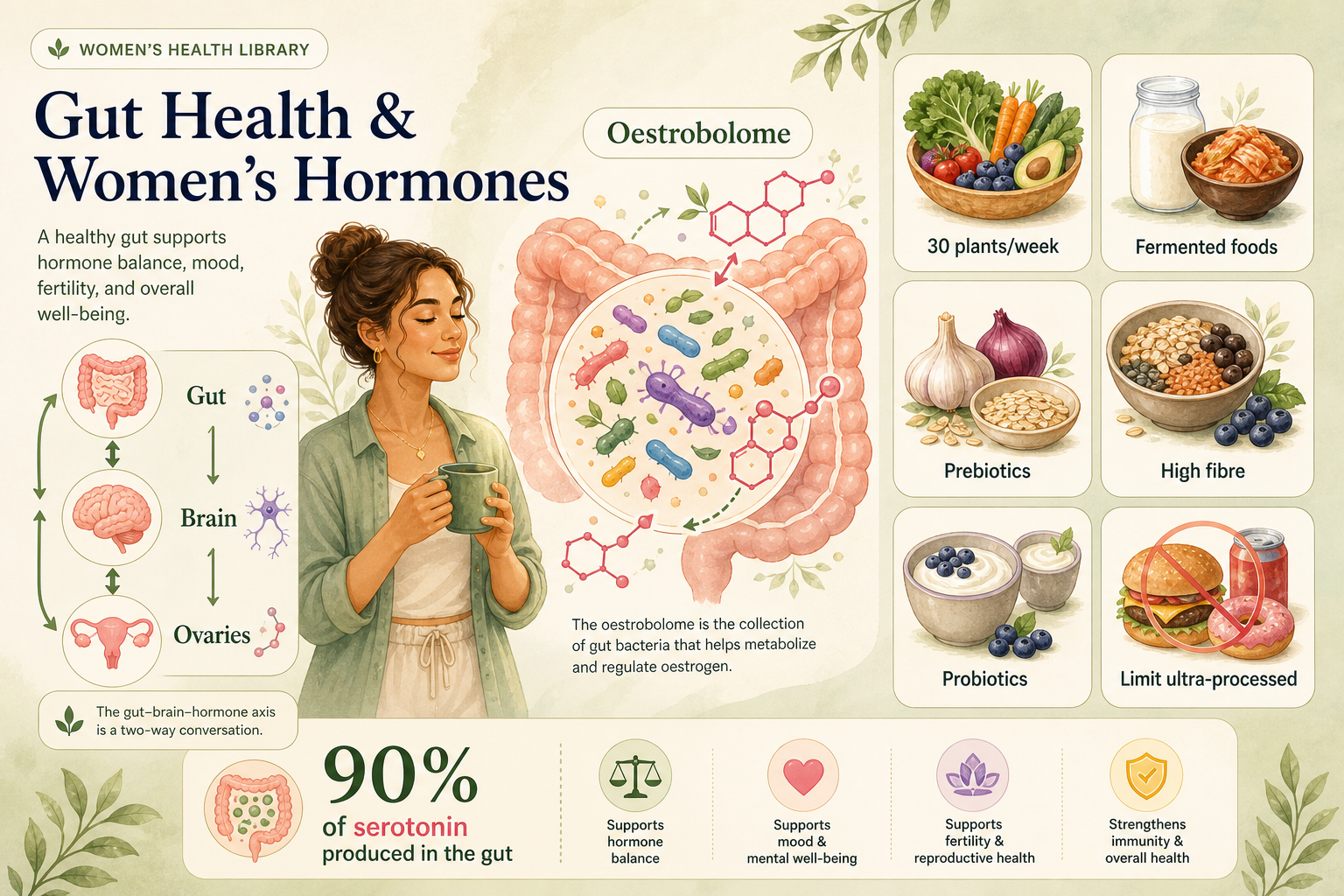
Gut health at a glance
When we think about health, the gut rarely gets the credit it deserves — yet it quietly shapes how we feel every single day. Your digestive system does the obvious job of breaking down food, but it also houses a vast community of microbes known as the gut microbiome, helps regulate your immune system, and is in constant conversation with your brain and your hormones.
For women in particular, gut health and hormonal health are closely connected. Many women notice their digestion shifts across the menstrual cycle — more bloating or constipation before a period, looser stools as it begins. This is normal, and understanding it can take away a lot of worry.
The good news is that supporting your gut doesn't require anything complicated or expensive. Familiar Indian foods — dal, whole grains, vegetables, fruit, curd and buttermilk — are wonderful for the gut. With enough fibre, fermented foods, water, regular movement and a little stress care, most everyday digestive niggles settle. This guide explains how your gut works, the gut-hormone and gut-mood links, the common issues women face, and the signs that mean it's time to see a doctor.
Small, steady habits win
Your gut responds best to consistency, not quick fixes. A little more fibre, a daily walk, enough water and regular meals do more over time than any single 'gut cleanse' or fad.
Useful tools
What Is the Gut Microbiome?
Your gut — mainly the large intestine — is home to trillions of microbes, including bacteria, that together make up the gut microbiome. Far from being harmful, most of these microbes are helpful: they break down the fibre you eat, help produce certain vitamins, support your immune system and protect against unfriendly bugs. A varied, balanced microbiome is generally a sign of a healthy gut.
The make-up of your microbiome is shaped by many things — what you eat, how much you move, your sleep, stress levels, antibiotics and more. The single biggest lever you control is your diet: a varied diet rich in plants and fibre tends to support a more diverse, resilient microbiome, while a diet heavy in ultra-processed foods and low in fibre tends not to.
Variety feeds variety
Eating a wide range of plant foods across the week — different dals, vegetables, fruits, whole grains, nuts and seeds — is one of the simplest ways to support a diverse, healthy microbiome.
Your gut, in short
A whole ecosystem
Your gut hosts trillions of microbes that help break down food, make certain nutrients and support immunity.
Fibre is fuel
The fibre in whole grains, dal, fruit and vegetables feeds your good gut bacteria.
Fermented foods help
Curd, buttermilk, idli, dosa and dhokla add helpful live cultures to your diet.
Gut and mood are linked
The gut and brain talk constantly, which is why stress can upset digestion and vice versa.
Hormones move the gut
Cyclical hormone changes can make you bloated or change bowel habits around your period.
Water matters
Staying well hydrated keeps things moving and works hand-in-hand with fibre.
Common Digestive Issues
Most women experience occasional digestive upset — it's a normal part of life. These are the issues that come up most often, and many ease with the everyday habits further down this page.
Everyday digestive symptoms
- Bloating or a feeling of fullness and tightness
- Excess wind (gas) or burping
- Constipation — hard, infrequent or difficult stools
- Loose stools or diarrhoea
- Tummy cramps or discomfort
- Feeling uncomfortably full after normal meals
- Acid reflux or heartburn
Irritable bowel syndrome (IBS)
- Recurring tummy pain or cramps, often eased by passing stool
- Bloating that comes and goes
- Bowel habits that swing between constipation and diarrhoea
- A feeling of not having fully emptied the bowels
- Symptoms that flare with certain foods, stress or around your period
Track while you read
Tick the symptoms that apply to you. This is a self-check, not a diagnosis — saved on this device only.
Common, but worth understanding
Bloating, constipation and IBS-type symptoms are very common and usually manageable. Tracking what triggers them — foods, stress, your cycle — helps you and a doctor find what works.
What Affects Your Gut Health
Gut health isn't down to one thing — it reflects your daily habits and your body's natural rhythms. Understanding the main influences makes it easier to support your gut, and to be kind to yourself when things feel off.
- Diet and fibre
- What you eat has the biggest day-to-day impact. A diet low in fibre and high in ultra-processed foods can leave the microbiome less diverse and slow the bowels. Plenty of plants and fibre tends to do the opposite.
- The gut-hormone link
- Sex hormones influence how the gut moves. Many women notice more bloating or constipation in the days before a period, and looser, more frequent stools once it begins — a normal effect of the cyclical hormone changes.
- The gut-brain (gut-mood) link
- The gut and brain are in constant two-way communication, sometimes called the gut-brain axis. This is why stress, anxiety or low mood can trigger tummy symptoms, and why ongoing gut trouble can affect how you feel emotionally.
- Hydration and movement
- Not drinking enough water and being inactive both slow digestion and contribute to constipation. Regular movement and good hydration help keep things moving comfortably.
- Stress, sleep and antibiotics
- Poor sleep and ongoing stress can upset digestion, and antibiotics — while sometimes essential — can temporarily disturb the microbiome. These usually settle with time and good habits.
Because so much of gut health comes down to everyday habits and natural hormonal rhythms, gentle, consistent changes — not drastic ones — make the biggest difference.
Habits That Support Your Gut
These everyday habits are the foundation of good gut health. They work best together and over time — think small, steady changes you can keep up, rather than a short-lived overhaul.
Eat plenty of fibre
- Build meals around whole grains, dal and pulses, vegetables and fruit
- Keep the skin on fruit and vegetables where you can, and choose whole over refined grains
- Increase fibre gradually to avoid extra wind and bloating, and drink more water as you do
- Aim for variety across the week — different dals, vegetables and fruits feed a diverse microbiome
Include fermented foods
- Curd (dahi) and buttermilk (chaas) are easy, everyday sources of helpful live cultures
- Fermented foods like idli, dosa and dhokla are familiar, gut-friendly options
- Add them regularly rather than in one large amount, and notice how your gut responds
Stay well hydrated
- Sip water through the day — it works with fibre to keep things moving and ease constipation
- Plain water, buttermilk, coconut water and unsweetened drinks all count
- Go easy on very sugary or fizzy drinks, which can worsen bloating for some people
Move your body
- Regular activity — a daily walk, cycling, swimming or dancing — helps digestion and eases bloating
- A gentle walk after meals can be especially settling
- Even short, regular movement is better for the gut than occasional intense bursts
Eat regularly and mindfully
- Try to eat at fairly regular times and avoid skipping meals
- Eat slowly and chew well — rushing meals can cause wind and discomfort
- Notice foods that reliably upset you, but avoid cutting out major food groups without advice
Care for stress and sleep
- Because the gut and mind are linked, calming stress often calms the gut
- Try breathing exercises, gentle yoga, prayer or time outdoors
- Protect a regular sleep routine — poor sleep can worsen digestive symptoms
A word on probiotics and 'detoxes'
Some women find probiotic supplements helpful, but evidence varies and you don't need them to have a healthy gut — food-first habits do the heavy lifting. There's no need for 'gut cleanses' or detox products. Check with a doctor before starting any supplement, especially in pregnancy or with other conditions.
When to See a Doctor
Occasional bloating or a change in bowel habits is usually nothing to worry about. But some symptoms need prompt medical attention — please don't wait to get these checked.
- Your symptoms are persistent, severe, or steadily getting worse
- Everyday habits haven't helped after a reasonable try
- You think you may have IBS and want a proper assessment
- Gut symptoms are affecting your mood, sleep or daily life
- You're pregnant, or have other health conditions, and digestion has changed
A persistent change in your bowel habits
lasting more than a few weeks
Blood in your stool, or black/tarry stools
get this checked promptly
Unexplained weight loss
without trying
Persistent or severe tummy pain
especially if it wakes you at night
Difficulty swallowing or persistent vomiting
see a doctor without delay
A lump or swelling in your tummy
get this examined
Ongoing tiredness or signs of anaemia
alongside gut symptoms
Don't ignore these signs
A persistent change in bowel habits, blood in your stool, unexplained weight loss or severe ongoing tummy pain should always be checked by a doctor promptly. These are not symptoms to manage at home — early assessment matters.
Ask a Doctor →Continue learning
Frequently Asked Questions
What is the gut microbiome and why does it matter?
The gut microbiome is the vast community of microbes — mostly bacteria — living in your digestive system. They help break down fibre, support your immune system and influence everything from digestion to mood. A varied, balanced microbiome is generally a sign of a healthy gut, and a varied, fibre-rich diet helps support it.
How can I improve my gut health naturally?
Food-first habits do the heavy lifting: plenty of fibre from whole grains, dal, vegetables and fruit; fermented foods like curd, buttermilk, idli and dosa; enough water; regular movement; and caring for stress and sleep. Build these up gradually and keep them consistent — that matters more than any single product.
Why does my digestion change around my period?
Cyclical hormone changes affect how the gut moves. Many women feel more bloated or constipated in the days before a period, then notice looser, more frequent stools once it begins. This is a normal effect of the menstrual cycle, though tracking it can help you feel more in control.
Can stress really affect my gut?
Yes. The gut and brain are in constant two-way communication — the gut-brain axis — which is why stress, anxiety or low mood can trigger tummy symptoms, and ongoing gut trouble can affect how you feel emotionally. Calming stress through breathing, gentle movement or rest often helps settle the gut too.
Do I need probiotic supplements for a healthy gut?
Not necessarily. Some women find probiotic supplements helpful, but the evidence varies and you don't need them to have a healthy gut — a varied, fibre-rich diet with fermented foods does most of the work. Check with a doctor before starting any supplement, especially during pregnancy or with other conditions.
When should bloating or a change in bowel habits worry me?
See a doctor promptly if you have a persistent change in bowel habits lasting more than a few weeks, blood in your stool or black/tarry stools, unexplained weight loss, or severe, ongoing tummy pain. These signs need proper assessment and shouldn't be managed at home.
Was this guide helpful?
Understand your cycle better with ParentVibes
- Track your period dates
- Predict your next cycle
- Understand your fertile window
- Save health notes
- Get gentle reminders
Related tools
Period Tracker
Log periods and learn your personal cycle pattern.
Open tool
Ovulation Calculator
Estimate your ovulation date and fertile window.
Open tool
Fertility Window
See your most fertile days for trying to conceive.
Open tool
Pregnancy Tracker
Follow your pregnancy week by week once you conceive.
Open tool
Due Date Calculator
Estimate your baby's due date from your last period.
Open toolShare this guide with someone who needs it 💛
Medical review
- Last reviewed
- June 2026
- Medical reviewer
- Dr. Vinika G.
- Next review due
- June 2027
- Status
- Medically reviewed by Dr. Vinika G.
References
This article is for general information and education only and is not a substitute for professional medical advice, diagnosis, or treatment. Always consult a qualified doctor about your symptoms and before starting any supplement or making major dietary changes, especially during pregnancy or if you have other health conditions. A persistent change in bowel habits, blood in the stool, unexplained weight loss or severe ongoing abdominal pain should be assessed by a doctor promptly. Content reviewed against guidance from the NHS, MedlinePlus and the WHO.
Women's Health Library journey
100%Related guides
Free resources
Start here
Your journey with ParentVibes
From your first period to your baby's vaccinations — one continuous, supported path.
Understand your cycle
Know your phases, hormones and what's normal.
Track your period
Log periods and learn your personal pattern.
Understand ovulation
Find your fertile window with the calculator.
Plan pregnancy
A calm, step-by-step start to trying to conceive.
Week-by-week pregnancy
Follow every week once you conceive.
Baby milestones
Track growth and development month by month.
Vaccination tracker
Stay on schedule and never miss a vaccine.
Medical disclaimer
This article is for educational purposes only and does not replace medical advice. If you have severe pain, heavy bleeding, missed periods, or unusual symptoms, please consult a qualified healthcare provider.