
ParentVibes
Women's Health Library · parentvibes.in
Menstrual Hygiene: Period Products, Safe Use & Dignity
Quick Facts
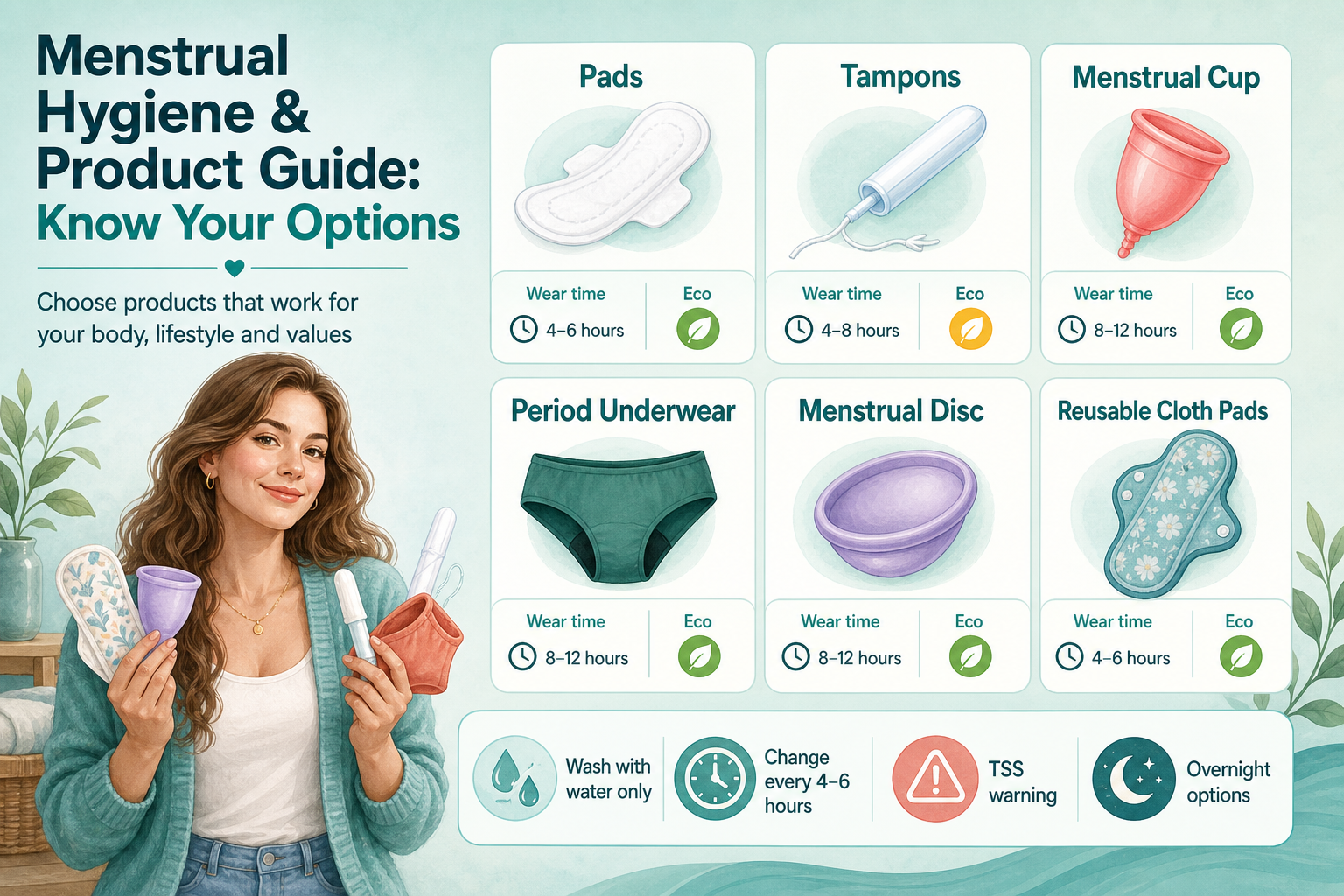
Menstrual hygiene is simply the everyday practice of managing your period cleanly, comfortably and with dignity — choosing a product that suits you, using it safely, and changing and disposing of it properly. Get these basics right and periods become easy to manage at school, at work and at home.
This is a practical, hands-on guide. It compares the four main period products — pads, tampons, menstrual cups and period underwear — and explains how often to change each one, how to clean and care for reusable products, how to dispose of disposables, and the hygiene steps that prevent irritation and infection. It also covers tips for India's hot, humid climate and the rare but serious warning signs of toxic shock syndrome.
This page is about the "how". For the bigger picture — what menstrual health means as a whole, life stages, dignity and breaking the stigma — see our Menstrual Health hub.
Looking for the bigger picture?
This guide covers practical hygiene and products. For what menstrual health means overall, the life stages and breaking stigma, read the Menstrual Health hub.
Read: Menstrual Health (the full picture) →Useful tools
Menstrual Hygiene at a Glance
Four main products
Pads, tampons, menstrual cups and period underwear — pick what suits your body, flow and lifestyle.
Change on time
Pads/tampons every 4–6 hours; a cup at least every 8–12 hours. Don't leave them in too long.
Clean hands first
Wash hands before and after changing. Clean the outside area with plain water only.
Reusables save money
A menstrual cup or period underwear can last years, lowering cost and waste over time.
Heat needs more care
In hot, humid weather change products more often and keep the area dry to avoid irritation.
TSS is rare
Toxic shock is very rare, but high fever, rash and vomiting with tampon use is an emergency.
Period Product Comparison: Pads, Tampons, Cups & Period Underwear
There is no single best product — the right one fits your body, flow, comfort and budget. Many people use a combination (for example, a cup by day and a pad or period underwear overnight). Here is how the four main options compare.
| Product | How it's used | Change / empty | Reusable? | Good points to know |
|---|---|---|---|---|
| Sanitary pads | Stick to the inside of underwear; worn externally | Roughly every 4–6 hours (sooner if heavy) | Mostly disposable; reusable cloth pads exist | Easiest to start with, nothing inserted, widely available; can feel bulky or warm in heat |
| Tampons | Inserted into the vagina to absorb flow | Every 4–6 hours; never leave longer than 8 hours | Disposable | Discreet, good for swimming/sport; use the lowest absorbency for your flow; carries a rare TSS risk |
| Menstrual cup | Soft silicone/rubber cup folded and inserted to collect flow | Empty, rinse and reinsert at least every 8–12 hours | Reusable — can last years with care | Cost-effective and low-waste; holds more than a tampon; takes practice to fold and position |
| Period underwear | Worn like normal underwear with a built-in absorbent layer | Change once full or daily; rinse then wash | Reusable — washable many times | Comfortable, nothing inserted, good as backup or overnight; needs washing and drying time |
How to choose
New to periods or prefer nothing internal? Start with pads or period underwear. Want discretion for sport or swimming? Tampons or a cup. Want to save money and reduce waste long-term? A menstrual cup or period underwear. It is fine to switch and mix.
Track which product suits you
Use the ParentVibes Period Tracker to log your flow and products so you can plan ahead and notice what works best.
Open the Period Tracker →Signs of Poor Hygiene or Infection
Good hygiene prevents most problems, but it helps to know the signs that something needs attention. These are not normal period symptoms and are worth getting checked.
Watch for these signs
- Itching, redness or soreness around the genital area
- An unusual or strong, fishy odour (a mild change during your period can be normal)
- Unusual discharge — change in colour (greenish/grey), texture or amount
- Burning or stinging when you pass urine
- Skin rash or chafing from a damp pad, especially in hot weather
Urgent — stop and seek care
- Sudden high fever, especially while using a tampon
- A widespread sunburn-like rash, vomiting or diarrhoea
- Feeling faint, dizzy or confused
Track while you read
Tick the symptoms that apply to you. This is a self-check, not a diagnosis — saved on this device only.
Don't ignore these
Persistent itching, unusual discharge or odour can signal an infection that needs treatment. See a doctor — these usually clear up quickly with the right care.
Safe Use, Changing, Washing & Disposal
These everyday steps keep you clean and comfortable and lower the risk of irritation and infection — with extra tips for India's hot, humid climate.
Changing & timing
- Change pads and tampons roughly every 4–6 hours — sooner on heavy days
- Never leave a tampon in longer than 8 hours; use the lowest absorbency that copes with your flow
- Empty, rinse and reinsert a menstrual cup at least every 8–12 hours
- Change period underwear once it feels full, or at least daily
- Even on a light day, change at least twice a day to stay fresh
Washing & personal hygiene
- Wash your hands before and after changing any product
- Clean the outside genital area with plain warm water; pat dry front to back
- Avoid scented soaps, douches and internal washes — the vagina cleans itself and harsh products cause irritation
- Change underwear daily and wear breathable cotton where possible
- Don't use scented or perfumed pads/tampons if your skin is sensitive
Disposal of disposables
- Wrap used pads and tampons in paper or their wrapper and put them in a bin
- Never flush pads or tampons — they block drains and toilets
- Use the disposal bin in toilets where provided
- If no bin is available, carry a small sealable bag until you find one
Caring for reusable products
- Menstrual cup: rinse with clean water between uses; wash with mild unscented soap; sterilise in boiling water between periods, per the maker's instructions
- Period underwear & cloth pads: rinse in cold water first, then wash and dry fully
- Dry cloth pads and period underwear completely — ideally in direct sunlight, which helps kill germs
- Store clean, dry reusables in a breathable cotton pouch, not a sealed plastic bag
- Replace any product that is torn, smells off, or no longer feels comfortable
Hot-climate tips (India)
- In heat and humidity, change pads more often to prevent chafing, rashes and odour
- Keep the area dry; loose cotton clothing helps air circulate
- Always carry spare products and a hand-cleaning option when out, as facilities vary
- Make sure cloth pads and period underwear are bone-dry before reuse — damp fabric breeds germs
- Store products in a cool, dry place away from direct heat
Period products are not luxuries. Keeping a small menstrual-care kit ready means you are never caught out at school, work or while travelling.
When to See a Doctor
See a doctor if you notice:
- Itching, redness or soreness that doesn't settle
- Unusual discharge — a change in colour, smell, texture or amount
- A strong or persistent odour despite good hygiene
- Burning or pain when passing urine
- A skin rash or chafing that keeps coming back
- Any worry about how to use a product safely
Toxic shock syndrome (TSS) — rare but a medical emergency
TSS is a very rare but serious illness linked to tampon use. If you are using a tampon (or have recently) and develop a sudden high fever, a sunburn-like rash, vomiting or diarrhoea, dizziness, fainting or confusion, or severe muscle aches: remove the tampon immediately and get urgent medical care or go to the nearest emergency department. Tell the doctor you have been using a tampon.
Continue learning
Frequently Asked Questions
How often should I change my pad or tampon?
Roughly every 4–6 hours, and sooner on heavy days. Don't leave a tampon in for more than 8 hours. A menstrual cup can be emptied less often — at least every 8–12 hours.
Which period product is best for me?
There's no single best product. Pads and period underwear involve nothing internal and are easy to start with; tampons and cups are discreet and good for sport or swimming; cups and period underwear are reusable and cost-effective over time. Choose what fits your body, flow, comfort and budget — and feel free to mix and switch.
Are menstrual cups safe?
Yes. Menstrual cups are safe and reusable when used as directed — inserted with clean hands, emptied at least every 8–12 hours, rinsed between uses and sterilised between periods. They take a little practice to fold and position. They can hold more than a tampon and reduce cost and waste over time.
What is toxic shock syndrome (TSS)?
TSS is a very rare but serious bacterial illness that has been linked to tampon use. Warning signs include a sudden high fever, a sunburn-like rash, vomiting or diarrhoea, dizziness or fainting, and severe muscle aches. If these appear while using a tampon, remove it and seek urgent medical care. Lower the risk by using the lowest suitable absorbency and changing tampons regularly.
Can I bathe, exercise or swim during my period?
Yes. Bathing and gentle exercise are safe and can ease cramps. For swimming, use a tampon or a menstrual cup. The idea that you must avoid washing or normal activity during a period is a myth, not a medical fact.
How do I dispose of pads and tampons properly?
Wrap them in paper or their wrapper and put them in a bin — use a disposal bin where one is provided. Never flush pads or tampons, as they block drains and toilets. If there's no bin nearby, carry a small sealable bag until you find one.
Do I need special soaps or washes for intimate hygiene?
No. The vagina cleans itself. Wash only the outside area with plain warm water; avoid scented soaps, douches and internal washes, which can cause irritation and upset the natural balance.
Was this guide helpful?
Understand your cycle better with ParentVibes
- Track your period dates
- Predict your next cycle
- Understand your fertile window
- Save health notes
- Get gentle reminders
Related tools
Period Tracker
Log periods and learn your personal cycle pattern.
Open tool
Ovulation Calculator
Estimate your ovulation date and fertile window.
Open tool
Fertility Window
See your most fertile days for trying to conceive.
Open tool
Pregnancy Tracker
Follow your pregnancy week by week once you conceive.
Open tool
Due Date Calculator
Estimate your baby's due date from your last period.
Open toolShare this guide with someone who needs it 💛
Medical review
- Last reviewed
- June 2026
- Medical reviewer
- Dr. Vinika G.
- Next review due
- June 2027
- Status
- Medically reviewed by Dr. Vinika G.
References
This article is for general information and education only and is not a substitute for professional medical advice, diagnosis, or treatment. Always follow the instructions provided with your period products. Consult a qualified doctor for signs of infection, persistent irritation, or any concern. Toxic shock syndrome is a medical emergency — in an emergency, contact your doctor or local emergency services immediately. Content reviewed against guidance from the NHS and WHO.
Women's Health Library journey
100%Related guides
Free resources
Start here
Your journey with ParentVibes
From your first period to your baby's vaccinations — one continuous, supported path.
Understand your cycle
Know your phases, hormones and what's normal.
Track your period
Log periods and learn your personal pattern.
Understand ovulation
Find your fertile window with the calculator.
Plan pregnancy
A calm, step-by-step start to trying to conceive.
Week-by-week pregnancy
Follow every week once you conceive.
Baby milestones
Track growth and development month by month.
Vaccination tracker
Stay on schedule and never miss a vaccine.
Medical disclaimer
This article is for educational purposes only and does not replace medical advice. If you have severe pain, heavy bleeding, missed periods, or unusual symptoms, please consult a qualified healthcare provider.