
ParentVibes
Women's Health Library · parentvibes.in
Stress & Hormones: How Cortisol Affects Your Cycle, Mood & Health
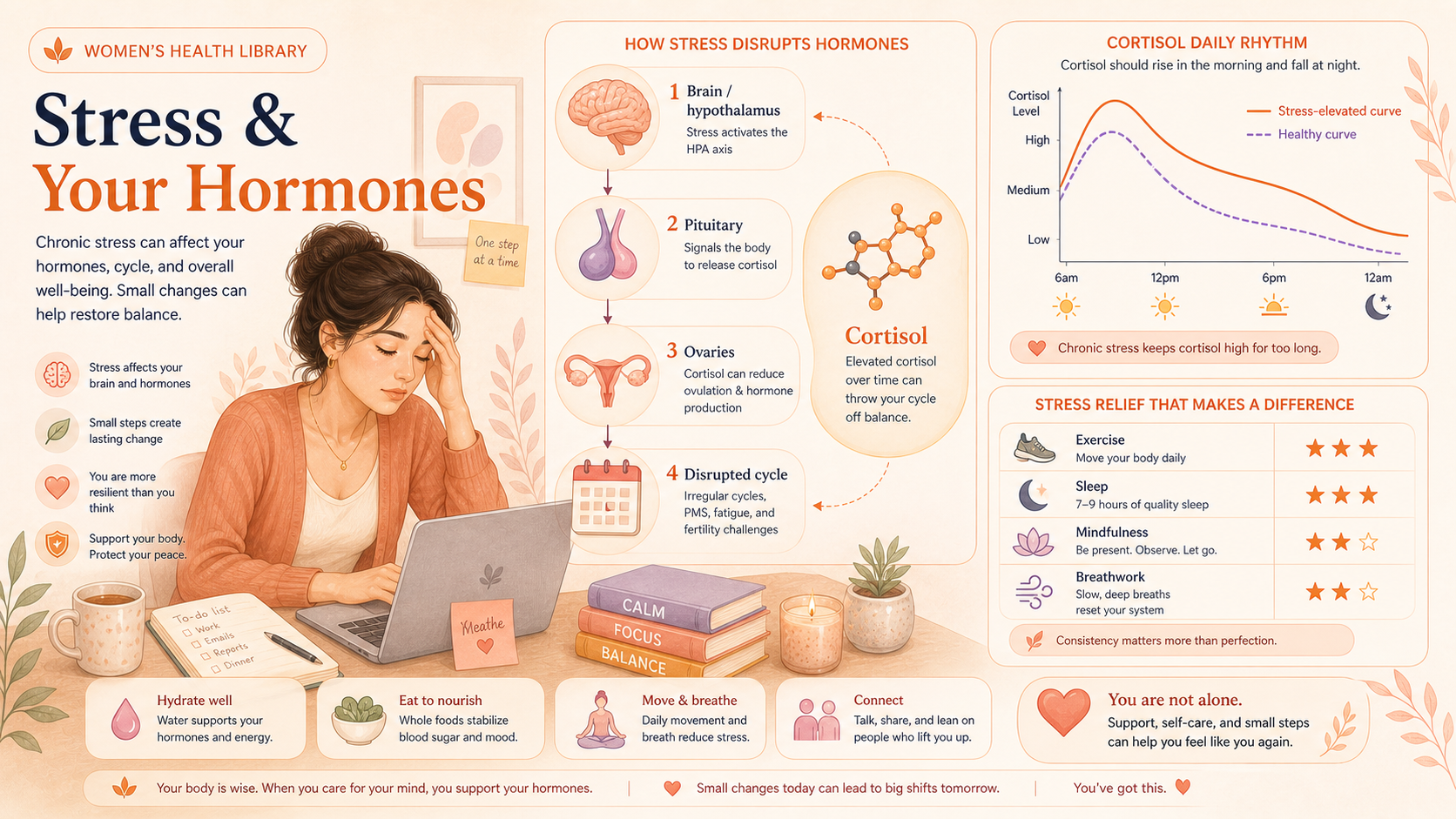
Stress & hormones at a glance
When life feels overwhelming — work deadlines, family responsibilities, money worries, exams, caring for others — your body responds in a very physical way. This is the stress response, and it's driven by hormones. In a moment of pressure, your body releases adrenaline and cortisol to help you meet the challenge: your heart beats faster, your senses sharpen and your body readies its energy. This is a brilliant survival system, and for short bursts it works exactly as it should.
The trouble starts when stress doesn't switch off. Modern life often keeps the pressure on day after day, and your body wasn't designed to run with high stress hormones all the time. When cortisol stays raised for weeks or months, it can quietly ripple into the rest of your hormones — including the reproductive hormones that drive your menstrual cycle. That's why long stretches of stress can leave your periods late, light, irregular or even missing, disturb your sleep, change your appetite and weight, flatten your mood and energy, and show up on your skin.
If any of this sounds familiar, please know two things: it's not your imagination, and it's not a personal failing. The link between stress and hormones is real and well recognised. This guide explains how it works, what to watch for, the everyday stress-care that genuinely helps, and when stress is affecting your health enough that it's worth seeing a doctor.
Stress is physical, not just mental
If stressful months have thrown your periods or sleep off track, that's your hormones responding to a real biological signal — not weakness. Noticing the link is the first step to feeling steadier.
Track your cycle and mood →What Is the Stress Response?
The stress response is your body's automatic way of dealing with a perceived threat or demand — sometimes called 'fight-or-flight'. When your brain senses pressure, it triggers a chain of signals that release stress hormones, mainly adrenaline (for an immediate jolt of energy and alertness) and cortisol (which keeps that response going and helps mobilise fuel). Your heart rate and breathing speed up, your muscles tense, and your attention narrows on the challenge in front of you.
This system is meant to be short-lived: it switches on to help you cope, then switches off so your body can rest and recover. Stress itself isn't 'bad' — it's a normal, healthy reaction that helps you rise to challenges. What matters is balance. Problems tend to arise when stress is intense, frequent or unrelenting, so the response stays switched on and cortisol stays high for long stretches. That's when stress can start to affect your hormones, cycle and overall health.
Acute vs chronic stress
A burst of stress before a presentation or exam is normal and usually harmless. It's ongoing, day-after-day stress — without enough rest and recovery — that's more likely to affect your hormones and health over time.
Stress and your body, in short
It's a survival response
Adrenaline and cortisol prepare your body to act fast — heart racing, senses sharp, energy ready.
Short bursts are fine
The stress response is designed to switch on briefly and then switch off so your body can recover.
Constant stress is the issue
When the 'off switch' rarely flips, cortisol stays high — and that's when problems build up.
Your cycle can react
Chronic stress can delay or skip periods, affect ovulation and make cycles irregular.
It touches everything
Sleep, appetite and weight, mood, energy and even skin can all shift when stress runs high.
Calm is restorative
Rest, movement, sleep and connection genuinely lower stress hormones — your body wants to recover.
The Hormones Behind Stress
- Adrenaline
- Released within seconds of feeling stressed, adrenaline gives the immediate 'rush' — a faster heartbeat, quicker breathing, a burst of energy and heightened alertness. It's designed for very short-term action and settles quickly once the pressure passes.
- Cortisol
- Often called the main 'stress hormone', cortisol rises a little more slowly and stays up longer. It helps keep energy available and keeps you in a state of readiness. In short bursts this is helpful; when stress is constant, persistently high cortisol can disrupt sleep, appetite, blood sugar, mood and the balance of other hormones.
- Effect on oestrogen and progesterone
- Your reproductive hormones (oestrogen and progesterone) work in a finely tuned monthly rhythm controlled by the brain. When the body is under sustained stress, it can effectively prioritise 'survival' over reproduction — dampening the signals that drive ovulation. This can lower or unsteady oestrogen and progesterone, which is why ongoing stress can delay, lighten, skip or make periods irregular, and can affect ovulation.
- Knock-on effects on other hormones
- Chronically raised cortisol can also influence the hormones that regulate appetite, sleep and blood sugar. That's part of why long-term stress is linked with disturbed sleep, changes in hunger and cravings, shifts in weight, and lower energy — the whole system is connected.
How Stress Can Affect Your Cycle & Health
When stress runs high for a while, the effects can show up across your body — not just in your mood. These are common ways chronic stress can present. They vary a lot from person to person.
Periods & cycle
- Periods that are late, irregular or unpredictable
- Lighter periods, or skipped periods
- Changes in ovulation, which can affect timing and fertility
- Worse premenstrual symptoms (mood, cramps, bloating)
Sleep & energy
- Trouble falling asleep or staying asleep
- Waking unrefreshed, or feeling 'wired but tired'
- Persistent fatigue and low energy through the day
Mood & mind
- Feeling anxious, on edge, irritable or overwhelmed
- Low mood, tearfulness or losing interest in things
- Trouble concentrating, 'brain fog' or feeling forgetful
Appetite, weight & skin
- Changes in appetite — eating much more or much less
- Stronger cravings, often for sugary or comfort foods
- Changes in weight, sometimes around the middle
- Flare-ups of acne or other skin changes
- Headaches, muscle tension, an upset stomach or bloating
Track while you read
Tick the symptoms that apply to you. This is a self-check, not a diagnosis — saved on this device only.
Spotting the pattern
Noting your stress levels alongside your cycle, sleep and mood — even a quick daily line — often reveals how closely they move together, and helps you and a doctor see what's going on.
Log your cycle and mood →What Keeps Stress Hormones High?
A short burst of stress is normal and harmless. It's when stress becomes constant — without enough recovery — that cortisol can stay raised and start to affect your hormones. Many everyday pressures, especially when they pile up, can keep the stress response switched on.
- Ongoing life pressures
- Work or study demands, money worries, relationship strain, family and caregiving responsibilities, or major life changes can keep your body in a state of low-grade alert for long periods.
- The 'always-on' load
- Long hours, constant connectivity, juggling many roles, and rarely having true downtime mean the stress response gets few chances to fully switch off and let the body recover.
- Poor sleep and rest
- Stress disturbs sleep, and poor sleep in turn raises stress hormones — a loop that can be hard to break and that amplifies the effect on your cycle and mood.
- Lifestyle factors that add load
- Skipping meals or very restrictive eating, intense over-exercising, too much caffeine, alcohol or smoking, and little physical activity can all add to the body's stress load.
- Health and hormonal conditions
- Existing anxiety, depression, thyroid problems or other health issues can both feed into and be worsened by stress — which is why it's worth getting checked if symptoms persist.
Stress affecting your hormones isn't a sign you're 'not coping well enough'. It's a normal biological response to a genuinely heavy load — and recognising that load is the first step to lightening it.
Stress-Care That Helps Your Hormones
The most powerful step is giving your body regular chances to switch off the stress response and recover. These everyday habits genuinely lower stress hormones over time — they work best done consistently, not only on your hardest days. Be gentle with yourself; small, repeated steps add up.
Build in real rest and pauses
- Take short, deliberate breaks through the day — even a few minutes of doing nothing helps
- Protect some genuine downtime each week for rest, hobbies or simply being still
- Lower expectations on heavy days; not everything has to be done at once
Calm your nervous system
- Try slow breathing (a longer breath out than in), meditation, prayer or quiet reflection
- Gentle yoga, stretching or time in nature signals safety to your body
- Practise daily, even briefly — calming the body regularly is what lowers cortisol over time
Move your body kindly
- Aim for regular, enjoyable activity — a brisk walk, cycling, swimming or dancing
- Movement helps burn off stress hormones and lifts mood
- Avoid pushing into exhausting, intense over-exercise, which can add to stress load
Protect your sleep
- Keep a consistent sleep and wake time, and wind down without screens beforehand
- Keep your room calm, dark and cool; avoid caffeine late in the day
- Better sleep lowers stress hormones, and lower stress improves sleep — they reinforce each other
Eat and fuel steadily
- Eat regular, balanced meals — don't skip meals, which can spike stress hormones
- Include whole grains, dal, vegetables, fruit, nuts and protein to keep energy steady
- Go easy on excess caffeine, sugary foods and alcohol, which can worsen the stress response
Lean on connection
- Talk to trusted friends or family — sharing genuinely eases stress
- Ask for help with the load where you can; you don't have to carry everything alone
- Set gentle boundaries around your time and energy where possible
Start with one small thing
You don't need to overhaul your life. Picking one habit — a daily walk, a regular bedtime, five minutes of slow breathing — and keeping it up for a few weeks is often enough to feel a real difference.
When to See a Doctor
Stress-care helps most people, but sometimes it's right to get medical support. Please speak to a doctor or gynaecologist if:
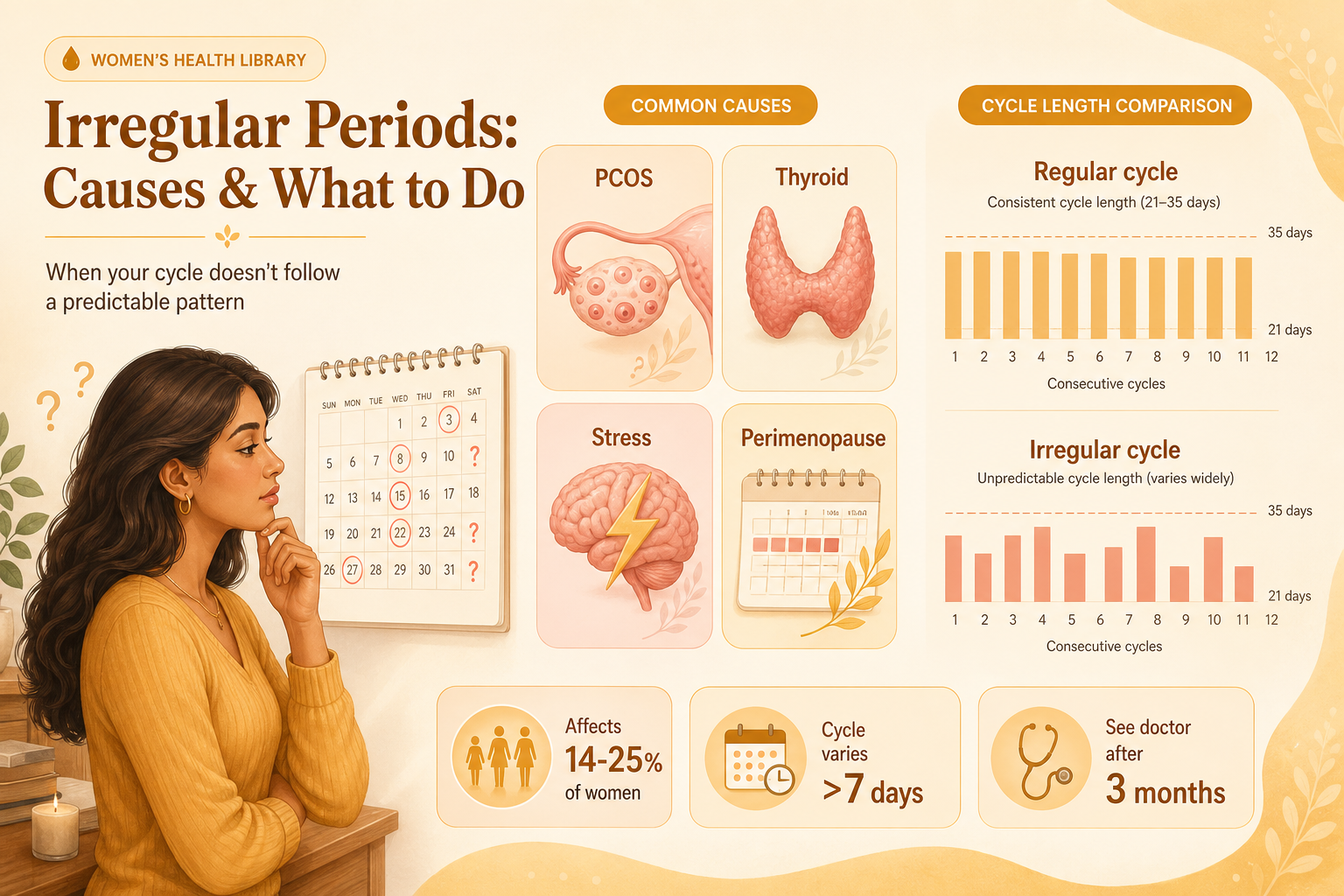
- Your periods become irregular, stop, or change for more than two to three cycles
- Stress, anxiety or low mood is constant or interfering with work, study or relationships
- Lifestyle and stress-care steps haven't helped after a few weeks
- You're worried something other than stress (e.g. a thyroid or hormonal issue) may be involved
- You feel low, hopeless or very anxious most days, beyond just busy or pressured times
Periods stop, or stay irregular
Your period stops for three months or more, or stays irregular even as life settles
Stress feels unmanageable
Stress, anxiety or low mood feels constant, overwhelming, or is affecting daily life
Sleep stays badly disrupted
Poor sleep persists despite trying to improve your routine
Physical symptoms persist
Ongoing fatigue, headaches, weight changes or other symptoms aren't settling
Please reach out right away
If stress ever brings thoughts of harming yourself, or you feel unable to cope or stay safe, please reach out now — to someone you trust, a mental-health professional, your local emergency services, or India's Tele-MANAS helpline on 14416 (or 1-800-891-4416), available 24/7. You are not alone, and immediate support is available.
Continue learning
Frequently Asked Questions
Can stress really affect my periods?
Yes. When the body is under sustained stress, high cortisol can dampen the signals that drive your cycle, which may delay your period, make it lighter or irregular, or cause you to skip one. Periods usually settle as stress eases, but see a doctor if they stay irregular or stop for three months or more.
What is cortisol and why does it matter?
Cortisol is the main stress hormone. It rises when you're under pressure and helps keep energy available and your body in a state of readiness. In short bursts that's useful. When stress is constant and cortisol stays high, it can affect sleep, appetite, weight, mood and the balance of your reproductive hormones.
Why does stress make me crave food or gain weight?
Chronically raised cortisol can influence appetite and blood sugar, which can increase hunger and cravings — often for sugary, comforting foods — and may lead to weight changes. Poor sleep from stress can add to this. Regular meals, movement and better sleep all help.
Can stress affect ovulation and fertility?
Ongoing stress can affect ovulation by disrupting the hormonal signals that drive it, which can make cycles irregular or harder to predict. For most people this settles as stress eases. If you're trying to conceive and your cycles are very irregular or absent, it's worth speaking to a doctor.
How do I lower my stress hormones naturally?
Give your body regular chances to switch off the stress response: real rest and breaks, slow breathing or meditation, gentle regular movement, good sleep, steady balanced meals, and connection with people you trust. Consistency matters more than intensity — small daily habits lower stress hormones over time.
When should I see a doctor about stress?
See a doctor if your periods become irregular or stop for two to three cycles or more, if stress or low mood feels constant or is affecting daily life, if self-care hasn't helped after a few weeks, or if you're worried another condition may be involved. If stress ever brings thoughts of self-harm, seek help immediately.
Was this guide helpful?
Understand your cycle better with ParentVibes
- Track your period dates
- Predict your next cycle
- Understand your fertile window
- Save health notes
- Get gentle reminders
Related tools
Period Tracker
Log periods and learn your personal cycle pattern.
Open tool
Ovulation Calculator
Estimate your ovulation date and fertile window.
Open tool
Fertility Window
See your most fertile days for trying to conceive.
Open tool
Pregnancy Tracker
Follow your pregnancy week by week once you conceive.
Open tool
Due Date Calculator
Estimate your baby's due date from your last period.
Open toolShare this guide with someone who needs it 💛
Medical review
- Last reviewed
- June 2026
- Medical reviewer
- Dr. Vinika G.
- Next review due
- June 2027
- Status
- Medically reviewed by Dr. Vinika G.
References
This article is for general information and education only and is not a substitute for professional medical advice, diagnosis, or treatment. Always consult a qualified doctor or gynaecologist about your symptoms, especially if your periods change or stop, or if stress is affecting your daily life. Do not start or stop any treatment or supplement without medical advice. If stress ever brings thoughts of self-harm or you feel unable to stay safe, please contact someone you trust, a mental-health professional, your local emergency services, or India's Tele-MANAS helpline on 14416 (or 1-800-891-4416), available 24/7. You are not alone, and help is available. Content reviewed against guidance from the NHS, the WHO, MedlinePlus and the American Psychological Association.
Women's Health Library journey
100%Related guides
Free resources
Start here
Your journey with ParentVibes
From your first period to your baby's vaccinations — one continuous, supported path.
Understand your cycle
Know your phases, hormones and what's normal.
Track your period
Log periods and learn your personal pattern.
Understand ovulation
Find your fertile window with the calculator.
Plan pregnancy
A calm, step-by-step start to trying to conceive.
Week-by-week pregnancy
Follow every week once you conceive.
Baby milestones
Track growth and development month by month.
Vaccination tracker
Stay on schedule and never miss a vaccine.
Medical disclaimer
This article is for educational purposes only and does not replace medical advice. If you have severe pain, heavy bleeding, missed periods, or unusual symptoms, please consult a qualified healthcare provider.