
ParentVibes
Women's Health Library · parentvibes.in
Pelvic Pain in Women: Causes, Red Flags & When to See a Doctor
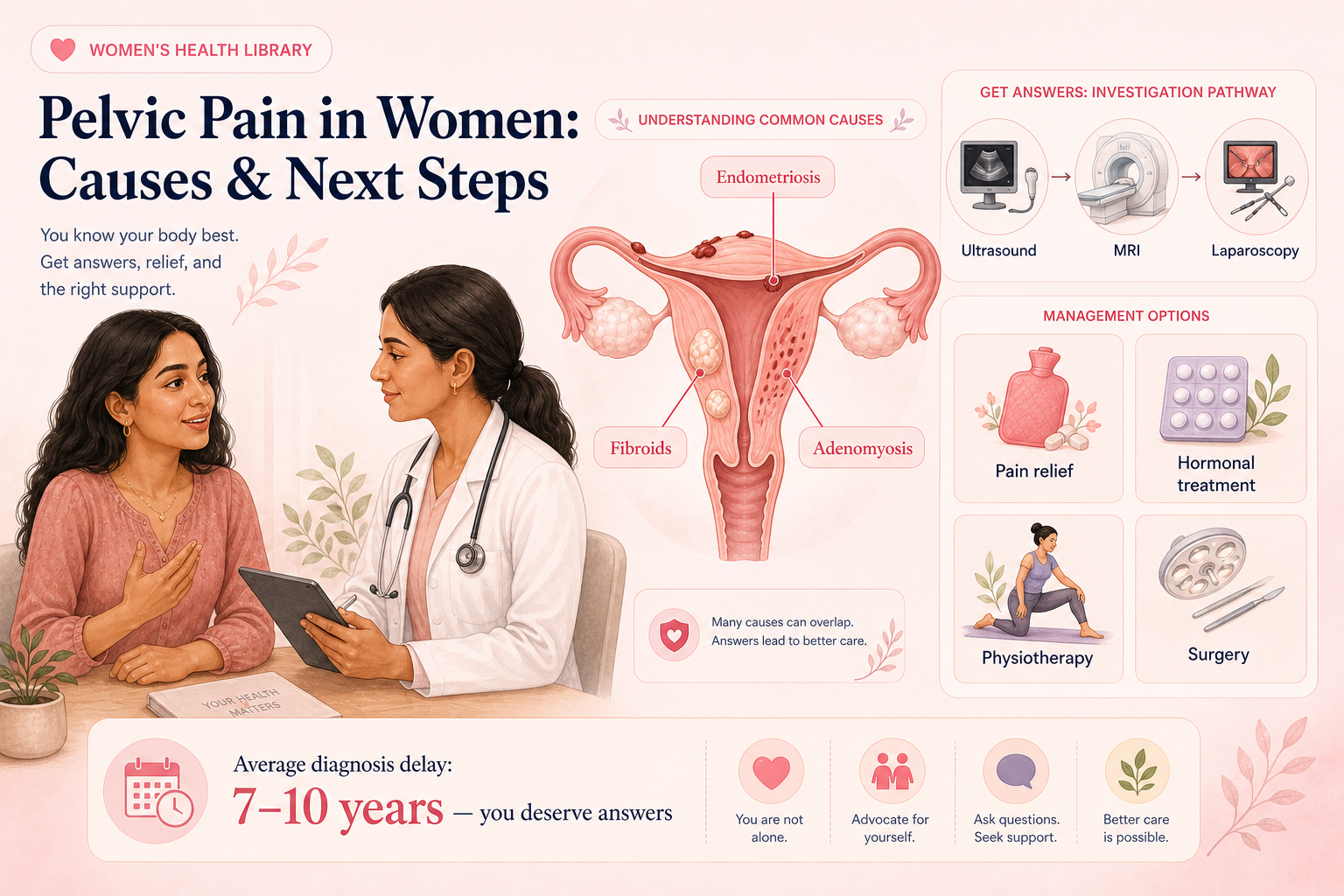
Pelvic pain at a glance
Pelvic pain is discomfort felt in the lowest part of your tummy and pelvis — the area below your belly button and between your hips. It can be sharp or dull, come and go or stay constant, and range from a mild niggle to severe pain that stops you in your tracks. Many women feel some pelvic pain at points in their lives, and most of the time there's a treatable explanation.
Doctors often think about pelvic pain in two broad groups. Acute pelvic pain is sudden and new — it has come on over hours or days. Chronic pelvic pain is pain that has lasted six months or more, either constantly or coming back regularly. The pain can come from the reproductive organs (uterus, ovaries, fallopian tubes), the bladder and urinary tract, the bowel, or the muscles and nerves of the pelvis — which is why finding the cause matters.
The good news is that most causes of pelvic pain are common and manageable, from period pain and ovulation pain to urinary infections, ovarian cysts, fibroids, endometriosis and bowel conditions like IBS. At the same time, a few patterns are warning signs that need urgent care. This guide walks through the common causes, what you can do at home, the red flags to never ignore, and when to see a doctor.
Note the pattern of your pain
When does it happen — around your period, mid-cycle, when you pass urine, after eating? Is it sharp or dull? What eases it? These details are the single most useful thing you can bring to a doctor, and tracking makes them clear.
Open the Period Tracker →What Is Pelvic Pain?
Pelvic pain is any pain felt in the area below your belly button and between your hips — your lower tummy, the area over your bladder, and deeper in the pelvis. It can feel sharp, crampy, dull, aching or pressure-like, and it may stay in one place or spread to your lower back, hips or inner thighs.
It helps to describe pelvic pain in a few simple ways, because these guide what's likely going on and how urgent it is. How long has it lasted — is it new and sudden (acute) or long-standing and recurring over six months or more (chronic)? Is it linked to your menstrual cycle — before or during periods, or around the middle of the cycle? Is it linked to other things, like passing urine, opening your bowels, eating, or sex? And how severe is it — mild and manageable, or severe enough to disrupt your day? You don't need medical answers to these; just noticing the pattern helps enormously.
Acute vs chronic — why it matters
Sudden, severe pain that's new is treated as potentially urgent until checked. Long-standing pain that comes and goes is usually assessed more gradually to find the underlying cause. Knowing which one you have helps you decide how quickly to seek care.
Pelvic pain, in short
It's a symptom, not a diagnosis
Pelvic pain points to something that needs explaining — the goal is to find and treat the cause.
Acute or chronic
Sudden, new pain (acute) is judged differently from pain that lingers for six months or more (chronic).
Often cycle-linked
Many causes — period pain, ovulation pain, endometriosis — follow your menstrual cycle.
Infections matter
Urinary infections and pelvic infections can cause pain and need prompt treatment.
Some pain is urgent
Severe sudden pain, pain with fever, or pain in pregnancy needs same-day medical care.
Tracking helps a lot
Noting when pain happens, how bad it is, and what eases it gives a doctor the clearest picture.
Symptoms & How Pelvic Pain Can Feel
Pelvic pain feels different depending on the cause. Noticing the type of pain and what comes with it helps you and your doctor narrow things down.
How the pain itself can feel
- Cramping, like period pain
- A dull ache or heaviness low in the tummy
- Sharp or stabbing pain, often on one side
- Pressure or a 'dragging' feeling
- Pain that spreads to the lower back, hips or thighs
- Pain that comes and goes, or stays constant
Things that may come with it
- Pain linked to your period or to mid-cycle (ovulation)
- Burning when passing urine, or needing to go often (possible UTI)
- Bloating, or a change in bowel habits (possible bowel cause)
- Pain during or after sex
- Abnormal vaginal discharge or unusual bleeding
- Fever, feeling generally unwell, or nausea and vomiting
Track while you read
Tick the symptoms that apply to you. This is a self-check, not a diagnosis — saved on this device only.
A simple pain diary helps
Note the date, where the pain is, how bad it is (mild / moderate / severe), what you were doing, and what eased it. Over a few weeks this reveals patterns a doctor can act on.
Track symptoms in the Period Tracker →Common Causes of Pelvic Pain
Pelvic pain has many possible causes, and they can come from the reproductive organs, the urinary system, the bowel, or the muscles and nerves of the pelvis. Below are some of the more common ones — but only a doctor can confirm what's causing your pain.
- Period pain (dysmenorrhoea)
- Cramping in the lower tummy and back during your period is one of the most common causes of pelvic pain. It's caused by the uterus contracting and usually eases over the first day or two. Pain that is very severe, getting worse over time, or new in someone who never had it deserves a check.
- Ovulation pain (mittelschmerz)
- Some women feel a brief, one-sided ache or twinge around the middle of their cycle, when an ovary releases an egg. It's usually mild and lasts a few hours to a couple of days — but sudden, severe one-sided pain should be checked.
- Endometriosis
- A condition where tissue similar to the womb lining grows outside the uterus. It can cause painful, sometimes severe periods, pain during or after sex, and chronic pelvic pain. It's a common cause of long-standing pelvic pain and is worth investigating if pain is significant.
- Fibroids
- Non-cancerous growths in or on the wall of the uterus. They can cause pelvic pressure or pain, heavy periods, and a feeling of fullness. Many fibroids cause no symptoms at all and don't always need treatment.
- Urinary and pelvic infections
- A urinary tract infection (UTI) can cause lower tummy pain along with burning when passing urine and needing to go often. Pelvic inflammatory disease (PID) — an infection of the reproductive organs, often from an untreated sexually transmitted infection — can cause pelvic pain, abnormal discharge and fever, and needs prompt treatment.
- Ovarian cysts
- Fluid-filled sacs on an ovary are common and often harmless, clearing on their own. But a cyst that grows large, bursts, or causes the ovary to twist (torsion) can cause sudden, severe one-sided pain — which is a medical emergency.
- Bowel conditions, including IBS
- The bowel sits within the pelvis, so digestive problems can feel like pelvic pain. Irritable bowel syndrome (IBS) can cause crampy lower tummy pain with bloating and changes in bowel habits. Constipation can also cause aching pelvic discomfort.
- Pregnancy-related causes
- Pelvic pain in pregnancy always needs medical advice. Early in pregnancy, one-sided pain with bleeding can signal an ectopic pregnancy (a pregnancy growing outside the womb), which is a medical emergency. Any pain or bleeding in pregnancy should be checked urgently.
Because so many systems share the pelvis, pelvic pain can be hard to pin down on your own — and that's completely normal. A doctor can sort through the possibilities; your job is simply to notice and describe the pattern.
How Pelvic Pain Is Treated
Treatment depends entirely on the cause — which is why getting a diagnosis matters. These are general examples only; your doctor will tailor care to you.
- Period or ovulation pain
- Heat, gentle movement and over-the-counter pain relief usually help. For troublesome period pain, a doctor may discuss hormonal options such as the combined pill.
- Urinary or pelvic infection
- Infections such as UTIs or pelvic inflammatory disease are treated with the right antibiotics, prescribed by a doctor. Prompt treatment of pelvic infections protects future fertility.
- Endometriosis or fibroids
- Options range from pain relief and hormonal treatments to procedures or surgery in some cases. Care is individual and decided with a gynaecologist.
- Ovarian cysts
- Many cysts are watched and clear on their own. Larger, persistent or complicated cysts — or a suspected twisted ovary (torsion) — may need urgent assessment or surgery.
- Bowel-related pain (e.g. IBS)
- Managed with diet, fluids, bowel-friendly habits and, where needed, medicines for IBS. A doctor can confirm the diagnosis and rule out other causes.
Finding the cause is the first step
A doctor may ask about your symptoms and cycle, examine you, and arrange tests such as a urine test, swabs, blood tests or an ultrasound scan. This helps target the right treatment rather than just masking the pain.
Ask a Doctor →Prescription treatments need a doctor
Antibiotics, hormonal treatments and other prescription medicines must be assessed, prescribed and monitored by a doctor — never started, shared or stopped on your own. Never ignore severe or worsening pelvic pain in the hope it will pass.
Easing Pelvic Pain at Home
For everyday pain — like period cramps or mild ovulation pain — these steps can bring real relief. They are not a substitute for seeing a doctor when pain is severe, new, or comes with red-flag signs (see below).
Warmth and rest
- A warm compress, hot water bottle or warm bath can ease cramping and muscle tension
- Rest when you need to, but gentle activity often helps more than lying still
- Loose, comfortable clothing around the tummy can reduce pressure
Gentle movement
- Light walking, stretching or gentle yoga can ease cramps and pelvic tension
- Regular activity through the month can reduce period and cycle-linked pain over time
- Listen to your body — ease off if movement makes the pain worse
Simple pain relief
- Over-the-counter pain relief can help period and mild pelvic pain — follow the packet instructions
- If you have stomach, kidney or other health conditions, or are pregnant, check with a doctor or pharmacist first
- If you regularly need pain relief to get through the day, see a doctor to find the cause
Diet, fluids and bowel care
- Stay well hydrated, especially if you have urinary symptoms
- Fibre, fluids and regular meals help if constipation or IBS adds to the discomfort
- Limiting very fatty, spicy or gas-forming foods may help bowel-related pelvic pain
Stress and pelvic tension
- Stress and anxiety can tighten pelvic muscles and worsen pain — breathing exercises and relaxation can help
- Gentle pelvic-floor relaxation and good sleep support recovery
- For ongoing pain, ask a doctor about pelvic-floor physiotherapy
Red Flags & When to See a Doctor
See a doctor if pelvic pain is severe, getting worse, new and unexplained, lasting more than a few days, or interfering with your daily life — and especially if you have any of the warning signs below. Some of these need same-day or emergency care.
Severe, sudden pelvic pain
Seek urgent/emergency care now — especially if it's sharp, one-sided, or comes with feeling faint, as this can signal a twisted ovary, a burst cyst or another emergency.
Pelvic pain with a fever
See a doctor urgently (same day) — pain plus fever can signal a pelvic infection that needs prompt treatment.
Pain or bleeding in pregnancy (or if you could be pregnant)
Seek urgent medical care immediately — one-sided pain with bleeding in early pregnancy can signal an ectopic pregnancy, which is an emergency.
Heavy or abnormal vaginal bleeding, or unusual discharge
See a doctor soon — especially with pain, an unpleasant smell, or fever.
Pain with vomiting, fainting, or being unable to pass urine or stool
Seek emergency care now — these can be signs of a serious problem.
Burning or blood when passing urine, with tummy or back pain
See a doctor promptly — a urinary infection can spread to the kidneys if untreated.
Pain that keeps returning, lasts months, or affects your daily life
Book a non-urgent appointment — chronic pelvic pain deserves proper investigation, even if it isn't an emergency.
Severe sudden pelvic pain — get help now
If you have severe, sudden pelvic pain — especially with fainting or feeling very unwell, with a fever, or with any bleeding when you are or could be pregnant — do not wait. Go to your nearest emergency department or call your local emergency services straight away. It's always better to be checked.
Continue learning
Frequently Asked Questions
Is pelvic pain normal?
Some pelvic pain — like period cramps or a mild mid-cycle twinge around ovulation — is very common and usually nothing to worry about. But pain that is severe, sudden, new, getting worse, or coming with fever or (if you could be pregnant) bleeding is not something to ignore and should be checked by a doctor.
What's the difference between acute and chronic pelvic pain?
Acute pelvic pain is sudden and new — it has come on over hours or days, and severe acute pain may be urgent. Chronic pelvic pain has lasted six months or more, either constantly or coming back regularly. Both deserve attention; the difference mainly affects how quickly you need to be seen and how the cause is investigated.
When is pelvic pain an emergency?
Seek emergency care for severe, sudden pelvic pain — especially if it's sharp and one-sided, comes with fainting or feeling very unwell, comes with a fever, or comes with any bleeding when you are or could be pregnant. These can signal conditions like a twisted ovary, a burst cyst, a serious infection or an ectopic pregnancy.
Can a urine infection cause pelvic pain?
Yes. A urinary tract infection (UTI) often causes lower tummy or pelvic pain along with burning when passing urine and needing to go more often. If you also have back pain, fever or blood in your urine, see a doctor promptly, as the infection can spread to the kidneys.
Could my pelvic pain be from my bowel rather than my reproductive organs?
Very possibly. The bowel sits within the pelvis, so digestive problems can feel like 'gynae' pain. Irritable bowel syndrome (IBS) and constipation are common causes of crampy lower tummy pain, often with bloating and changes in bowel habits. A doctor can help tell bowel causes apart from reproductive ones.
Should I worry about pelvic pain in pregnancy?
Any pain or bleeding in pregnancy should be checked by a doctor without delay. Early in pregnancy, one-sided pain with bleeding can be a sign of an ectopic pregnancy, which is a medical emergency. Please don't wait it out — seek urgent care.
Was this guide helpful?
Understand your cycle better with ParentVibes
- Track your period dates
- Predict your next cycle
- Understand your fertile window
- Save health notes
- Get gentle reminders
Related tools
Period Tracker
Log periods and learn your personal cycle pattern.
Open tool
Ovulation Calculator
Estimate your ovulation date and fertile window.
Open tool
Fertility Window
See your most fertile days for trying to conceive.
Open tool
Pregnancy Tracker
Follow your pregnancy week by week once you conceive.
Open tool
Due Date Calculator
Estimate your baby's due date from your last period.
Open toolShare this guide with someone who needs it 💛
Medical review
- Last reviewed
- June 2026
- Medical reviewer
- Dr. Vinika G.
- Next review due
- June 2027
- Status
- Medically reviewed by Dr. Vinika G.
References
This article is for general information and education only and is not a substitute for professional medical advice, diagnosis, or treatment. Always consult a qualified doctor or gynaecologist about pelvic pain and before starting any treatment. Severe, sudden pelvic pain — especially with fainting, fever, or any bleeding when you are or could be pregnant — needs emergency care: go to your nearest emergency department or call your local emergency services straight away. Prescription medicines must be prescribed and monitored by a doctor. Content reviewed against guidance from the NHS, ACOG, the WHO, and MedlinePlus.
Women's Health Library journey
100%Related guides
Free resources
Start here
Your journey with ParentVibes
From your first period to your baby's vaccinations — one continuous, supported path.
Understand your cycle
Know your phases, hormones and what's normal.
Track your period
Log periods and learn your personal pattern.
Understand ovulation
Find your fertile window with the calculator.
Plan pregnancy
A calm, step-by-step start to trying to conceive.
Week-by-week pregnancy
Follow every week once you conceive.
Baby milestones
Track growth and development month by month.
Vaccination tracker
Stay on schedule and never miss a vaccine.
Medical disclaimer
This article is for educational purposes only and does not replace medical advice. If you have severe pain, heavy bleeding, missed periods, or unusual symptoms, please consult a qualified healthcare provider.