
ParentVibes
Women's Health Library · parentvibes.in
Irregular Periods: What's Normal, Common Causes & When to See a Doctor
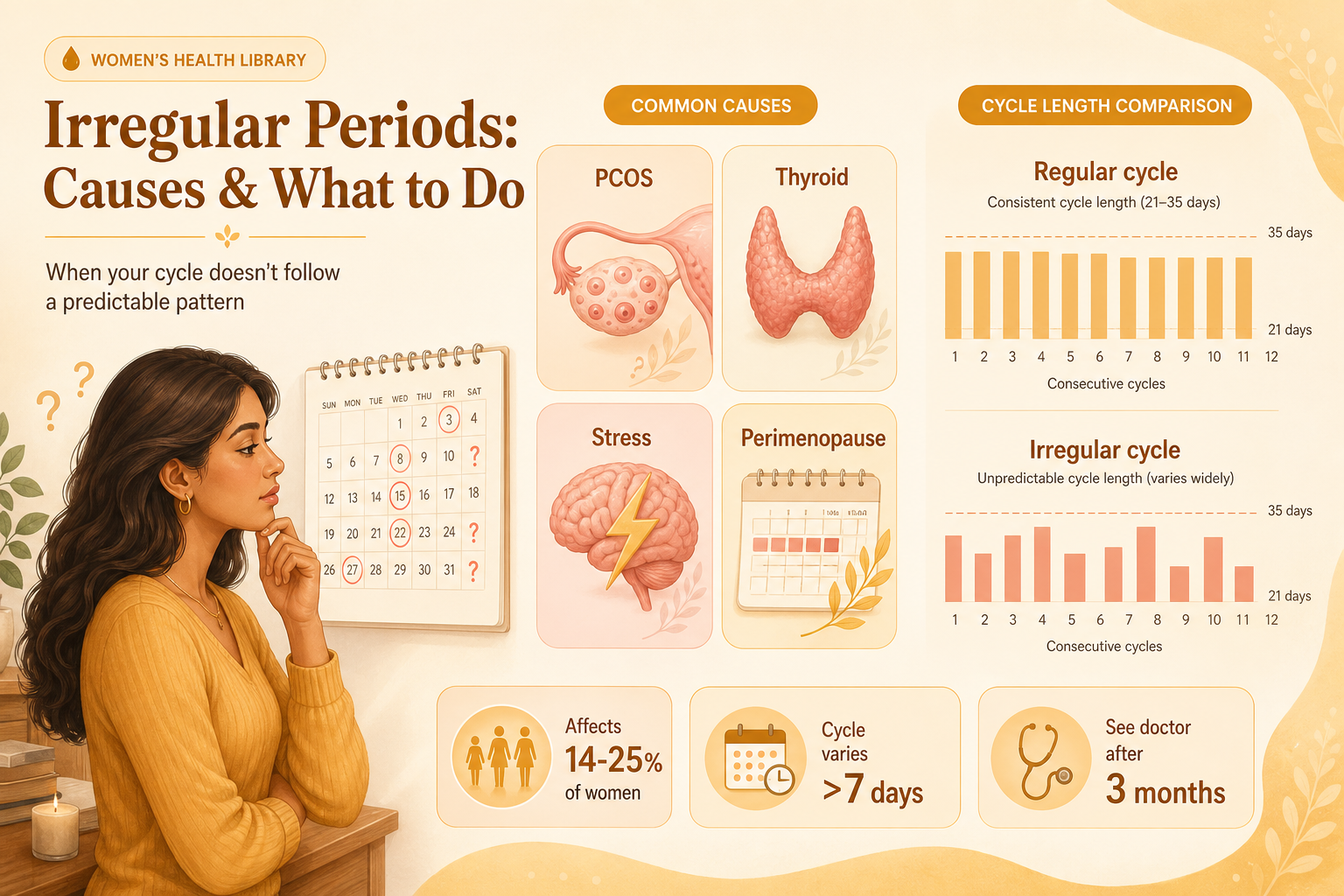
Quick Facts
Periods that arrive at unpredictable times, vary a lot in length or flow, or go missing for a while are described as irregular. They're extremely common — and often harmless — but they can also be your body's way of flagging something that's worth checking.
Periods are considered irregular when the gap between them keeps changing, or when cycles fall outside the usual 21–35 day range for adults. Some irregularity is completely normal at certain life stages — during the first few years after periods begin, and in the lead-up to menopause. At other times, irregular periods can point to a hormonal cause such as PCOS or a thyroid problem.
This guide explains what "irregular" really means, the common causes, how doctors find the reason, and the clear signs that mean you should book an appointment.
Track first
A few months of data in the ParentVibes Period Tracker is the single most useful thing you can bring to a doctor about irregular periods.
Track your cycle →Useful tools
Things worth knowing
Irregular is a pattern, not one event
It's about the gap or flow changing over time — not a single odd month.
Often it's harmless
Stress, travel, illness or a new routine can shift one or two cycles.
Sometimes it's a signal
PCOS and thyroid problems are common, treatable causes worth ruling out.
Life stage matters
Some irregularity is expected just after periods start and near menopause.
Check pregnancy first
A missed period always warrants a pregnancy test before anything else.
Tracking finds the pattern
A few months of data is the most useful thing to bring to your doctor.
Everything You Need to Know (What Counts as Irregular)
"Irregular" isn't a single thing — it's an umbrella for several patterns:
| Pattern | What it looks like |
|---|---|
| Unpredictable timing | The gap between periods keeps changing month to month |
| Cycles too short / too long | Regularly under 21 days or over 35 days (adults) |
| Missed periods | One or more skipped periods (not due to pregnancy) |
| Changeable flow/length | Period length or heaviness varies a lot |
Normal at some stages
Irregular cycles are expected in the first 1–3 years after periods start and in perimenopause. Switching contraception can also temporarily disturb your rhythm.
Quick definitions
- Oligomenorrhoea — infrequent periods (cycles longer than ~35 days).
- Amenorrhoea — no periods (primary: never started by 15–16; secondary: stopped for 3+ months).
Signs That Often Come With Irregular Periods
Irregular periods may appear alone or alongside clues to the cause. Note any of these to share with your doctor:
Signs to note
- Unpredictable, missed, or very spaced-out periods
- Hormonal signs: excess facial/body hair, acne, oily or dry skin, scalp hair thinning (may suggest PCOS)
- Thyroid signs: unexplained weight change, tiredness, feeling too hot or cold, palpitations
- Difficulty getting pregnant
- Significant recent weight loss/gain, very high exercise, or major stress
- Hot flushes or sleep changes (around perimenopause)
Track while you read
Tick the symptoms that apply to you. This is a self-check, not a diagnosis — saved on this device only.
Irregular periods plus weight gain, tiredness, facial hair or trouble conceiving should be reviewed by a doctor.
Causes
There are many possible causes — most are treatable once identified:
- Natural life stages
- Puberty (settling cycles) and perimenopause both bring irregular cycles.
- Hormonal conditions
- PCOS is a leading cause; an under- or over-active thyroid is another.
- Contraception
- Starting, stopping or switching hormonal methods can disturb cycles.
- Weight and body composition
- Being significantly under- or over-weight affects ovulation.
- Stress and lifestyle
- High stress, intense exercise, or eating too little can pause or delay periods.
- Pregnancy & breastfeeding
- The most common reason for missed periods if you're sexually active.
- Other medical conditions
- E.g. diabetes, high prolactin levels, and some chronic illnesses.
A negative pregnancy test plus three missed periods in a row is a clear prompt to see your doctor.
Diagnosis
There's no single test — your doctor works out the cause from your history, an exam, and targeted tests.
What your doctor may do
- History — your cycle pattern, last period date, other symptoms, weight, stress, contraception, family history (your tracker data is gold here)
- Pregnancy test — usually the first step if periods have stopped
- Examination — for signs of hormonal imbalance (skin, hair, weight, blood pressure)
- Blood tests — thyroid function, prolactin, and androgens (testosterone); sometimes FSH/LH and glucose/HbA1c
- Pelvic ultrasound — to look at the ovaries and womb (often transabdominal for unmarried women in India, per comfort and clinician judgment)
- Referral to a gynaecologist if further tests are needed
Bring your history
Keep scans and results in ParentVibes Medical Records so every doctor has the full picture.
Treatment
Treatment isn't always needed — if there's no underlying problem and you're not trying to conceive, irregular periods may simply be monitored. When treatment is needed, it targets the cause.
- PCOS-related
- Lifestyle measures; the combined pill can help regularise periods; metformin for metabolic features.
- Thyroid problem
- Treating the thyroid condition usually restores regular cycles.
- Weight / lifestyle
- Reaching a healthy weight, balanced eating, managing stress and exercise load.
- Contraception-related
- Reviewing or changing the method with your doctor.
- Trying to conceive
- Treating the cause and, if ovulation is absent, ovulation-supporting medicines under specialist care.
Trying to conceive with irregular cycles?
The ParentVibes Ovulation Calculator can help you plan next steps.
Try Ovulation Calculator →Never self-medicate
The combined pill, metformin, thyroid and fertility medicines are prescription-only and must be chosen and monitored by a doctor.
Home Care
While you get to the cause, these steps support a healthier, more regular cycle:
Support a more regular cycle
- Aim for a healthy, stable weight — both very low and very high weight disrupt ovulation. If above a healthy weight (e.g. with PCOS), even a ~5% loss can help
- Eat regularly and balanced — don't skip meals or under-eat; build plates around fibre + protein + healthy fats with whole grains/millets
- Match exercise to your body — regular moderate activity helps; extreme training can stop periods
- Manage stress and sleep — both strongly affect cycle hormones (yoga, breathing, 7–9 hours' sleep)
- Track every cycle so you can see whether things are improving
Daily habits for more regular cycles
- Balanced meals, no skipping
- Moderate (not extreme) exercise
- 7–9 hours sleep
- Stress check-in
- Cycle logged
When to See a Doctor
See a doctor if:
- You've missed 3 periods in a row and a pregnancy test is negative
- Periods suddenly become irregular after being regular
- Irregular periods come with weight gain, tiredness, facial/body hair, or acne
- You're struggling to conceive
- Cycles are regularly shorter than 21 days or longer than 35 days
- Bleeding between periods, after sex, or very heavy bleeding
- No periods have started by age 15–16
Same-day care
For very heavy bleeding (soaking a pad hourly for hours), fainting, or severe sudden pelvic pain.
Continue learning


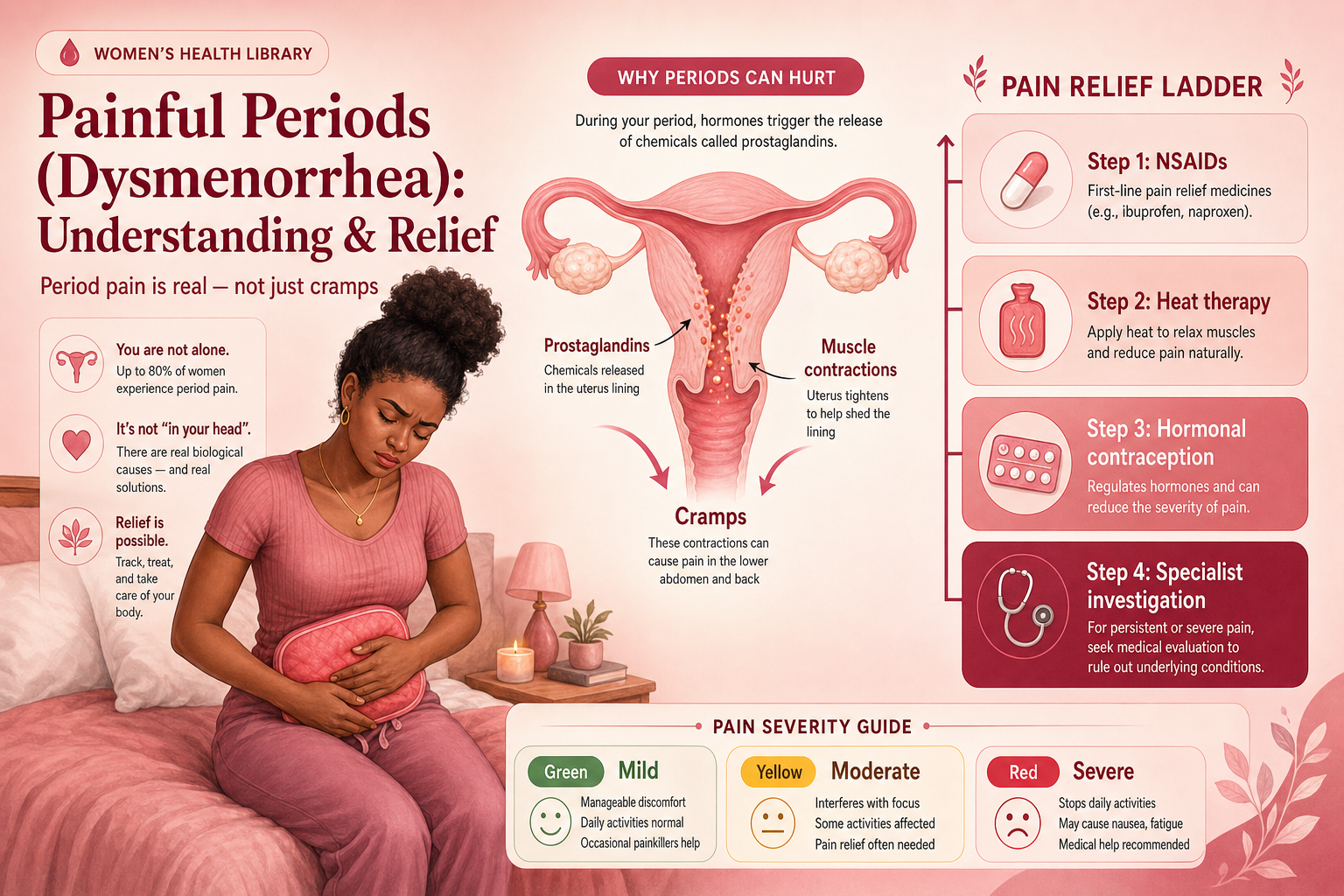
Frequently Asked Questions
What counts as an irregular period?
Periods are irregular when the gap between them keeps changing, or cycles are regularly shorter than 21 or longer than 35 days (in adults).
Are irregular periods normal?
Often yes — especially in the first few years after periods start and around menopause. Persistent irregularity at other times should be checked.
Why are my periods suddenly irregular?
Common reasons include stress, weight change, intense exercise, contraception changes, thyroid problems and PCOS. If sexually active, rule out pregnancy first.
Can irregular periods affect getting pregnant?
They can make timing harder and may signal irregular ovulation, but many women still conceive. A doctor can help if you're trying.
When should I worry about irregular periods?
See a doctor if you've missed 3 periods (and aren't pregnant), have other hormonal/thyroid signs, are struggling to conceive, or have bleeding between periods.
Can stress really delay my period?
Yes — significant stress can delay or pause periods by affecting cycle hormones.
Will losing weight help?
If you're above a healthy weight (e.g. with PCOS), even a ~5% reduction can help regularise periods.
Was this guide helpful?
Understand your cycle better with ParentVibes
- Track your period dates
- Predict your next cycle
- Understand your fertile window
- Save health notes
- Get gentle reminders
Related tools
Period Tracker
Log periods and learn your personal cycle pattern.
Open tool
Ovulation Calculator
Estimate your ovulation date and fertile window.
Open tool
Fertility Window
See your most fertile days for trying to conceive.
Open tool
Pregnancy Tracker
Follow your pregnancy week by week once you conceive.
Open tool
Due Date Calculator
Estimate your baby's due date from your last period.
Open toolShare this guide with someone who needs it 💛
Medical review
- Last reviewed
- June 2026
- Medical reviewer
- Dr. Vinika G.
- Next review due
- June 2027
- Status
- Medically reviewed by Dr. Vinika G.
References
This article is for general information and education only and is not a substitute for professional medical advice, diagnosis, or treatment. Always consult a qualified doctor about irregular periods and before starting, stopping, or changing any treatment or medication. In a medical emergency, contact your doctor or local emergency services immediately. Content reviewed against guidance from the NHS, ACOG, and peer-reviewed literature.
Women's Health Library journey
100%Related guides
Free resources
Start here
Your journey with ParentVibes
From your first period to your baby's vaccinations — one continuous, supported path.
Understand your cycle
Know your phases, hormones and what's normal.
Track your period
Log periods and learn your personal pattern.
Understand ovulation
Find your fertile window with the calculator.
Plan pregnancy
A calm, step-by-step start to trying to conceive.
Week-by-week pregnancy
Follow every week once you conceive.
Baby milestones
Track growth and development month by month.
Vaccination tracker
Stay on schedule and never miss a vaccine.
Medical disclaimer
This article is for educational purposes only and does not replace medical advice. If you have severe pain, heavy bleeding, missed periods, or unusual symptoms, please consult a qualified healthcare provider.