
ParentVibes
Women's Health Library · parentvibes.in
Acne in Women: Hormonal Causes, Triggers & How to Treat It
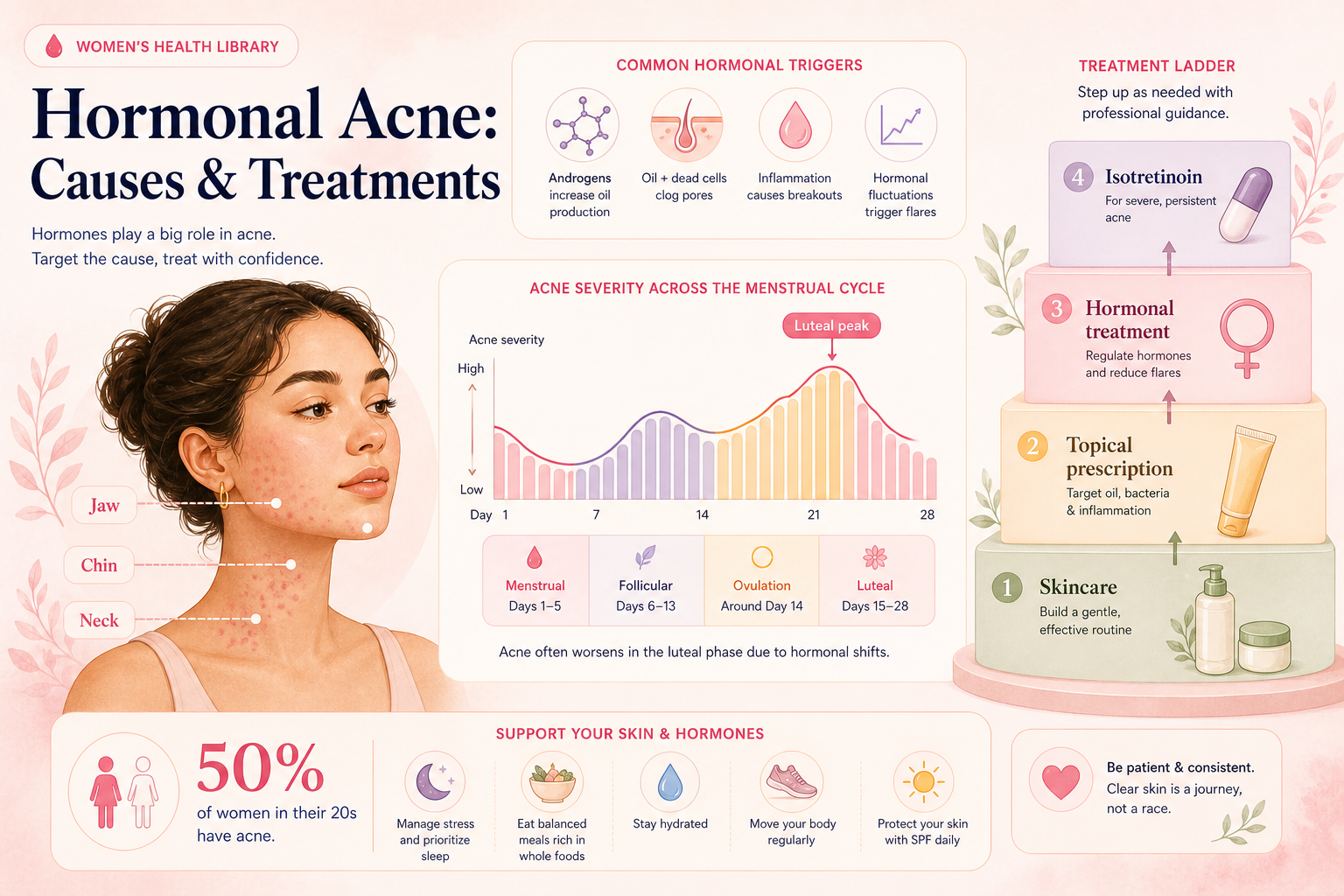
Acne at a glance
Acne is one of the most common skin conditions women experience — and contrary to what many of us are told, it doesn't simply stop after the teenage years. Plenty of women get their first spots, or their worst breakouts, well into their twenties, thirties and beyond. This is often called adult or hormonal acne, and it tends to show up along the jawline, chin and lower cheeks rather than across the whole face.
Acne happens when pores (the tiny openings of hair follicles) become blocked with oil and dead skin cells. Bacteria can then grow inside, leading to inflammation — the redness, swelling and tenderness of a spot. Hormones play a big part because they influence how much oil the skin makes, which is why acne so often flares before a period, during times of stress, or in conditions like PCOS (polycystic ovary syndrome).
Whatever your age, acne is not a reflection of your hygiene or anything you've done wrong — and it is very treatable. For most women, gentle and consistent skincare plus a few everyday adjustments make a real difference. When acne is stubborn, painful, scarring or affecting how you feel, a doctor or dermatologist has effective options. This guide explains why acne happens, what triggers flares, the PCOS connection, simple skincare that helps, and when it's time to get support.
Acne is common — and not your fault
If your spots flare reliably before your period or during stressful weeks, that's a hormonal pattern, not a hygiene problem. Tracking when flares happen can help you and a doctor see the picture clearly.
Open the Period Tracker →Useful tools
What Is Acne?
Acne is a condition where the skin's pores become blocked and inflamed. Each pore is connected to an oil (sebaceous) gland that makes sebum to keep skin soft. When too much oil combines with dead skin cells, the pore clogs. If bacteria that naturally live on skin grow inside that blocked pore, the area becomes inflamed — giving the red, tender spots we recognise as acne. Acne most often appears on the face, but can also affect the neck, chest, shoulders and back.
There are different types. Non-inflamed spots include blackheads (open clogged pores that look dark) and whiteheads (closed clogged pores). Inflamed spots include papules and pustules (the classic red or pus-filled spots), and deeper, more painful nodules and cysts. Hormonal acne in women is often inflamed and located lower on the face — around the jaw, chin and mouth — and may come and go with the cycle.
Hormonal acne has a 'signature'
Spots concentrated along the jawline and chin, often deeper and tender, that flare before your period are a typical sign of hormonal acne in adult women.
Acne, in short
It often follows your cycle
Hormonal acne tends to flare in the days before a period, especially along the jaw and chin.
It's not about being 'unclean'
Acne is driven by hormones, oil and clogged pores — not poor hygiene. Over-washing can make it worse.
You're far from alone
Acne is one of the most common skin conditions, and many women experience it well into adulthood.
Watch for the PCOS pattern
Acne alongside irregular periods or extra hair growth is worth checking with a doctor.
Patience pays off
Most treatments take several weeks to work — sticking with a gentle routine matters more than quick fixes.
Don't pick or squeeze
Squeezing spots can worsen inflammation and lead to lasting marks or scars.
Signs & Types of Acne
Acne can range from a few spots to widespread, inflamed breakouts. Recognising the type helps you choose the right care and know when to see a doctor.
Non-inflamed spots
- Blackheads — small, open clogged pores that look dark on the surface
- Whiteheads — small, closed clogged pores under the skin
- Generally not red or painful, but can feel rough or bumpy
Inflamed spots
- Papules — small red, tender bumps
- Pustules — red spots with a white or yellow centre of pus
- Nodules — larger, hard, painful lumps deep in the skin
- Cysts — deep, painful, pus-filled lumps that can lead to scarring
Where it shows up in women
- Jawline, chin and lower cheeks (typical of hormonal acne)
- Forehead, nose and mid-face
- Neck, chest, shoulders and back
- Marks or dark spots left behind after a spot heals
Track while you read
Tick the symptoms that apply to you. This is a self-check, not a diagnosis — saved on this device only.
Note the timing and the marks
Tracking when flares happen — and whether spots are leaving lasting marks or scars — helps you and a doctor decide whether home care is enough or stronger treatment would help.
Track flares in the Period Tracker →What Causes Acne in Women?
Acne is driven by a combination of factors rather than a single cause. In women, hormones are often central — which is why breakouts can track with the menstrual cycle and with conditions like PCOS.
- Hormones and oil production
- Androgens (hormones that all women have in small amounts) stimulate the skin's oil glands. More oil means a higher chance of clogged pores. Natural shifts across the menstrual cycle, in the years around starting periods, and at other hormonal stages can all influence breakouts.
- Cycle-related flares
- Many women notice spots in the week or so before a period (the luteal phase), as hormone levels shift. This premenstrual flare is one of the clearest signs that acne is hormonally driven.
- PCOS (polycystic ovary syndrome)
- PCOS is associated with higher androgen activity, which can cause persistent acne — often together with irregular periods and extra hair growth. If you notice this combination, it's worth seeing a doctor, as PCOS is manageable and treating it can also help the skin.
- Clogged pores and bacteria
- Dead skin cells and oil block pores, and skin bacteria can then multiply inside, driving inflammation. This is the basic mechanism behind most spots, whatever else is going on.
- Triggers that make it worse
- Stress, lack of sleep, certain skincare or make-up that clogs pores (look for 'non-comedogenic'), heavy sweating, friction from helmets, masks or phones held to the face, and picking or squeezing spots can all worsen acne — though they don't cause it on their own.
- Family tendency and other factors
- Acne often runs in families. Some medicines can also trigger or worsen it. The link with specific foods is less clear-cut, though some women find very sugary or highly processed diets seem to affect their skin.
Because acne in women is so often hormonal, it isn't about washing more or 'eating badly'. Understanding your own triggers — and being gentle with your skin — is far more useful than blame.
Treatment Options
Most acne improves with gentle, consistent skincare. When that isn't enough — or acne is deep, scarring or hormonal — a doctor or dermatologist can offer stronger options. Treatments take time, so give them several weeks before judging whether they work.
- Mild acne (a few spots, blackheads, whiteheads)
- A simple gentle routine and, if needed, an over-the-counter product a pharmacist recommends. Avoid harsh scrubbing and don't pick spots. Give it a few weeks of consistency.
- Moderate acne (more widespread, inflamed)
- A doctor may prescribe topical treatments (applied to the skin) or a course of antibiotics, alongside a good skincare routine. These need time and guidance to use safely.
- Hormonal acne (cycle-linked, jaw and chin)
- A doctor may discuss hormonal options such as the combined pill or other prescription treatments that target the hormonal driver. These are individual choices made with medical advice.
- Acne with PCOS signs
- A doctor can assess for PCOS (irregular periods, extra hair growth) and treat the underlying condition, which often helps the skin too. See our PCOS guide to learn more.
- Severe, deep or scarring acne
- A dermatologist may consider stronger prescription treatments and can advise on preventing or treating scarring. Early treatment of severe acne helps protect the skin long term.
Gentle and consistent beats harsh and quick
Most acne treatments take several weeks to show results. Sticking with a calm routine works far better than switching products constantly or scrubbing harder.
Ask a Doctor →Prescription acne treatments need a doctor
Antibiotics, hormonal treatments and stronger prescription medicines for acne must be assessed, prescribed and monitored by a doctor — never started, shared or stopped on your own. Some acne medicines are not safe in pregnancy, so always tell your doctor if you are pregnant, breastfeeding or trying to conceive.
Skincare & Everyday Care at Home
A simple, gentle routine done consistently is the foundation of acne care. The goal is to keep skin clean and calm without stripping or irritating it — over-washing and harsh products often make acne worse.
Keep your routine gentle
- Wash your face twice a day (morning and night) and after heavy sweating, with a mild cleanser and lukewarm water
- Use your fingertips, not rough scrubs or cloths — over-scrubbing irritates skin and worsens acne
- Pat dry gently and avoid touching your face through the day
Choose skin-friendly products
- Look for 'non-comedogenic' or 'oil-free' on moisturisers, sunscreen and make-up so they don't clog pores
- Moisturise even oily skin — a light, oil-free moisturiser keeps the skin barrier healthy
- Remove make-up fully before bed and clean make-up brushes regularly
Don't pick or squeeze
- Squeezing or picking spots pushes inflammation deeper and raises the risk of marks and scars
- Let spots heal on their own; cover them with non-comedogenic make-up if you wish
- Keep things that touch your face clean — pillowcases, phone screens, helmet straps and masks
Support your skin from the inside
- Aim for balanced meals with plenty of vegetables, fruit, whole grains and protein
- Stay hydrated and try to get regular, good-quality sleep
- Manage stress where you can — breathing, gentle movement, prayer or time outdoors
Protect against marks
- Use a non-comedogenic sunscreen daily — sun can darken post-acne marks, which is especially relevant for Indian skin tones
- Be patient: dark marks left after spots often fade over weeks to months on their own
- Avoid harsh 'fairness' or strong DIY treatments that can irritate and worsen marks
A gentle reminder
Skincare basics — gentle cleansing, the right products, no picking and daily sunscreen — do the heavy lifting. Expensive products aren't necessary; consistency is.
When to See a Doctor or Dermatologist
Please speak to a doctor, gynaecologist or dermatologist if:
- Your acne is moderate to severe, or isn't improving with gentle home care after a few weeks
- You have deep, painful spots, nodules or cysts
- Acne is leaving marks or scars
- You also have irregular periods or extra hair growth (possible PCOS)
- Your skin is affecting your confidence, mood or daily life
- You're pregnant, breastfeeding or trying to conceive and want safe options
Sudden, severe acne with rapid worsening
See a doctor promptly to assess the cause and start treatment early
Acne plus irregular periods and extra hair growth
Worth a doctor's review to check for PCOS
Deep, painful cysts or early scarring
Ask about a dermatologist referral to protect the skin long term
Getting help early protects your skin
There's no need to 'wait it out' if acne is painful, scarring or getting you down. Effective treatments exist, and starting sooner helps prevent lasting marks.
Ask a Doctor →Continue learning
Frequently Asked Questions
Why am I getting acne as an adult woman?
Adult acne is common and usually hormonal. Hormones influence how much oil your skin makes, so spots can appear or worsen around your cycle, during stress, or with conditions like PCOS. It's not a sign of poor hygiene — and it's very treatable.
Why does my acne flare before my period?
Hormone levels shift in the days before a period (the luteal phase), which can increase oil and trigger breakouts — often along the jawline and chin. This premenstrual flare is one of the clearest signs that acne is hormonally driven.
Is my acne a sign of PCOS?
Acne on its own isn't a diagnosis. But persistent acne together with irregular periods and extra hair growth can be a sign of PCOS. If you notice that combination, see a doctor — PCOS is manageable, and treating it often helps the skin too.
What's the best skincare routine for acne?
Keep it gentle and consistent: a mild cleanser twice a day, a light oil-free (non-comedogenic) moisturiser, daily sunscreen, and no picking or harsh scrubbing. Give any new routine or product several weeks before judging whether it helps.
Does diet cause acne?
The link is not clear-cut, and acne isn't caused by 'eating badly'. Some women find very sugary or highly processed foods seem to affect their skin. A balanced diet, good sleep and stress care support healthy skin overall, but they're not a cure on their own.
Should I stop wearing make-up if I have acne?
You don't have to. Choose make-up labelled 'non-comedogenic' or 'oil-free' so it doesn't clog pores, remove it fully before bed, and keep brushes clean. Covering spots with the right products is fine and won't worsen acne.
Was this guide helpful?
Understand your cycle better with ParentVibes
- Track your period dates
- Predict your next cycle
- Understand your fertile window
- Save health notes
- Get gentle reminders
Related tools
Period Tracker
Log periods and learn your personal cycle pattern.
Open tool
Ovulation Calculator
Estimate your ovulation date and fertile window.
Open tool
Fertility Window
See your most fertile days for trying to conceive.
Open tool
Pregnancy Tracker
Follow your pregnancy week by week once you conceive.
Open tool
Due Date Calculator
Estimate your baby's due date from your last period.
Open toolShare this guide with someone who needs it 💛
Medical review
- Last reviewed
- June 2026
- Medical reviewer
- Dr. Vinika G.
- Next review due
- June 2027
- Status
- Medically reviewed by Dr. Vinika G.
References
This article is for general information and education only and is not a substitute for professional medical advice, diagnosis, or treatment. Always consult a qualified doctor, gynaecologist or dermatologist about your skin and before starting any treatment. Prescription acne medicines, antibiotics and hormonal treatments must be prescribed and monitored by a doctor, and some are not safe in pregnancy — always tell your doctor if you are pregnant, breastfeeding or trying to conceive. Content reviewed against guidance from the NHS, the American Academy of Dermatology, MedlinePlus, ACOG and the WHO.
Women's Health Library journey
100%Related guides
Free resources
Start here
Your journey with ParentVibes
From your first period to your baby's vaccinations — one continuous, supported path.
Understand your cycle
Know your phases, hormones and what's normal.
Track your period
Log periods and learn your personal pattern.
Understand ovulation
Find your fertile window with the calculator.
Plan pregnancy
A calm, step-by-step start to trying to conceive.
Week-by-week pregnancy
Follow every week once you conceive.
Baby milestones
Track growth and development month by month.
Vaccination tracker
Stay on schedule and never miss a vaccine.
Medical disclaimer
This article is for educational purposes only and does not replace medical advice. If you have severe pain, heavy bleeding, missed periods, or unusual symptoms, please consult a qualified healthcare provider.