
ParentVibes
Women's Health Library · parentvibes.in
Periods (Menstruation): What's Normal, Common Problems & When to See a Doctor
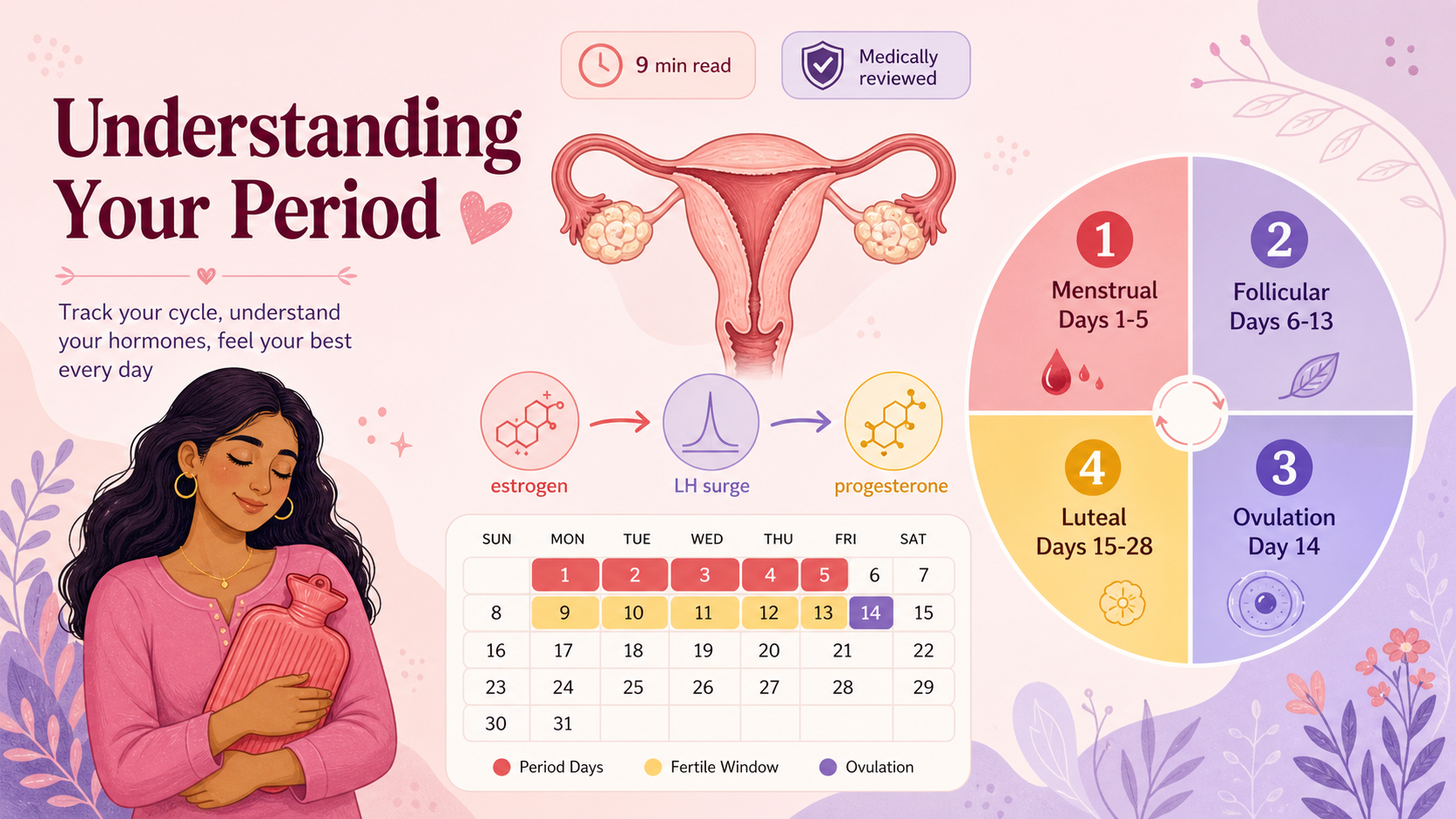
Quick Facts
A period is the part of the menstrual cycle when the lining of the womb (uterus) sheds and leaves the body through the vagina as menstrual blood. It's a normal, healthy sign that the reproductive system is working — and for most women it's a monthly companion for around 30–40 years of life.
Periods usually begin around age 12, though starting anywhere from about 8 to 17 is normal, often roughly two years after the first signs of puberty. In fact, doctors now treat the menstrual cycle as a "vital sign" — a useful window into a girl's or woman's overall health, just like blood pressure or pulse.
Yet periods are still surrounded by confusion, silence and myths — especially in India, where open conversation can be limited. This pillar guide gives you the clear, judgement-free basics: what a normal period looks like, what's not normal, the common problems (pain, heavy bleeding, irregular or missed periods), and exactly when to see a doctor.
Know your normal
Tracking each period in the ParentVibes Period Tracker helps you learn your own pattern — and makes it far easier to spot when something changes.
Track your period →Useful tools
Things worth knowing
A period is the lining shedding
It's the womb lining leaving the body — a normal sign the system is working.
“Normal” varies a lot
Length, flow and timing differ between women and across life stages.
Your cycle is a vital sign
Doctors use it like blood pressure — a useful window into your health.
Mild cramps are normal
Pain that stops daily life is not — and deserves a doctor's review.
Brown or pink blood is fine
Colour often changes on lighter days, at the start or end of a period.
Tracking reveals your pattern
A few months of data makes it easy to spot when something changes.
Everything You Need to Know (What's Normal)
There's a wide range of "normal," and your normal may differ from a friend's. Day 1 is the first day of bleeding; hormones rebuild the womb lining and, around mid-cycle, an egg is released (ovulation). If it isn't fertilised, hormone levels drop and the lining sheds as your next period. Here are the reference ranges from trusted health bodies:
| What | Typical / normal range |
|---|---|
| Age periods start (menarche) | Around 12; normal from ~8–17, often ~2 years after puberty signs |
| Cycle length (adults) | ~28 days typical; 21–35 days is normal |
| Cycle length (teens, first few years) | 21–45 days can be normal as cycles settle |
| Bleeding duration | 2–7 days; about 5 days is typical |
| Blood loss | About 20–90 ml (≈1–5 tablespoons) per period |
| Colour | Red when heaviest; pink or brown on lighter days |
Cycles settle with time
In the first 1–3 years after periods start, irregularity is common and usually normal as the body's hormones find their rhythm.
Symptoms (What You May Feel Around Your Period)
Periods come with a range of physical and emotional symptoms — most are normal, though they shouldn't run your life.
Common and usually normal
- Cramping in the lower tummy or back (period pain)
- Bloating, tender breasts, headaches
- Tiredness and changes in appetite
- Mood changes, irritability or low mood in the days before (often called PMS)
- Spotting just before a period starts
Signs worth getting checked (not "just part of periods")
- Pain so severe it stops you going to school, work or daily activities
- Very heavy bleeding (flooding, large clots, soaking through protection hourly)
- Bleeding between periods or after sex
- Periods that suddenly become very irregular, stop, or change a lot
Track while you read
Tick the symptoms that apply to you. This is a self-check, not a diagnosis — saved on this device only.
Unticked boxes are worth a conversation with a doctor — Ask a Doctor on ParentVibes can help you decide.
Causes (Why Periods Happen)
Periods are driven by a monthly rise and fall of reproductive hormones — mainly oestrogen and progesterone, controlled by the brain (pituitary gland) and ovaries. Hormones build the womb lining in the first half of the cycle; ovulation happens around mid-cycle; and if there's no pregnancy, hormone levels fall and the lining sheds as a period. Several things can change or disrupt periods:
- Natural life stages
- Puberty (settling cycles) and the approach to menopause both bring irregularity.
- Pregnancy and breastfeeding
- Periods pause during pregnancy and often while breastfeeding.
- Hormonal conditions
- PCOS / PCOD and thyroid problems are common causes of period changes.
- Lifestyle factors
- Significant weight change, intense exercise, stress, or eating too little.
- Medicines & contraception
- Some medicines and hormonal contraception alter periods.
- Conditions affecting the womb
- Fibroids and polyps can cause heavy or irregular bleeding.
A missed period is most commonly due to pregnancy in someone who is sexually active — a test is the simplest first step.
Diagnosis (How Doctors Assess Period Problems)
Periods themselves don't need diagnosing, but if something seems off, a doctor evaluates it. There's no single test — assessment is built around your menstrual history.
What your doctor may do
- History — when periods started, cycle length and regularity, flow, pain, the date of your last period, and any bleeding between periods (this is why tracking helps so much)
- Examination — general health, weight, signs of hormonal imbalance; a pelvic exam only if clinically appropriate
- Tests, if needed — a pregnancy test; blood tests for thyroid, prolactin or androgens; and a pelvic ultrasound (in India, often done transabdominally for unmarried women, per comfort and clinician judgment)
Teens
Because the menstrual cycle is a vital sign, doctors are encouraged to ask about it at every visit — so don't hesitate to raise period concerns early. Early identification of abnormal patterns can flag health issues sooner.
Treatment (Managing Period Problems)
Healthy periods don't need treatment. When there's a problem, treatment targets the cause and your goal, and ranges from simple self-care to doctor-prescribed options.
- Period pain
- Heat, gentle activity, simple pain relief; a doctor may suggest hormonal options if pain is significant.
- Heavy bleeding
- Medical review for cause; options may include medicines or hormonal treatments; iron if anaemic.
- Irregular / missed periods
- Address the cause (e.g. PCOS, thyroid, weight, stress); hormonal options if appropriate.
- PMS / mood symptoms
- Lifestyle measures, stress management; medical options for severe symptoms.
Trying to conceive?
Understanding your cycle is the first step — the ParentVibes Ovulation Calculator helps you find your fertile window.
Try Ovulation Calculator →Never self-medicate
Hormonal pills and prescription medicines must be assessed, chosen and monitored by a doctor based on your individual health.
Home Care (Self-Care During Your Period)
Most period discomfort can be eased at home:
Comfort
- Apply a warm compress or hot-water bottle to the lower tummy or back
- Keep gently moving — a short walk, stretching or yoga can ease cramps
- Rest when you need to; warm baths can help
Eating & drinking
- Stay hydrated; favour iron-rich foods (leafy greens, dals, jaggery, eggs) — especially with heavier periods
- Limit very salty, very sugary and caffeinated foods if they worsen bloating or mood
Hygiene (India-friendly)
- Change pads/tampons regularly (roughly every 4–6 hours, sooner if heavy); a menstrual cup is a reusable, hygienic option many find comfortable
- Wash with plain water; avoid harsh internal washes. Dispose of products hygienically
Wellbeing
- Track your symptoms, prioritise sleep, and manage stress
- Periods are normal — there's no need to limit normal daily life
Period-care kit checklist
- Pads / tampons / menstrual cup
- Spare underwear & wipes
- Pain relief (as advised)
- Hot-water bottle
- Tracker updated
When to See a Doctor
See a doctor if you notice:
- No periods by age 15–16, or by ~3 years after breast development begins (possible delayed puberty)
- Periods stop for 3+ months (and you're not pregnant), or become very irregular
- Very heavy bleeding — flooding, large clots, or soaking through protection every 1–2 hours
- Severe pain that stops normal activities or isn't helped by simple measures
- Bleeding between periods, after sex, or after menopause
- Periods lasting longer than 7 days
- Symptoms suggesting anaemia (tiredness, breathlessness, pallor) from heavy periods
Seek same-day care
For bleeding that soaks a pad every hour for several hours, fainting, or severe sudden pelvic pain.
Continue learning
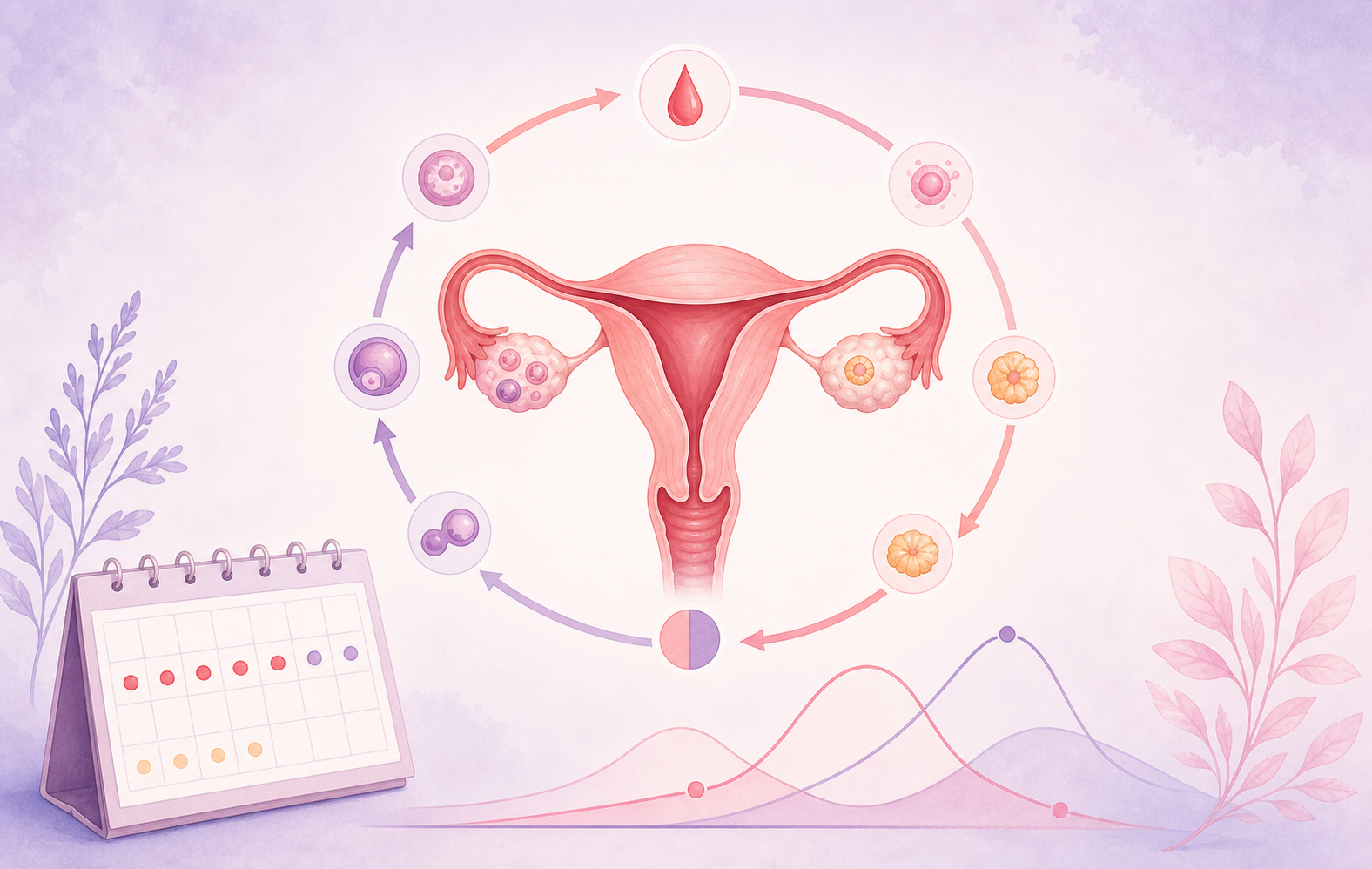
The Menstrual Cycle
The full hormonal rhythm behind your period — the four phases explained.
Read guide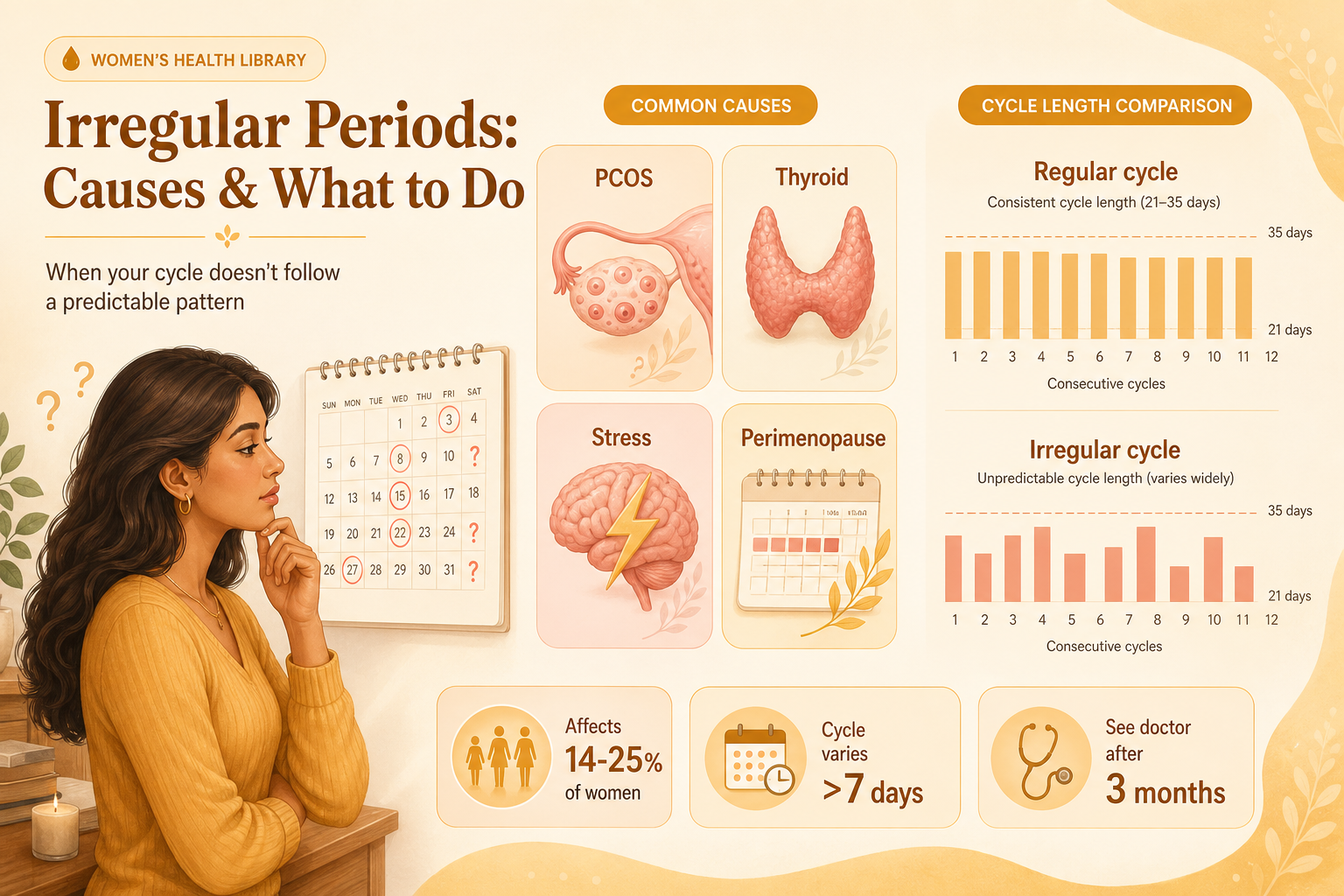
Irregular Periods
Why cycles go off-schedule and when it's worth investigating.
Read guide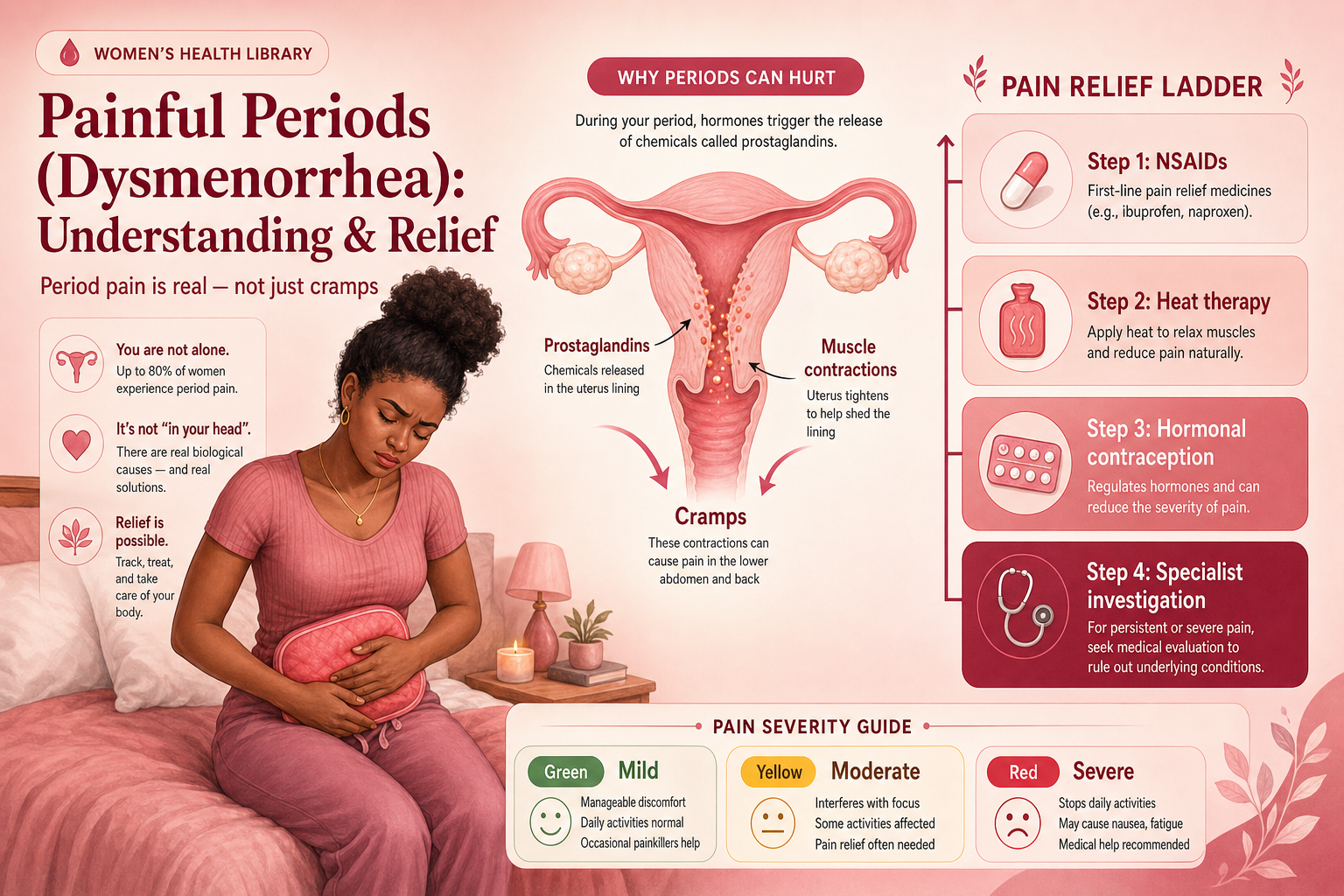
Painful Periods
What's normal, what's not, and relief that actually works.
Read guide
PCOS
A common hormonal cause of irregular or missed periods.
Read guideFrequently Asked Questions
How long is a normal period and cycle?
A period usually lasts 2–7 days (about 5 is typical). A cycle is normally 21–35 days in adults; in the first few years after periods start, 21–45 days can be normal.
At what age do periods start?
Usually around 12, but anywhere from about 8 to 17 is normal, often about two years after puberty begins. See a doctor if there's no period by 15–16.
How much bleeding is normal?
About 20–90 ml (roughly 1–5 tablespoons) per period. Soaking through protection hourly, or large clots, is too heavy and should be checked.
Is it normal for periods to be irregular?
In the first 1–3 years and around menopause, some irregularity is normal. Persistent irregularity at other times should be assessed.
Why is my period late if I'm not pregnant?
Stress, big weight changes, intense exercise, illness, thyroid issues and PCOS/PCOD can all delay periods. If you're sexually active, take a pregnancy test first.
Can I exercise, swim or do normal activities on my period?
Yes. There's no need to restrict normal activity. Gentle exercise can even ease cramps.
Is brown blood normal?
Yes — blood is often pink or brown on lighter days (start or end of a period).
Can I get pregnant during my period?
It's less likely but not impossible, especially with short cycles. Use an ovulation tracker to understand your fertile window.
Was this guide helpful?
Understand your cycle better with ParentVibes
- Track your period dates
- Predict your next cycle
- Understand your fertile window
- Save health notes
- Get gentle reminders
Related tools
Period Tracker
Log periods and learn your personal cycle pattern.
Open tool
Ovulation Calculator
Estimate your ovulation date and fertile window.
Open tool
Fertility Window
See your most fertile days for trying to conceive.
Open tool
Pregnancy Tracker
Follow your pregnancy week by week once you conceive.
Open tool
Due Date Calculator
Estimate your baby's due date from your last period.
Open toolShare this guide with someone who needs it 💛
Medical review
- Last reviewed
- June 2026
- Medical reviewer
- Dr. Vinika G.
- Next review due
- June 2027
- Status
- Medically reviewed by Dr. Vinika G.
References
This article is for general information and education only and is not a substitute for professional medical advice, diagnosis, or treatment. Periods and what's "normal" vary between individuals. Always consult a qualified doctor (OB-GYN or your physician) about period concerns, and before starting, stopping, or changing any treatment or medication. Never disregard professional medical advice or delay seeking it because of something you read here. In a medical emergency, contact your doctor or local emergency services immediately. Content reviewed against guidance from the NHS, ACOG, the American Academy of Pediatrics (AAP), and peer-reviewed literature.
Women's Health Library journey
100%Related guides
Free resources
Start here
Your journey with ParentVibes
From your first period to your baby's vaccinations — one continuous, supported path.
Understand your cycle
Know your phases, hormones and what's normal.
Track your period
Log periods and learn your personal pattern.
Understand ovulation
Find your fertile window with the calculator.
Plan pregnancy
A calm, step-by-step start to trying to conceive.
Week-by-week pregnancy
Follow every week once you conceive.
Baby milestones
Track growth and development month by month.
Vaccination tracker
Stay on schedule and never miss a vaccine.
Medical disclaimer
This article is for educational purposes only and does not replace medical advice. If you have severe pain, heavy bleeding, missed periods, or unusual symptoms, please consult a qualified healthcare provider.