
ParentVibes
Women's Health Library · parentvibes.in
Vaginal Health: What's Normal, Common Issues & How to Care for It
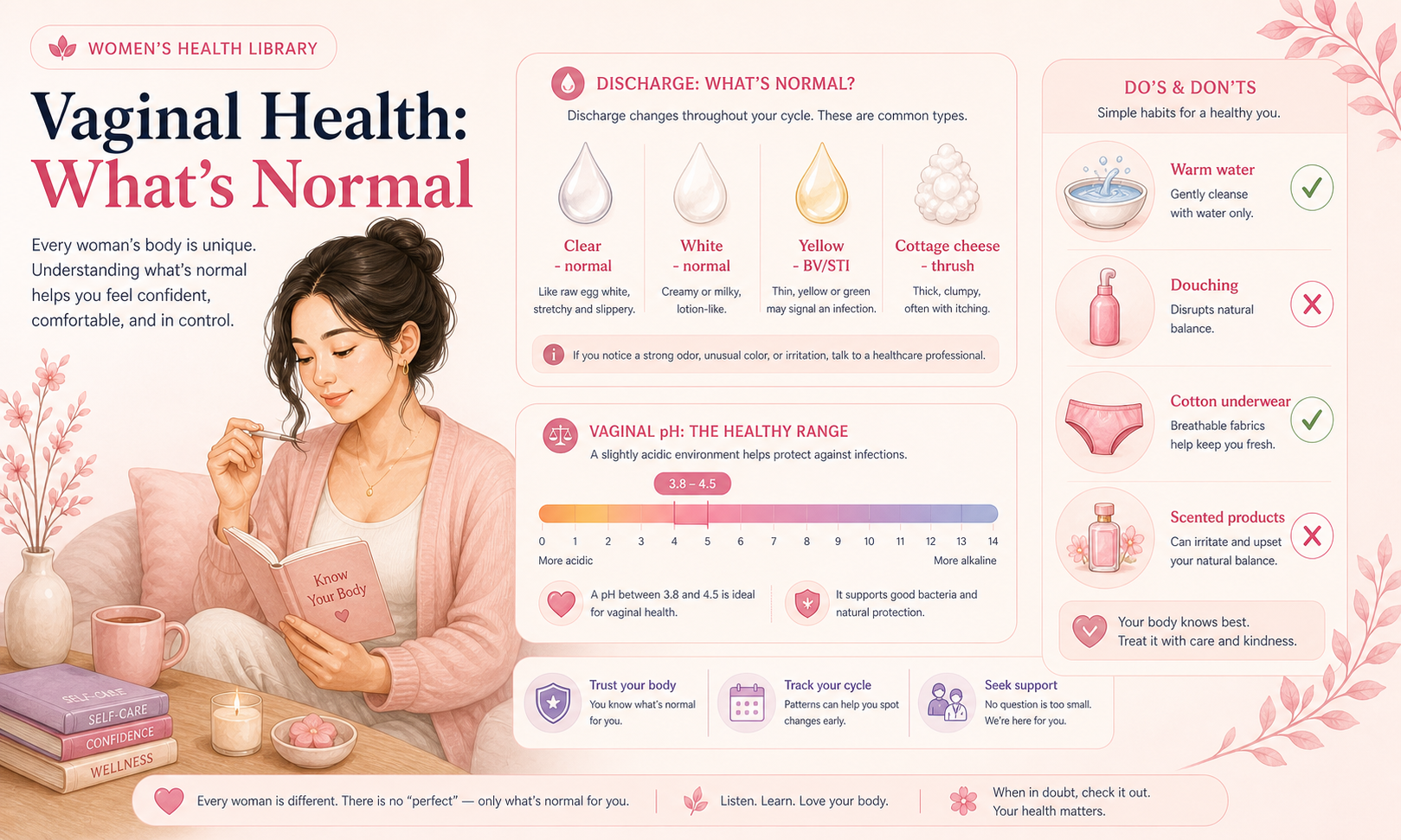
Vaginal health at a glance
Your vagina is a healthy, self-maintaining part of your body — yet it's something many of us were never taught to talk about openly. The good news is that caring for it is far simpler than the marketing for 'feminine hygiene' products would have you believe. In fact, the vagina is self-cleaning: it keeps its own balance of helpful bacteria and a naturally slightly acidic environment that protects against infection.
A small amount of discharge is completely normal and even helpful — it's how the vagina cleans itself. Discharge naturally changes in amount and texture across your menstrual cycle, and that's nothing to worry about. At the same time, common issues like thrush (a yeast infection), bacterial vaginosis, urinary tract infections and vaginal dryness affect many women at some point. They're usually easy to treat and absolutely nothing to feel embarrassed about.
This guide explains what's normal, what isn't, the everyday habits that genuinely help (and the popular myths to let go of), and the signs that mean it's worth seeing a doctor. The aim is simple: clear, judgment-free information so you can look after this part of your body with confidence.
Vulva or vagina?
The vulva is the outer part you can see and wash; the vagina is the internal canal. You only ever need to gently wash the vulva — the vagina takes care of itself. Knowing the difference makes caring for both much easier.
How a Healthy Vagina Works
The vagina is home to a community of 'good' bacteria — mainly lactobacilli — that produce mild acids, keeping the environment slightly acidic. This natural acidity, along with a steady production of discharge, is the vagina's built-in defence system: it discourages harmful bacteria and yeast from overgrowing. This is why the vagina is described as self-cleaning, and why washing inside it (douching) is unnecessary and can actually be harmful — it strips away the protective bacteria and upsets the balance. Hormones, especially oestrogen, also play a role: they help keep the vaginal tissues supple, well-lubricated and resilient, which is why dryness can appear at times of lower oestrogen.
Less really is more
A healthy vagina doesn't need special washes, wipes, sprays or 'intimate' products. Plain warm water on the vulva is enough — and leaving the inside alone lets it do its job.
The basics, in short
It cleans itself
The vagina maintains its own balance — you only need to wash the outside (the vulva) gently with water.
Discharge is normal
A small amount of clear or milky-white discharge is healthy and naturally changes through your cycle.
Balance matters
A slightly acidic pH and helpful bacteria keep infections at bay. Douching disrupts that balance.
Skip the douche
Douching and scented products do more harm than good — they raise the risk of irritation and infection.
Issues are common
Thrush, BV and UTIs are very common and usually easy to treat — there's no shame in seeking care.
Know your normal
When you know what's usual for you, it's easier to notice changes worth checking with a doctor.
Normal Discharge vs When to Take Notice
| Feature | Usually normal | Worth checking with a doctor |
|---|---|---|
| Colour | Clear, white or milky; may look pale yellow when dry on underwear | Green, grey, or bright yellow |
| Texture | Thin and watery, or thicker and creamy; stretchy and egg-white-like around ovulation | Thick and cottage-cheese-like, or thin and frothy |
| Amount | Varies across the cycle; often more around ovulation and before a period | A sudden, marked increase that's unusual for you |
| Smell | Mild, musky or faint — and familiar to you | Strong, fishy, or otherwise unpleasant or new |
| Other signs | No itching, burning, pain or soreness | Itching, burning, soreness, pain, or any bleeding between periods |
Your normal is the best baseline
Discharge varies a lot from person to person and across the cycle. What matters most is noticing a change from what's usual for you — especially if it comes with itching, odour, pain or an unusual colour.
Signs Something May Be Off
Most of the time everything is fine. But a few signs are worth paying attention to — they often point to a common, treatable issue rather than anything serious.
Changes in discharge
- Thick, white, cottage-cheese-like discharge (often points to thrush)
- Thin, greyish-white discharge with a fishy smell (often points to bacterial vaginosis)
- Green, frothy or strong-smelling discharge
- A sudden change in colour, amount or smell that's unusual for you
Discomfort and sensation
- Itching, soreness or burning around the vulva or vagina
- Stinging or burning when you pass urine
- Needing to pass urine more often or urgently (a sign of a UTI)
- Dryness, tightness or discomfort, including during sex
- Pain or discomfort in the lower tummy or pelvis
Things to never ignore
- Bleeding between periods or after sex
- Bleeding after menopause
- A sore, lump, ulcer or unusual growth on the vulva
- Pain with fever, which can suggest a deeper infection
It's okay to get it checked
These symptoms are common and usually easily treated. Seeing a doctor early means quicker relief — and reassurance. There's nothing embarrassing about it.
Ask a Doctor →Common Issues & Why They Happen
Most vaginal issues come down to a temporary upset in the natural balance of bacteria, yeast or moisture. Here are the most common, in plain language — all of them are treatable.
- Thrush (vaginal yeast infection)
- An overgrowth of a yeast (usually Candida) that lives harmlessly in small amounts. It causes itching, soreness and thick, white, cottage-cheese-like discharge that usually doesn't smell. It's very common, isn't classed as a sexually transmitted infection, and can be triggered by antibiotics, hormonal changes, pregnancy or diabetes. It's treated with antifungal pessaries, creams or tablets.
- Bacterial vaginosis (BV)
- A change in the balance of bacteria in the vagina, where the protective lactobacilli reduce and other bacteria increase. It often causes a thin, greyish-white discharge with a fishy smell, but little or no itching. It's common, isn't a sexually transmitted infection, and douching and scented products can trigger it. It's treated with antibiotics from a doctor.
- Urinary tract infections (UTIs)
- Infections of the urinary system — most often the bladder — usually caused by bacteria. They cause burning when passing urine, needing to go more often or urgently, and sometimes lower-tummy discomfort. They're very common in women and treated with antibiotics. Wiping front to back and staying well-hydrated can help reduce the risk.
- Vaginal dryness
- When the vagina makes less natural moisture, leading to discomfort, itching or pain during sex. It's most often linked to lower oestrogen — around menopause, while breastfeeding, or with some medications — but stress and certain products can contribute too. Vaginal moisturisers, lubricants and (where appropriate) medical treatments help a lot.
- Irritation and contact reactions
- Scented soaps, washes, wipes, bubble baths, douches and even some detergents can irritate the delicate skin of the vulva, causing itching and soreness without any infection. Switching to plain water and unscented products often settles it.
- Sexually transmitted infections (STIs)
- Some infections passed on through sex (such as trichomoniasis, chlamydia or gonorrhoea) can change discharge or cause discomfort — and some cause no symptoms at all. Testing is the only way to be sure, and most are very treatable. Condoms and regular testing are the best protection.
Similar symptoms, different causes
Thrush and BV can feel alike but need different treatments — which is why guessing (or repeatedly self-treating) often doesn't work. A quick check with a doctor gets you the right treatment first time.
Caring for Your Vaginal Health — and Myths to Drop
Good vaginal care is mostly about doing less, not more. These simple habits protect the natural balance — and the myths below are best let go of.
Keep washing simple
- Wash only the vulva (the outside) gently with plain warm water — once a day is plenty
- Never wash inside the vagina; it cleans itself and douching upsets the balance
- Skip scented soaps, intimate washes, sprays, wipes and 'feminine hygiene' products
- Pat dry gently and avoid vigorous scrubbing
Please don't douche
Douching (washing inside the vagina) is not recommended. It strips away the protective bacteria and raises the risk of irritation, bacterial vaginosis and other infections. The vagina does not need internal cleaning.
Choose breathable, comfortable clothing
- Cotton underwear lets the area breathe; change daily and after heavy sweating or exercise
- Avoid very tight clothing for long periods, which can trap heat and moisture
- Change out of wet swimwear or sweaty gym clothes promptly
Mind everyday habits
- Always wipe front to back after using the toilet to lower the risk of UTIs
- Stay well-hydrated and don't hold in urine for long periods
- Change pads, tampons or menstrual products regularly during periods
- Use a water-based lubricant for comfort during sex if you need it
Protect against infection
- Use condoms to lower the risk of sexually transmitted infections
- Consider regular STI testing if you're sexually active, especially with new partners
- Finish any prescribed course of treatment fully, even once you feel better
Myths worth letting go of
- Myth: 'A clean vagina needs washing inside.' It cleans itself — washing inside causes harm.
- Myth: 'Discharge means something is wrong.' Some discharge is normal and healthy.
- Myth: 'A natural smell is bad.' A mild, familiar scent is normal; only a strong or fishy odour needs checking.
- Myth: 'Scented products keep you fresh.' They often irritate the skin and disrupt the balance.
When to See a Doctor
Many issues settle on their own or are quickly treated. Please see a doctor or gynaecologist if you notice:
- You're unsure whether your symptoms are thrush, BV, a UTI or something else
- You're pregnant and notice unusual symptoms
- You think you may have been exposed to a sexually transmitted infection
Persistent itching, soreness or burning
Especially if it doesn't ease, or keeps coming back
Unusual discharge
A new colour (green, grey, bright yellow), strong or fishy smell, or thick, lumpy texture
Burning when passing urine or needing to go very often
Possible UTI — get it checked promptly
Pain during sex or ongoing dryness
Especially if it's affecting your comfort or relationships
Pain in the lower tummy or pelvis
Particularly with fever, which can signal a deeper infection
Bleeding between periods, after sex, or after menopause
Always worth getting checked
A sore, lump, ulcer or unusual growth on the vulva
Get this assessed without delay
Symptoms that return after treatment
Recurrent thrush or BV may need a different approach
Quick to treat, quicker to relief
Most vaginal issues are common and easily treated once correctly identified. Seeing a doctor early means faster relief and avoids repeated self-treatment that doesn't quite work.
Ask a Doctor →Continue learning
Frequently Asked Questions
How do I keep my vagina clean?
You don't need to clean inside the vagina at all — it's self-cleaning. Simply wash the vulva (the outer area) gently with plain warm water, once a day. Avoid scented soaps, intimate washes, sprays and wipes, and never douche, as these can disrupt the natural balance and cause irritation or infection.
Is vaginal discharge normal?
Yes. A small amount of clear or milky-white discharge is completely normal and is part of how the vagina cleans itself. The amount and texture naturally change across your cycle — often more and stretchier around ovulation. It's worth checking with a doctor only if the colour, smell or texture changes notably, or if there's itching, burning or pain.
What's the difference between thrush and bacterial vaginosis?
Thrush is a yeast overgrowth that usually causes itching and thick, white, cottage-cheese-like discharge that doesn't smell much. Bacterial vaginosis (BV) is a change in vaginal bacteria that usually causes a thin, greyish discharge with a fishy smell and little itching. They feel similar but need different treatments, so it's best to have it checked rather than guess.
Why shouldn't I douche or use intimate washes?
Douching and scented intimate products strip away the protective 'good' bacteria and disrupt the vagina's natural acidic balance. Rather than keeping you cleaner, they actually raise the risk of irritation, bacterial vaginosis and other infections. The vagina is self-cleaning and needs nothing inside it — plain water on the vulva is all you need.
Is it normal for the vagina to have a smell?
Yes. A mild, musky scent that's familiar to you is completely normal and varies a little across your cycle. It's only worth checking if the smell becomes strong, fishy or unpleasant, or comes with unusual discharge, itching or irritation — which can point to a treatable issue like BV.
What causes vaginal dryness, and can it be helped?
Vaginal dryness is most often linked to lower oestrogen — around menopause, while breastfeeding, or with some medications — though stress and irritating products can contribute too. It's common and very treatable: vaginal moisturisers, water-based lubricants and, where appropriate, medical treatments can all help. A doctor can guide you to the right option.
Was this guide helpful?
Understand your cycle better with ParentVibes
- Track your period dates
- Predict your next cycle
- Understand your fertile window
- Save health notes
- Get gentle reminders
Related tools

Period Tracker
Log periods and learn your personal cycle pattern.
Open tool
Ovulation Calculator
Estimate your ovulation date and fertile window.
Open tool
Fertility Window
See your most fertile days for trying to conceive.
Open tool
Pregnancy Tracker
Follow your pregnancy week by week once you conceive.
Open tool
Due Date Calculator
Estimate your baby's due date from your last period.
Open toolShare this guide with someone who needs it 💛
Medical review
- Last reviewed
- June 2026
- Medical reviewer
- Dr. Vinika G.
- Next review due
- June 2027
- Status
- Medically reviewed by Dr. Vinika G.
References
This article is for general information and education only and is not a substitute for professional medical advice, diagnosis, or treatment. Always consult a qualified doctor or gynaecologist about your symptoms and before starting any treatment. Vaginal symptoms such as thrush, bacterial vaginosis and UTIs can look similar but need different treatments, so please get an accurate diagnosis rather than self-treating repeatedly. Seek medical advice promptly for bleeding between periods or after sex, bleeding after menopause, persistent pain, fever, or any sore, lump or unusual growth. Content reviewed against guidance from the NHS, ACOG, the WHO and MedlinePlus.
Women's Health Library journey
100%Related guides
Free resources
Start here
Your journey with ParentVibes
From your first period to your baby's vaccinations — one continuous, supported path.
Understand your cycle
Know your phases, hormones and what's normal.
Track your period
Log periods and learn your personal pattern.
Understand ovulation
Find your fertile window with the calculator.
Plan pregnancy
A calm, step-by-step start to trying to conceive.
Week-by-week pregnancy
Follow every week once you conceive.
Baby milestones
Track growth and development month by month.
Vaccination tracker
Stay on schedule and never miss a vaccine.
Medical disclaimer
This article is for educational purposes only and does not replace medical advice. If you have severe pain, heavy bleeding, missed periods, or unusual symptoms, please consult a qualified healthcare provider.