
ParentVibes
Women's Health Library · parentvibes.in
PMS (Premenstrual Syndrome): Symptoms, Causes, Relief & When to Get Help
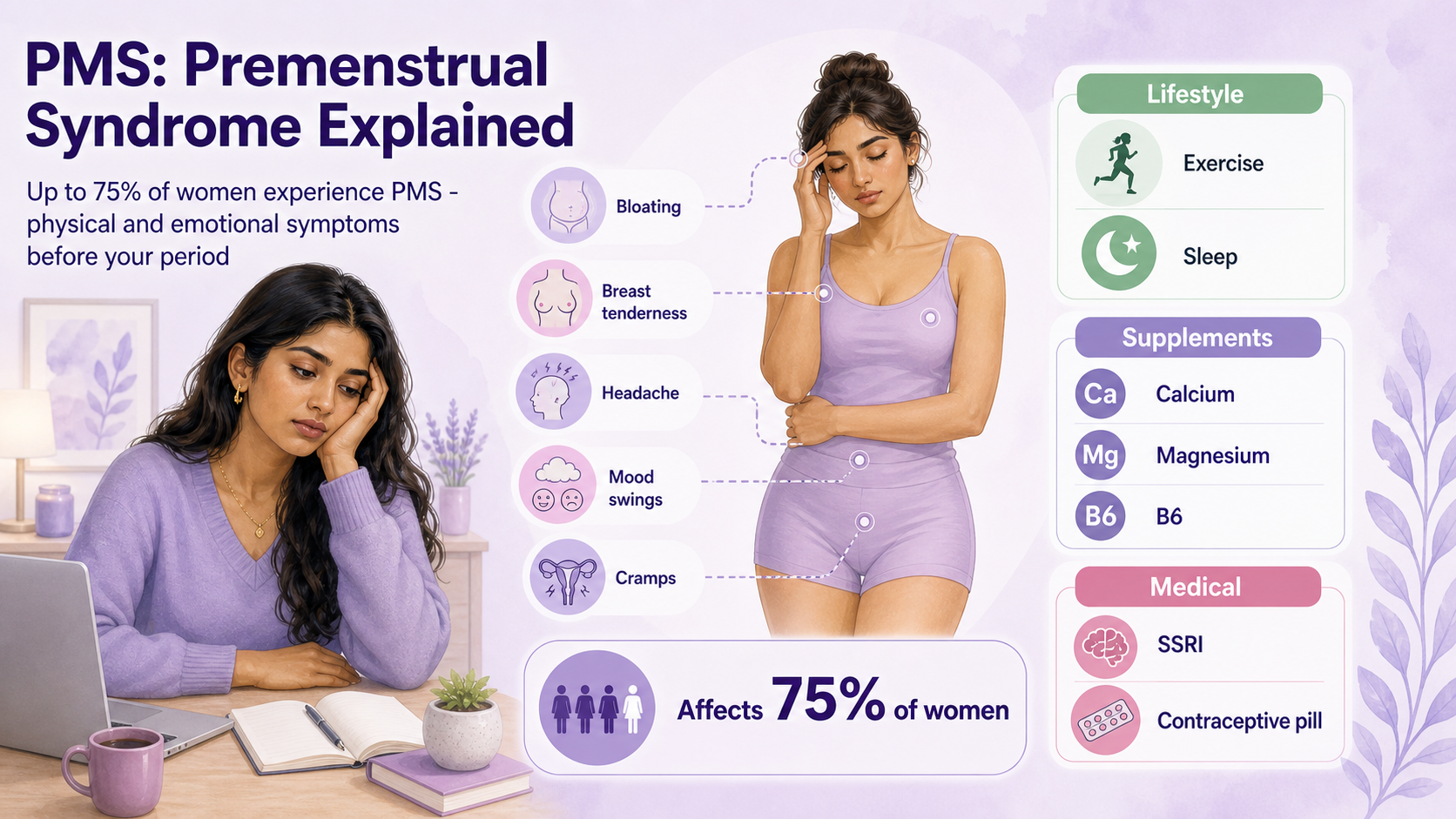
PMS at a glance
Premenstrual syndrome (PMS) is the name for the mix of physical and emotional symptoms that many women experience in the days leading up to a period. You might feel bloated, your breasts may feel tender, you could be more tired, tearful or irritable than usual — and then, as your period starts, these feelings ease. That timing is the hallmark of PMS.
PMS is extremely common, affecting a large share of women of reproductive age at some point in their lives. Symptoms range from mild and barely noticeable to disruptive enough to affect work, study and relationships. It is a real, recognised condition with a genuine biological basis — not something to dismiss or feel embarrassed about.
For most people, PMS can be managed well with everyday changes — movement, balanced eating, sleep and stress care. For a smaller group, premenstrual symptoms are severe, a condition called PMDD (premenstrual dysphoric disorder), which deserves and responds to proper medical support. This guide explains what PMS is, why it happens, what helps at home, and when it's time to see a doctor.
The timing is the clue
If your symptoms reliably appear before your period and settle once bleeding begins, that pattern points to PMS. Tracking it makes the picture clear — and is the single most useful thing you can bring to a doctor.
Open the Period Tracker →PMS, in short
It follows your cycle
Symptoms appear in the days before your period and fade soon after it begins.
You're far from alone
PMS affects a large share of women of reproductive age — it's a normal, recognised condition.
It's about hormone sensitivity
It's not 'too much' or 'too little' hormone — it's how your body responds to the normal cyclical changes.
Lifestyle helps first
Regular movement, balanced meals, good sleep and stress care genuinely ease symptoms.
Severe is treatable
When symptoms disrupt life, a doctor can help — including options for PMDD.
Tracking is powerful
A symptom diary across 2+ cycles confirms the pattern and guides care.
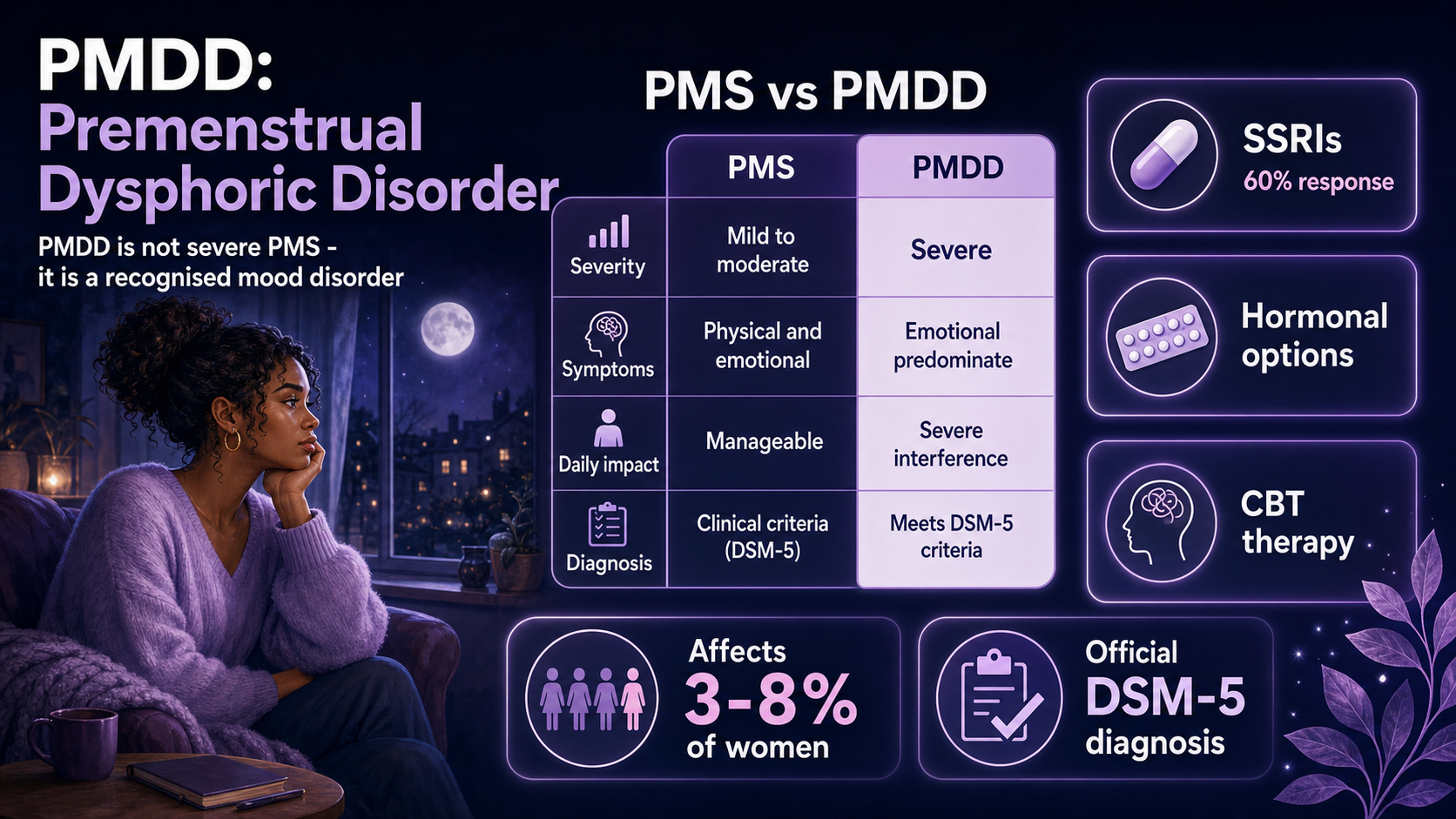
PMS vs PMDD — What's the Difference?
PMS and PMDD share the same timing (symptoms before a period, easing after), but they differ in severity and impact. Knowing which one fits your experience helps you get the right support.
| PMS (Premenstrual Syndrome) | PMDD (Premenstrual Dysphoric Disorder) | |
|---|---|---|
| How common | Very common in women of reproductive age | Less common (a small percentage of women) |
| Severity | Mild to moderate; uncomfortable but manageable | Severe; significantly disrupts daily life |
| Main symptoms | Bloating, tender breasts, mood swings, irritability, fatigue | Marked depression, anxiety, anger, feeling overwhelmed or hopeless |
| Impact on life | Manageable around work, study and relationships | Real disruption to work, study and relationships |
| Timing | Before the period, eases once it starts | Before the period, lifts after it starts (same pattern, stronger) |
| What helps | Lifestyle steps usually enough | Medical treatment (e.g. SSRIs or hormonal options) plus lifestyle |
The key difference
It comes down to severity and impact. If premenstrual mood symptoms are severe and regularly disrupt your life, it may be PMDD — which is recognised and treatable. Please don't tough it out alone.
Symptoms of PMS
PMS symptoms vary from person to person and cycle to cycle. They fall broadly into physical and emotional groups, and most ease once your period begins.
Physical symptoms
- Bloating and a feeling of fullness
- Tender or swollen breasts
- Tiredness and low energy
- Headaches
- Cramps or aches in the lower abdomen or back
- Changes in appetite or food cravings
- Acne or skin changes
- Constipation or diarrhoea
Emotional symptoms
- Mood swings, irritability or feeling on edge
- Tearfulness or feeling low
- Anxiety or tension
- Trouble concentrating ('brain fog')
- Feeling overwhelmed or less able to cope
- Changes in sleep — too much or too little
- Reduced interest in usual activities
Track while you read
Tick the symptoms that apply to you. This is a self-check, not a diagnosis — saved on this device only.
Track to see the pattern
Jotting down your symptoms each day — even a quick note on mood and energy — makes the premenstrual pattern obvious and helps you and your doctor tell PMS apart from other causes.
Log symptoms in the Period Tracker →What Causes PMS?
The exact cause isn't fully understood, but PMS is closely tied to the natural hormone changes of the menstrual cycle. It's not caused by 'abnormal' hormone levels — rather, by how sensitive your body and brain are to these normal shifts.
- Cyclical hormone changes
- After ovulation, levels of oestrogen and progesterone rise and then fall in the second half of the cycle (the luteal phase). For some women, this normal hormonal rhythm triggers physical and emotional symptoms.
- Sensitivity to serotonin
- Hormone shifts can affect serotonin, a brain chemical that influences mood, sleep and appetite. Increased sensitivity to these changes is thought to drive many of the emotional symptoms of PMS — which is why some treatments target serotonin.
- Individual sensitivity
- The same hormone changes affect everyone, but some people are simply more sensitive to them — which is why PMS varies so much from one person to the next.
- Lifestyle and other factors
- Stress, poor sleep, low physical activity, excess caffeine or alcohol, and diet can all make symptoms feel worse, even though they don't 'cause' PMS on their own.
Because PMS reflects a normal hormone rhythm and how your body responds to it, it is not a personal failing — and there is a lot you can do to feel better.
How PMS Is Diagnosed
There's no single blood test for PMS. It's diagnosed mainly from the pattern of your symptoms over time — which is why keeping a diary is so important.
What a doctor looks for
- Symptoms that appear in the luteal phase (before your period) and ease once bleeding starts
- A symptom diary kept across at least two consecutive cycles to confirm the timing pattern
- How much the symptoms affect your daily life — this helps tell PMS from PMDD
- Ruling out other causes (e.g. thyroid problems, anaemia, depression or anxiety that isn't cycle-linked) where relevant
Keeping a symptom diary
- Note your main physical and emotional symptoms each day, plus when your period starts and stops
- Rate severity (e.g. mild / moderate / severe) so changes are easy to see
- Track for at least 2 full cycles — the cyclical pattern is what confirms PMS
- Bring it to your appointment, or share your ParentVibes cycle and mood logs
Your ParentVibes Period Tracker logs are ideal for this — they capture the day-by-day pattern a doctor needs to confirm PMS or spot signs of PMDD.
Start tracking →Treatment & Relief
For most people, lifestyle steps come first and are genuinely effective. When symptoms are more severe, a doctor can offer additional options — these are individual and need medical guidance.
- Mild PMS
- Lifestyle measures first — regular exercise, balanced meals, good sleep and stress care. Simple pain relief for cramps or headaches as needed.
- Moderate PMS
- Continue lifestyle steps; a doctor may discuss options such as the combined hormonal pill to steady the hormonal cycle, or specific supplements where appropriate.
- Severe PMS / PMDD
- A doctor may discuss certain antidepressants (SSRIs) and/or hormonal treatments, and talking therapy (e.g. CBT). These are prescribed and monitored individually.
- Physical symptoms (cramps, aches)
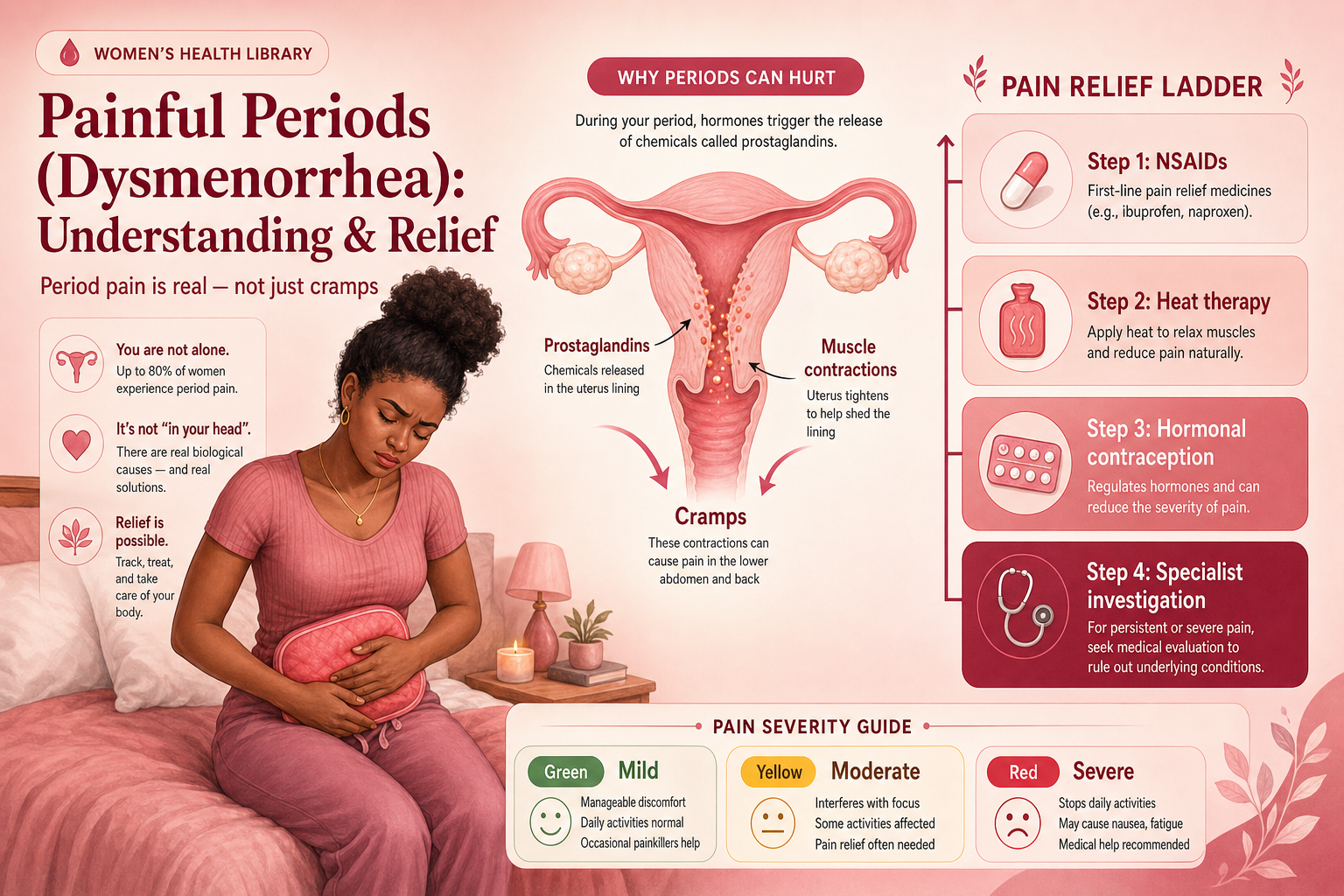
- Over-the-counter pain relief, a warm compress, and gentle movement can help — see our guide to painful periods for more.
Lifestyle first, support when you need it
Everyday changes help most people with PMS. If they aren't enough, or symptoms are severe, that's exactly when to talk to a doctor — effective options exist.
Ask a Doctor →Medication and hormonal treatment are prescription-only
SSRIs, the hormonal pill and other prescription treatments must be assessed, prescribed and monitored by a doctor — never started or stopped on your own. Discuss any supplements (including calcium or magnesium) with a doctor before taking them, especially during pregnancy or if you have other health conditions.
Feeling Better at Home
These everyday habits are the foundation of PMS care. They're most powerful when done consistently across the month — not just in the days you feel symptoms.
Move regularly
- Aim for regular activity through the week — brisk walking, cycling, swimming or dancing
- Even a daily 20–30 minute walk can lift mood and ease bloating and cramps
- Gentle yoga or stretching can relieve tension and aches premenstrually
Eat to steady your energy
- Eat regular, balanced meals to keep blood sugar steady — include fibre, protein and healthy fats
- Choose whole grains, dal, vegetables, fruit and nuts; smaller, more frequent meals can help bloating
- Limit excess salt (eases bloating), caffeine and alcohol, and very sugary foods
Protect your sleep
- Keep a consistent sleep and wake time, even premenstrually
- Wind down without screens; a calm, dark, cool room helps
- Poor sleep makes mood and fatigue worse — protecting it pays off
Care for stress
- Try breathing exercises, meditation, prayer or time in nature
- Make space for rest and hobbies, and lower expectations on harder days
- Talk to trusted friends or family — connection genuinely helps
Supplements — discuss with a doctor first
- Some women find calcium or magnesium helpful for PMS symptoms
- Vitamin B6 is sometimes suggested, but doses matter and too much can be harmful
- Always discuss any supplement with a doctor before starting — especially in pregnancy or with other conditions
A gentle reminder
Supplements are not a substitute for the basics — movement, food, sleep and stress care do the heaviest lifting. Check with a doctor before adding anything new.
When to See a Doctor
Please speak to a doctor or gynaecologist if:
- Your symptoms disrupt your daily life, work, study or relationships
- Lifestyle steps haven't helped after a few cycles
- Your premenstrual mood symptoms are severe (possible PMDD)
- You're unsure whether your symptoms are PMS or something else
- You feel low, hopeless or very anxious — especially most days, or beyond just the premenstrual phase
Please seek help right away
If premenstrual symptoms ever bring thoughts of harming yourself, or you feel unable to stay safe, please reach out now — to someone you trust, a mental-health professional, your local emergency services, or India's Tele-MANAS helpline on 14416 (or 1-800-891-4416), available 24/7. You are not alone, and immediate support is available.
Continue learning
Frequently Asked Questions
Is PMS normal?
Yes. PMS is very common, affecting a large share of women of reproductive age. It's a real, recognised condition linked to the natural hormone changes of the menstrual cycle — not something you're imagining.
How long before my period does PMS start?
PMS symptoms typically appear in the 1–2 weeks before your period (the luteal phase) and ease once bleeding begins. That timing is the key feature that distinguishes PMS from other causes.
What's the difference between PMS and PMDD?
Both share the same timing — symptoms before the period that ease after it starts. PMS is mild-to-moderate and manageable; PMDD is a severe form with marked mood symptoms that significantly disrupt daily life. PMDD is less common but recognised and treatable.
What helps PMS naturally?
Regular exercise, balanced meals that keep blood sugar steady, good sleep, and stress care (breathing, yoga, connection) all genuinely help. Tracking symptoms across cycles also helps you and your doctor see what works.
When should I see a doctor about PMS?
See a doctor if symptoms disrupt your daily life, if lifestyle steps haven't helped after a few cycles, if your mood symptoms are severe (possible PMDD), or if you feel low or anxious most days. If you ever have thoughts of self-harm, seek help immediately.
Can I take supplements like calcium or magnesium for PMS?
Some women find calcium or magnesium helpful, but doses and safety matter. Always discuss any supplement with a doctor before starting — especially during pregnancy or if you have other health conditions.
Does PMS mean something is wrong with my hormones?
No. PMS isn't caused by abnormal hormone levels. It reflects how sensitive your body is to the normal rise and fall of hormones across the cycle, which is why it varies so much between people.
Was this guide helpful?
Understand your cycle better with ParentVibes
- Track your period dates
- Predict your next cycle
- Understand your fertile window
- Save health notes
- Get gentle reminders
Related tools
Period Tracker
Log periods and learn your personal cycle pattern.
Open tool
Ovulation Calculator
Estimate your ovulation date and fertile window.
Open tool
Fertility Window
See your most fertile days for trying to conceive.
Open tool
Pregnancy Tracker
Follow your pregnancy week by week once you conceive.
Open tool
Due Date Calculator
Estimate your baby's due date from your last period.
Open toolShare this guide with someone who needs it 💛
Medical review
- Last reviewed
- June 2026
- Medical reviewer
- Dr. Vinika G.
- Next review due
- June 2027
- Status
- Medically reviewed by Dr. Vinika G.
References
This article is for general information and education only and is not a substitute for professional medical advice, diagnosis, or treatment. Always consult a qualified doctor or gynaecologist about your symptoms and before starting any treatment or supplement. Prescription medicines and hormonal treatments must be prescribed and monitored by a doctor. If premenstrual symptoms ever bring thoughts of self-harm or you feel unable to stay safe, please contact someone you trust, a mental-health professional, your local emergency services, or India's Tele-MANAS helpline on 14416 (or 1-800-891-4416), available 24/7. You are not alone, and help is available. Content reviewed against guidance from ACOG, the NHS, the WHO, and peer-reviewed literature.
Women's Health Library journey
100%Related guides
Free resources
Start here
Your journey with ParentVibes
From your first period to your baby's vaccinations — one continuous, supported path.
Understand your cycle
Know your phases, hormones and what's normal.
Track your period
Log periods and learn your personal pattern.
Understand ovulation
Find your fertile window with the calculator.
Plan pregnancy
A calm, step-by-step start to trying to conceive.
Week-by-week pregnancy
Follow every week once you conceive.
Baby milestones
Track growth and development month by month.
Vaccination tracker
Stay on schedule and never miss a vaccine.
Medical disclaimer
This article is for educational purposes only and does not replace medical advice. If you have severe pain, heavy bleeding, missed periods, or unusual symptoms, please consult a qualified healthcare provider.