
ParentVibes
Women's Health Library · parentvibes.in
Anxiety in Women: Signs, Causes & How to Find Relief
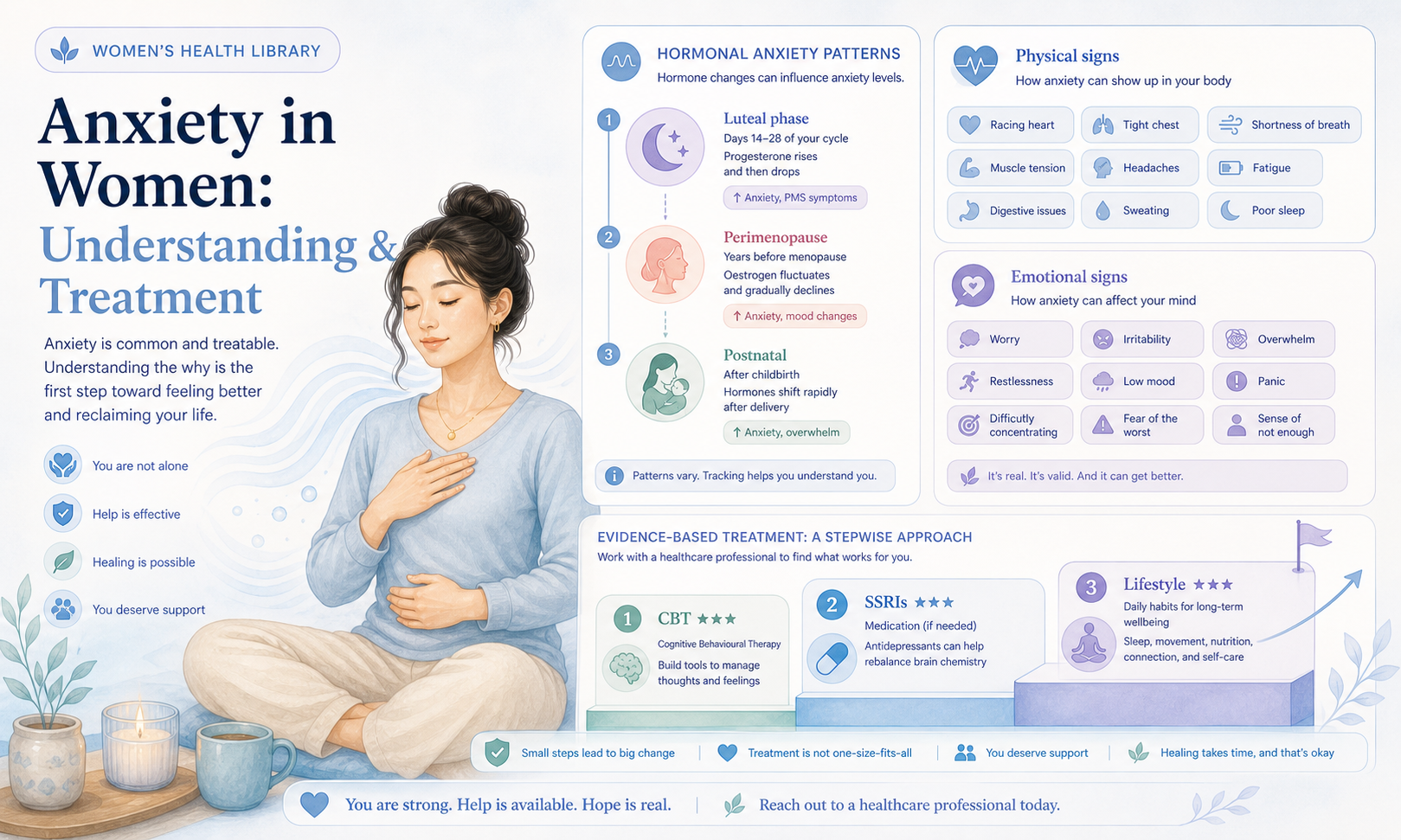
Anxiety at a glance
Anxiety is the feeling of worry, unease or fear that arises when we face stress or something we perceive as a threat. It's a completely normal part of being human — most of us feel anxious before an exam, a job interview, a difficult conversation or a big life change. In these moments, anxiety can even be useful: it sharpens our focus and helps us prepare. Usually, it settles once the situation passes.
For some women, though, anxiety doesn't settle. The worry becomes intense, frequent and hard to switch off, turning up even when there's no clear reason — and it begins to affect sleep, relationships, work and the simple ability to enjoy life. When anxiety reaches this point, it may be an anxiety disorder, which is a recognised and very treatable health condition, not a weakness or a flaw in your character.
Anxiety is especially common in women, and there are real reasons for that. The natural rise and fall of hormones across the menstrual cycle, the changes of pregnancy and the new baby months, and the shifting hormones of perimenopause can all influence how anxious you feel. Add the everyday load many women carry — caring for family, running a home, work, finances and social expectations — and it's easy to see why anxious feelings build up.
This guide gently explains what anxiety is, how to tell ordinary worry from an anxiety disorder, why it happens, what genuinely helps at home, and the effective support that's available when you need more. Whatever you're feeling right now, please know this: it's understandable, you are not alone, and things can get better.
Worry vs an anxiety disorder
A little worry that comes and goes with a stressful event is normal. If worry is intense most days, feels uncontrollable, and is getting in the way of your daily life for weeks at a time, it's worth speaking to someone — and help works.
Useful tools
What Is Anxiety?
Anxiety is your body and mind's built-in alarm system. When your brain senses a threat — real or anticipated — it releases stress hormones that prepare you to face it: your heart beats faster, your breathing quickens, your muscles tense, and your attention narrows. This 'fight-or-flight' response is meant to be short-lived and protective.
Normal anxiety is tied to a clear trigger, is proportionate to the situation, and eases once the stress passes. An anxiety disorder is different: the alarm seems to stay switched on. The worry is more intense than the situation calls for, hard to control, present on most days, and it lingers — often for weeks or months. It can show up as constant generalised worry, sudden panic attacks, intense fear in social situations, or specific phobias.
Importantly, anxiety is felt in the body as much as the mind. Many women first notice it as physical symptoms — a racing heart, tight chest, churning stomach or trouble sleeping — and may not realise these are signs of anxiety. None of it is imagined: it's a genuine response your body is having, and it deserves the same care as any other health concern.
A helpful way to think about it
Anxiety isn't about being 'weak' or unable to cope. It's an over-active alarm system — and like any system, it can be gently turned down with the right support and steady habits.
Anxiety, in short
Some anxiety is normal
Worry before an exam, interview or big change is your body doing its job. It's only a concern when it's constant and overwhelming.
You're far from alone
Anxiety is one of the most common mental-health conditions, and women are affected more often than men.
Hormones can play a part
Shifts across your cycle, in pregnancy and around perimenopause can make anxious feelings stronger for some women.
It's felt in the body too
Racing heart, tight chest, churning stomach and restlessness are real, physical signs of anxiety — not 'all in your head'.
Self-help genuinely works
Steady routines, slow breathing, regular movement and less caffeine can ease anxiety meaningfully.
It's very treatable
Talking therapy such as CBT — and, when needed, medication — help a great deal. Reaching out is a sign of strength.
Signs & Symptoms of Anxiety
Anxiety shows up in the mind, the body and in behaviour. You won't have every symptom, and they vary from person to person — but recognising your own pattern is a powerful first step.
Emotional and mental signs
- Constant or excessive worrying that's hard to switch off
- Feeling tense, on edge or unable to relax
- A sense of dread or that something bad is about to happen
- Irritability or feeling easily overwhelmed
- Trouble concentrating or a mind that 'goes blank'
- Going over worries again and again (rumination)
- Fear of losing control, or of the worst-case scenario
Physical signs
- A racing or pounding heart, or palpitations
- Tight chest or shortness of breath
- Churning or upset stomach, nausea, or needing the toilet more
- Restlessness, trembling or feeling shaky
- Tense, aching muscles and headaches
- Sweating, dizziness or feeling light-headed
- Tiredness, yet trouble falling or staying asleep
Behaviour changes
- Avoiding places, people or situations that feel stressful
- Needing lots of reassurance from others
- Difficulty making decisions or constantly checking things
- Withdrawing from friends, family or activities you used to enjoy
Track while you read
Tick the symptoms that apply to you. This is a self-check, not a diagnosis — saved on this device only.
Panic attacks
A panic attack is a sudden wave of intense fear with strong physical symptoms — racing heart, breathlessness, dizziness — that can feel frightening but isn't dangerous and usually peaks within minutes. If these happen, slow breathing can help in the moment, and it's worth talking to a doctor.
What Causes Anxiety in Women?
There's rarely a single cause. Anxiety usually comes from a mix of biological, hormonal, psychological and life factors that build up over time. Understanding what's feeding yours can help you and a professional find the right kind of support.
- Hormonal and cycle changes
- The natural rise and fall of oestrogen and progesterone across the menstrual cycle can affect mood and anxiety for some women, often in the days before a period. Anxiety can also shift during and after pregnancy and around perimenopause, when hormone levels fluctuate more. These changes don't 'cause' anxiety on their own, but they can make it stronger or harder to manage.
- Stress and life load
- Ongoing pressure — caring for children or elderly parents, running a household, work demands, finances, relationship strain or social expectations — keeps the body's stress response switched on. Many women carry a heavy, often invisible mental load, and this steady pressure is a very common driver of anxiety.
- Major life events and changes
- Bereavement, a move, a new job, exams, becoming a parent, illness in the family or financial worry can all set off anxiety. Sometimes it lingers long after the event has passed.
- Personal and family history
- A tendency towards anxiety can run in families, and difficult or stressful experiences earlier in life can make someone more prone to it. Having experienced anxiety, depression or trauma before can also play a part.
- Lifestyle factors
- Too much caffeine, poor or broken sleep, very little physical activity, skipping meals, and alcohol can all feed anxious feelings. These rarely cause anxiety alone, but they can make it noticeably worse — which is also why changing them helps.
- Physical health conditions
- Some health issues — such as thyroid problems or anaemia — and certain medicines can produce anxiety-like symptoms. This is one reason it's worth seeing a doctor, so any physical cause can be checked and treated.
Because anxiety usually has several contributing causes, there's also more than one way to feel better — from everyday changes to professional support. It is never a personal failing.
Treatment & Professional Help
If self-help isn't enough, or anxiety is taking over your days, please know that effective treatment exists and works well. Reaching out is a positive, brave step — not a last resort. A doctor or mental-health professional can help you choose what's right for you.
- Mild anxiety
- Self-help often makes a real difference — steady routines, breathing, regular movement, less caffeine, better sleep and connection. Self-help resources and guided relaxation can support this.
- Moderate anxiety
- Talking therapy is usually the recommended first step. Cognitive behavioural therapy (CBT) is well established for anxiety — it helps you understand and gently change anxious thoughts and avoidance patterns. A professional can guide you to this.
- More severe or persistent anxiety
- A doctor may discuss therapy together with medication. Several effective options exist and are chosen, prescribed and monitored individually by a professional. Combined with therapy and self-help, they help many women recover.
- Anxiety linked to your cycle, pregnancy or perimenopause
- If anxiety tracks with hormonal changes, mention this to your doctor — care can be tailored, and any physical contributors (such as thyroid issues) can be checked at the same time.
Help works — and it's a sign of strength
Most people with anxiety improve with the right support. Asking for help is brave, not weak. If you're unsure where to start, a doctor is a safe first step.
Ask a Doctor →Medication is prescription-only
Any medicine for anxiety must be assessed, prescribed and monitored by a doctor — never started, changed or stopped on your own, as this can be harmful. Discuss any supplements or herbal products with a doctor too, especially during pregnancy, breastfeeding, or if you have other health conditions or take other medicines.
Self-Help: Easing Anxiety at Home
These everyday steps are the foundation of managing anxiety, and many women feel real relief from them. They work best done gently and consistently — not perfectly. Be patient and kind with yourself; small, steady changes add up.
Breathe to calm your body
- When anxiety rises, slow your breathing — breathe in gently for a count of 4, out for 6, for a few minutes
- Slow, longer out-breaths signal safety to your body and ease the physical wave of anxiety
- Try a simple daily practice of breathing, meditation or prayer — even 5–10 minutes builds calm over time
Keep a steady routine
- Regular wake, meal and sleep times give an anxious mind a sense of predictability and safety
- Break big tasks into small, manageable steps so they feel less overwhelming
- Protect a little time each day for rest and something you enjoy, and lower expectations on harder days
Move your body
- Regular activity — a brisk walk, cycling, swimming, dancing or yoga — is one of the best natural ways to ease anxiety
- Even a daily 20–30 minute walk can lift mood and release built-up tension
- Gentle yoga and stretching relax tense muscles and quiet a busy mind
Limit caffeine, eat regularly
- Cut back on tea, coffee, cola and energy drinks — caffeine can mimic and worsen anxiety (racing heart, jitteriness)
- Eat regular, balanced meals to keep blood sugar steady; skipping meals can make anxiety worse
- Go easy on alcohol — it can feel calming briefly but tends to make anxiety worse afterwards
Protect your sleep
- Keep a consistent sleep and wake time, and wind down without screens before bed
- A calm, dark, cool room and a simple bedtime routine help
- If worries keep you awake, jot them down to deal with tomorrow — getting them out of your head can help
Sleep and anxiety feed each other
Anxiety can disturb sleep, and poor sleep makes anxiety worse — so protecting your rest is one of the kindest things you can do for an anxious mind.
Lean on connection
- Talk to someone you trust — a friend, partner or family member; saying worries out loud often shrinks them
- Stay connected even when anxiety makes you want to withdraw — gentle company helps
- Be compassionate with yourself; you'd comfort a friend feeling this way, so offer yourself the same kindness
When to See a Doctor
Please reach out to a doctor or mental-health professional if:
- Anxiety is present on most days and has lasted several weeks or more
- Worry feels uncontrollable or out of proportion to what's happening
- It's affecting your sleep, work, relationships or ability to enjoy life
- You're having panic attacks, or avoiding places and situations because of fear
- Self-help hasn't been enough, or symptoms are getting worse
- You also feel persistently low, hopeless or have lost interest in things
- You're pregnant or recently had a baby and feel very anxious
Please seek help right away
If anxiety or low mood ever brings thoughts of harming yourself, or you feel unable to stay safe, please reach out now — to someone you trust, a mental-health professional, your local emergency services, or India's Tele-MANAS helpline on 14416 (or 1-800-891-4416), available 24/7. You are not alone, and immediate support is available.
Continue learning
Frequently Asked Questions
Is it normal to feel anxious?
Yes. Anxiety is a normal human response to stress or a perceived threat, and a little worry before something important is healthy. It becomes a concern when the worry is intense, frequent, hard to control, and starts to affect your daily life over several weeks — at that point it may be an anxiety disorder, which is common and very treatable.
Why does anxiety seem worse before my period?
The natural rise and fall of hormones across the menstrual cycle can affect mood and anxiety for some women, often in the days before a period. This doesn't cause anxiety on its own, but it can make anxious feelings stronger. Tracking when you feel anxious across your cycle can help you and a doctor see the pattern.
Can hormones in pregnancy or perimenopause cause anxiety?
Hormone levels shift a lot during and after pregnancy and around perimenopause, and these changes — along with the life changes that come with them — can make some women feel more anxious. If you're feeling very anxious during these times, please talk to a doctor; tailored support is available.
What can I do at home to ease anxiety?
Slow breathing, a steady daily routine, regular movement like walking or yoga, limiting caffeine and alcohol, eating regular meals, protecting your sleep, and talking to someone you trust all genuinely help. These work best done gently and consistently, and many women feel real relief from them.
Does anxiety need medication?
Not always. Many people improve with self-help and talking therapy such as CBT. For more severe or persistent anxiety, a doctor may discuss medication alongside therapy. Any medicine must be prescribed and monitored by a professional — never started or stopped on your own.
When should I get professional help for anxiety?
See a doctor or mental-health professional if anxiety is present most days for several weeks, feels uncontrollable, affects your sleep, work or relationships, involves panic attacks, or isn't easing with self-help. If you ever have thoughts of harming yourself, please seek help immediately — you don't have to manage this alone.
Was this guide helpful?
Understand your cycle better with ParentVibes
- Track your period dates
- Predict your next cycle
- Understand your fertile window
- Save health notes
- Get gentle reminders
Related tools
Period Tracker
Log periods and learn your personal cycle pattern.
Open tool
Ovulation Calculator
Estimate your ovulation date and fertile window.
Open tool
Fertility Window
See your most fertile days for trying to conceive.
Open tool
Pregnancy Tracker
Follow your pregnancy week by week once you conceive.
Open tool
Due Date Calculator
Estimate your baby's due date from your last period.
Open toolShare this guide with someone who needs it 💛
Medical review
- Last reviewed
- June 2026
- Medical reviewer
- Dr. Vinika G.
- Next review due
- June 2027
- Status
- Medically reviewed by Dr. Vinika G.
References
This article is for general information and education only and is not a substitute for professional medical advice, diagnosis, or treatment. Always consult a qualified doctor or mental-health professional about your symptoms and before starting, changing or stopping any treatment, medicine or supplement. Prescription medicines for anxiety must be prescribed and monitored by a doctor. If anxiety or low mood ever brings thoughts of self-harm, or you feel unable to stay safe, please contact someone you trust, a mental-health professional, your local emergency services, or India's Tele-MANAS helpline on 14416 (or 1-800-891-4416), available 24/7. You are not alone, and help is available. Content reviewed against guidance from the World Health Organization, the NHS, and the National Institute of Mental Health (NIMH).
Women's Health Library journey
100%Related guides
Free resources
Start here
Your journey with ParentVibes
From your first period to your baby's vaccinations — one continuous, supported path.
Understand your cycle
Know your phases, hormones and what's normal.
Track your period
Log periods and learn your personal pattern.
Understand ovulation
Find your fertile window with the calculator.
Plan pregnancy
A calm, step-by-step start to trying to conceive.
Week-by-week pregnancy
Follow every week once you conceive.
Baby milestones
Track growth and development month by month.
Vaccination tracker
Stay on schedule and never miss a vaccine.
Medical disclaimer
This article is for educational purposes only and does not replace medical advice. If you have severe pain, heavy bleeding, missed periods, or unusual symptoms, please consult a qualified healthcare provider.