
ParentVibes
Women's Health Library · parentvibes.in
Fatigue & Low Energy in Women: Common Causes & What Helps
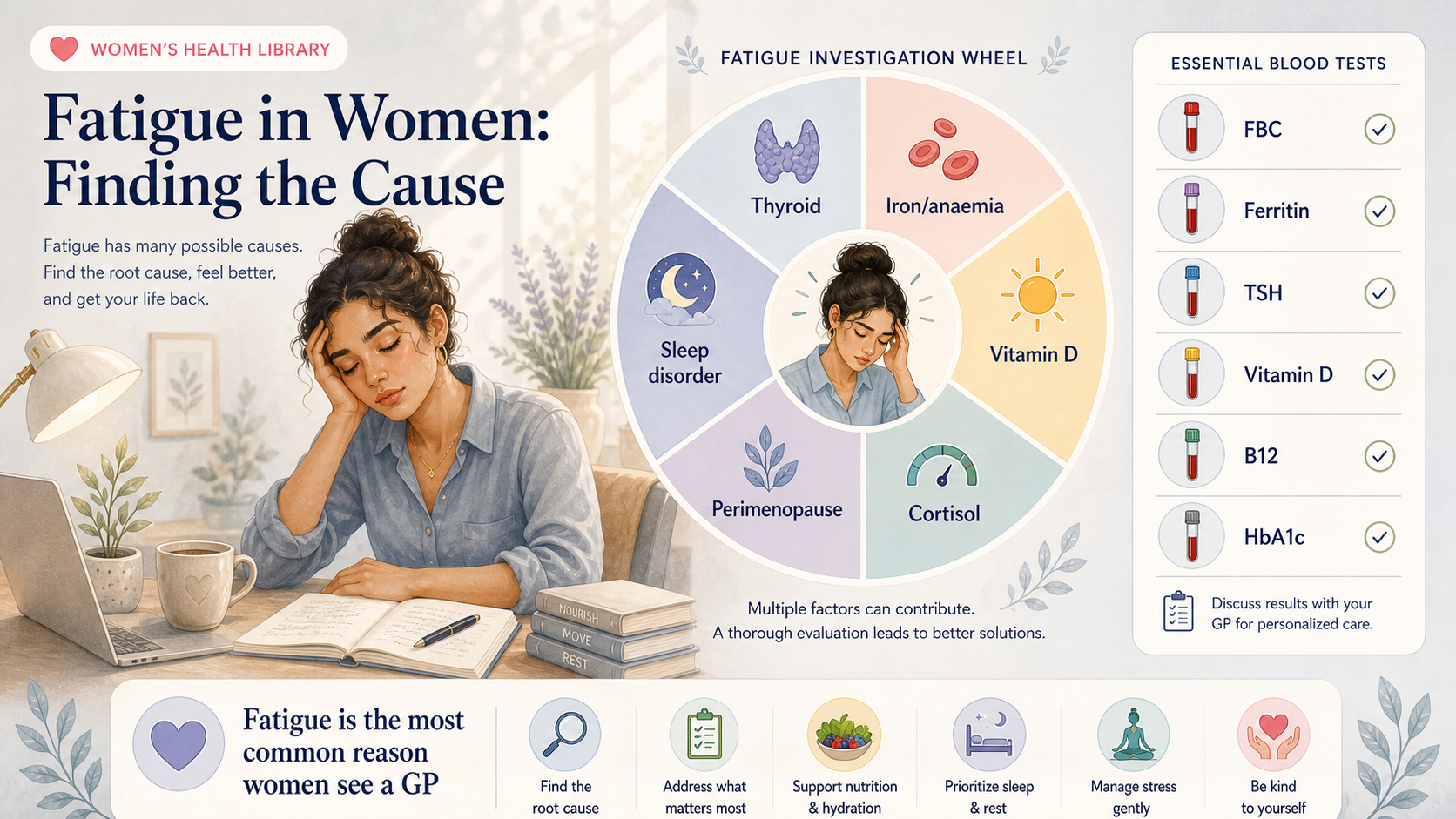
Fatigue at a glance
If you feel tired all the time — drained even after a full night's sleep, struggling to get through the day, low on the energy you used to have — you are far from alone. Fatigue is one of the most common reasons women of all ages see a doctor, and it's a genuine symptom worth taking seriously, not a character flaw or something to simply push through.
Fatigue is more than ordinary sleepiness. It's a persistent lack of physical or mental energy that rest doesn't fully fix, and it can quietly affect your mood, concentration, work and relationships. For many women, the cause is a mix of everyday pressures — broken sleep, a packed schedule, caring for others, stress and not enough time to eat well or move. For others, there's a specific, treatable medical reason: low iron (iron-deficiency anaemia), an underactive thyroid, the natural hormonal shifts of the menstrual cycle and perimenopause, or low mood and anxiety.
The good news: most fatigue improves once you understand what's driving it. This guide walks through the common causes, the self-care that genuinely helps, and — importantly — the red flags that mean it's time for a check-up and some simple bloodwork. You don't have to accept feeling exhausted as 'just how it is'.
Tired all the time? It's worth understanding why
Persistent fatigue almost always has a reason — and many of the common causes in women are simple to test for and very treatable. Tracking your energy, sleep and cycle for a couple of weeks makes the picture much clearer for you and your doctor.
Track your cycle & energy →Useful tools
What Is Fatigue (and How Is It Different from Just Being Tired)?
Everyone feels tired sometimes — after a late night, a hard workout or a stressful week. That kind of tiredness usually lifts with rest and a few good nights' sleep. Fatigue is different: it's a deeper, lasting lack of energy that sticks around even when you've slept, and that can make ordinary tasks feel heavier than they should. You might notice it physically (heavy limbs, no stamina, needing to sit down), mentally (foggy thinking, trouble concentrating, low motivation), or both. When fatigue lasts for weeks, has no obvious explanation, or is getting in the way of daily life, it's a signal worth paying attention to — and often one with a treatable cause behind it.
A simple way to tell them apart
Ordinary tiredness improves with rest. Fatigue lingers despite rest. If you've slept reasonably well for a couple of weeks and still feel drained, treat it as a symptom to explore — not just a sign you need an early night.
Fatigue, in short
It's not just being sleepy
Fatigue is a deeper lack of energy and drive that a good night's sleep doesn't fully restore.
Low iron is a common cause
Iron-deficiency anaemia — often linked to heavy periods or diet — is one of the most frequent, very treatable causes in women.
Check the thyroid
An underactive thyroid is a classic, easily-tested cause of tiredness, low mood and weight changes.
Sleep and stress matter most
Poor sleep, a packed schedule and chronic stress are the everyday drivers of feeling drained.
Your hormones play a part
Energy can dip before your period and during perimenopause — a normal, recognisable pattern.
Bloodwork brings clarity
If tiredness lasts or has no obvious cause, simple blood tests often find a treatable reason.
What Fatigue Can Feel Like
Fatigue shows up differently for everyone, and it often blends physical and mental tiredness. You may recognise several of these — and noticing patterns (like timing around your period) is useful.
Physical signs
- Feeling drained or 'heavy', even after sleep
- Low stamina — ordinary tasks feel like hard work
- Needing to rest or nap more than usual
- Breathlessness or a racing heart on mild exertion (can point to low iron)
- Looking pale, or feeling lightheaded or dizzy
- Headaches, aches, or feeling run-down
- Disturbed or unrefreshing sleep
Mental & emotional signs
- Brain fog — trouble concentrating or thinking clearly
- Low motivation or finding it hard to get going
- Feeling irritable, tearful or easily overwhelmed
- Low mood or loss of interest in usual activities
- Forgetfulness or mental slowness
- Reduced patience and a shorter fuse than usual
Track while you read
Tick the symptoms that apply to you. This is a self-check, not a diagnosis — saved on this device only.
Track to spot the pattern
Jotting down your energy, sleep and mood each day — plus when your period starts — makes hidden patterns clear. It helps you see what helps, and gives your doctor a head start at your appointment.
Log energy & cycle in the Period Tracker →Common Causes of Fatigue in Women
Fatigue rarely has a single cause — it's often a few things adding up. Here are the most common reasons women feel persistently low on energy. Several of these are easy to test for and very treatable, which is why a check-up matters when tiredness lingers.
- Iron-deficiency anaemia (low iron)
- One of the most common causes of fatigue in women. When you don't have enough iron, your body can't make enough healthy red blood cells to carry oxygen — leaving you tired, breathless, pale or lightheaded. It's often linked to heavy periods, a diet low in iron, or pregnancy. It's diagnosed with a simple blood test and usually treated effectively with diet changes and iron supplements prescribed by a doctor.
- Thyroid problems
- An underactive thyroid (hypothyroidism) — where the gland makes too little thyroid hormone — is a classic cause of tiredness, often alongside low mood, feeling cold, weight gain and dry skin. It's common in women and easily checked with a blood test, and very manageable once diagnosed.
- Poor or disrupted sleep
- Not getting enough good-quality sleep is one of the biggest everyday drivers of fatigue — whether from late nights, broken sleep, caring for a baby or family, shift work, or an unsettled sleep routine. Even small, consistent improvements to sleep can make a real difference.
- Stress, busy life and burnout
- Ongoing stress, juggling work and home, caregiving and emotional load are exhausting in their own right. Chronic stress raises the body's stress hormones, disturbs sleep and appetite, and leaves you running on empty — a very common picture for women carrying a lot.
- Your menstrual cycle & perimenopause
- It's normal for energy to dip in the days before a period (as part of PMS) and during perimenopause, when shifting hormones can disturb sleep and mood. Heavy periods can also lead to low iron, which deepens tiredness. These cyclical patterns are recognisable once you start tracking them.
- Low mood, anxiety and depression
- Tiredness and low energy are core features of low mood, anxiety and depression — and the link runs both ways, as constant fatigue can also pull mood down. If you also feel persistently low, anxious, or have lost interest in things you used to enjoy, mental wellbeing deserves attention alongside the physical causes.
- Diet, hydration & low energy intake
- Skipping meals, irregular eating, very restrictive diets, low fluid intake or relying on sugar and caffeine can all leave energy spiking and crashing. Not eating enough — or not enough of the right foods — is an easily overlooked cause of feeling drained.
- Other medical causes
- Less commonly, fatigue can be linked to things like low vitamin B12 or vitamin D, blood sugar problems (diabetes), infections, certain medicines, or other conditions. This is exactly why persistent, unexplained tiredness is worth a doctor's assessment and some bloodwork — to find and treat what's behind it.
Because fatigue usually has more than one cause, the most useful first step is often a check-up with some simple blood tests — to rule in or out the common, treatable culprits like low iron and thyroid problems — alongside a look at sleep, food and stress.
Treatment Depends on the Cause
There's no single 'fatigue treatment' — the right approach depends on what's driving it. That's why finding the cause is the key step. Here's how the common causes are typically addressed, alongside the self-care above.
- Iron-deficiency anaemia
- Iron-rich diet plus iron supplements prescribed and dosed by a doctor, and addressing the cause of the iron loss (for example, very heavy periods). Energy usually improves once iron stores recover.
- Underactive thyroid
- Diagnosed with a blood test and managed with thyroid medication and monitoring by a doctor. Tiredness, mood and other symptoms typically improve once levels are corrected.
- Sleep & stress-related fatigue
- Improving sleep routine, managing stress, sharing the load, and addressing any sleep disruption. Talking therapies can help when stress or burnout is significant.
- Cycle- & perimenopause-related dips
- Tracking the pattern, lifestyle steps, and treating heavy periods or low iron where present. A doctor can discuss options for troublesome perimenopause symptoms.
- Low mood, anxiety or depression
- Support for mental wellbeing — which may include talking therapy and, where appropriate, medication, alongside lifestyle steps. Treating low mood often lifts the fatigue with it.
Find the cause, treat the cause
If self-care hasn't restored your energy, a doctor can run simple blood tests and help pinpoint what's going on. Most of the common causes of fatigue in women are very treatable once identified.
Ask a Doctor →Medicines and supplements are not for self-prescribing
Iron, thyroid medication and other treatments must be assessed, prescribed and monitored by a doctor — never started or stopped on your own. Too much iron can be harmful, and taking a supplement you don't need won't fix fatigue and may mask the real cause. A simple blood test guides the right treatment.
Self-Care: Everyday Steps That Genuinely Help
For many women, fatigue improves a great deal with consistent everyday changes — most powerful when done steadily over weeks, not just on the days you feel exhausted. These steps also support your energy whatever the underlying cause, and complement any treatment your doctor recommends.
Protect your sleep
- Aim for a consistent sleep and wake time, even on weekends
- Wind down without screens; keep the room calm, dark and cool
- Limit caffeine from the afternoon onwards, and heavy meals late at night
- If broken sleep is unavoidable (e.g. a young baby), rest when you can and ask for help to share the load
Eat to fuel steady energy
- Eat regular, balanced meals — don't skip; include fibre, protein and healthy fats to steady blood sugar
- Include iron-rich foods (dal, beans, leafy greens, jaggery, eggs, lean meat) with vitamin C (lemon, amla, citrus, tomato) to help absorb iron
- Choose whole grains, fruit, vegetables and nuts; go easy on sugary snacks and excess caffeine that cause energy crashes
- Stay hydrated through the day — even mild dehydration can sap energy
Move — gently and regularly
- It feels counter-intuitive, but regular activity boosts energy over time
- Start small — a daily 20–30 minute walk, cycling, swimming or dancing
- Gentle yoga or stretching can ease tension and lift mood
- Build up gradually rather than overdoing it on a 'good' day
Care for stress & mind
- Try breathing exercises, meditation, prayer or time outdoors
- Make space for rest and the things you enjoy — and lower expectations on harder days
- Share the load: talk to family, delegate, and say no when you need to
- Connect with people you trust — isolation deepens fatigue
Mind the energy-drainers
- Notice patterns — does fatigue follow poor sleep, skipped meals or your cycle?
- Limit alcohol and reliance on caffeine and sugar for a 'lift'
- Pace yourself across the day rather than pushing to exhaustion
Self-care first — but not instead of a check-up
These steps help nearly everyone, but they're not a substitute for finding a medical cause. If tiredness persists despite good self-care, please get checked — some causes (like low iron or thyroid) need treatment, not just rest.
Supplements — ask a doctor first
- Don't self-prescribe iron, B12 or other supplements — too much iron can be harmful and the wrong supplement won't help
- A blood test shows whether you're actually low and what you need
- Always discuss any supplement with a doctor before starting, especially in pregnancy or with other conditions
When to See a Doctor (and Why Bloodwork Helps)
Self-care is a good starting point, but please see a doctor — and ask about blood tests — if any of the following apply. Simple bloodwork (such as haemoglobin/iron studies, thyroid function and more) often finds a clear, treatable cause.
- Your tiredness has lasted for several weeks despite reasonable sleep and self-care
- Your fatigue is severe, getting worse, or stopping you doing everyday things
- There's no obvious explanation for how exhausted you feel
- You feel breathless, your heart races on mild effort, you look pale or feel lightheaded (possible anaemia)
- Your periods are very heavy or have changed — this can cause iron-deficiency anaemia
- You also feel cold, have gained weight, have dry skin or low mood (possible thyroid problem)
- You feel persistently low, anxious, or have lost interest in things you enjoy
- You have other symptoms alongside the tiredness that worry you
Breathlessness, a racing heart, very pale skin or fainting
Seek prompt medical advice — these can signal significant anaemia or another problem that needs assessment.
Sudden, severe or rapidly worsening weakness or exhaustion
Get checked urgently rather than waiting it out.
Very heavy periods that soak through protection, with tiredness and breathlessness
See a doctor — heavy bleeding can cause iron-deficiency anaemia that needs treating.
Persistent low mood, hopelessness, or any thoughts of self-harm
Please reach out for support straight away — you don't have to manage this alone.
Please seek help right away
If your low energy comes with thoughts of harming yourself, or you feel unable to stay safe, please reach out now — to someone you trust, a mental-health professional, your local emergency services, or India's Tele-MANAS helpline on 14416 (or 1-800-891-4416), available 24/7. If you feel faint, severely breathless or have chest pain, seek emergency care immediately. You are not alone, and support is available.
Continue learning
Frequently Asked Questions
Why am I so tired all the time as a woman?
Persistent tiredness in women usually comes from a mix of causes — poor or broken sleep, ongoing stress and a heavy load, low iron (often linked to periods), thyroid problems, hormonal shifts across the cycle and perimenopause, or low mood. Because it's often more than one thing, a check-up with some simple blood tests is the best way to find what's behind it.
Can heavy periods make me tired?
Yes. Heavy periods can lead to iron-deficiency anaemia, where low iron means your blood carries less oxygen — leaving you tired, breathless and pale. It's a very common and treatable cause of fatigue in women. If your periods are heavy and you feel exhausted, please see a doctor for an iron check.
What blood tests check for the cause of fatigue?
A doctor commonly checks things like your haemoglobin and iron levels (for anaemia) and thyroid function, and may look at other markers such as vitamin B12, vitamin D or blood sugar depending on your symptoms. Which tests you need is decided by your doctor based on your history — bloodwork often reveals a clear, treatable cause.
Should I take iron supplements if I feel tired?
Not without checking first. Taking iron you don't need can be harmful, and if low iron isn't the cause, it won't help. A simple blood test shows whether you're actually low. Always let a doctor confirm and dose iron or any other supplement — especially in pregnancy or with other health conditions.
Is it normal to feel more tired before my period?
Yes — a dip in energy in the days before a period is a common part of PMS, linked to the natural hormone changes of the cycle. Tracking your energy alongside your cycle helps you recognise the pattern. If tiredness is severe, persistent, or your periods are very heavy, it's still worth a check-up.
When should I worry about fatigue?
See a doctor if tiredness lasts for weeks despite good sleep, is severe or getting worse, has no clear cause, or comes with red flags like breathlessness, a racing heart, pallor or fainting, very heavy periods, or persistent low mood. Sudden severe weakness, fainting or chest pain need urgent care, and any thoughts of self-harm need immediate support.
Was this guide helpful?
Understand your cycle better with ParentVibes
- Track your period dates
- Predict your next cycle
- Understand your fertile window
- Save health notes
- Get gentle reminders
Related tools
Period Tracker
Log periods and learn your personal cycle pattern.
Open tool
Ovulation Calculator
Estimate your ovulation date and fertile window.
Open tool
Fertility Window
See your most fertile days for trying to conceive.
Open tool
Pregnancy Tracker
Follow your pregnancy week by week once you conceive.
Open tool
Due Date Calculator
Estimate your baby's due date from your last period.
Open toolShare this guide with someone who needs it 💛
Medical review
- Last reviewed
- June 2026
- Medical reviewer
- Dr. Vinika G.
- Next review due
- June 2027
- Status
- Medically reviewed by Dr. Vinika G.
References
This article is for general information and education only and is not a substitute for professional medical advice, diagnosis, or treatment. Fatigue can have many causes — please consult a qualified doctor about persistent, severe or unexplained tiredness, and before starting any supplement or treatment. Blood tests and any medicines (such as iron or thyroid treatment) must be arranged, prescribed and monitored by a doctor. If you feel faint, severely breathless or have chest pain, seek emergency care immediately. If low energy ever brings thoughts of self-harm or you feel unable to stay safe, please contact someone you trust, a mental-health professional, your local emergency services, or India's Tele-MANAS helpline on 14416 (or 1-800-891-4416), available 24/7. You are not alone, and help is available. Content reviewed against guidance from the NHS, the WHO and MedlinePlus.
Women's Health Library journey
100%Related guides
Free resources
Start here
Your journey with ParentVibes
From your first period to your baby's vaccinations — one continuous, supported path.
Understand your cycle
Know your phases, hormones and what's normal.
Track your period
Log periods and learn your personal pattern.
Understand ovulation
Find your fertile window with the calculator.
Plan pregnancy
A calm, step-by-step start to trying to conceive.
Week-by-week pregnancy
Follow every week once you conceive.
Baby milestones
Track growth and development month by month.
Vaccination tracker
Stay on schedule and never miss a vaccine.
Medical disclaimer
This article is for educational purposes only and does not replace medical advice. If you have severe pain, heavy bleeding, missed periods, or unusual symptoms, please consult a qualified healthcare provider.