
Early skills
Patience over pressure: sitting, walking, and potty training
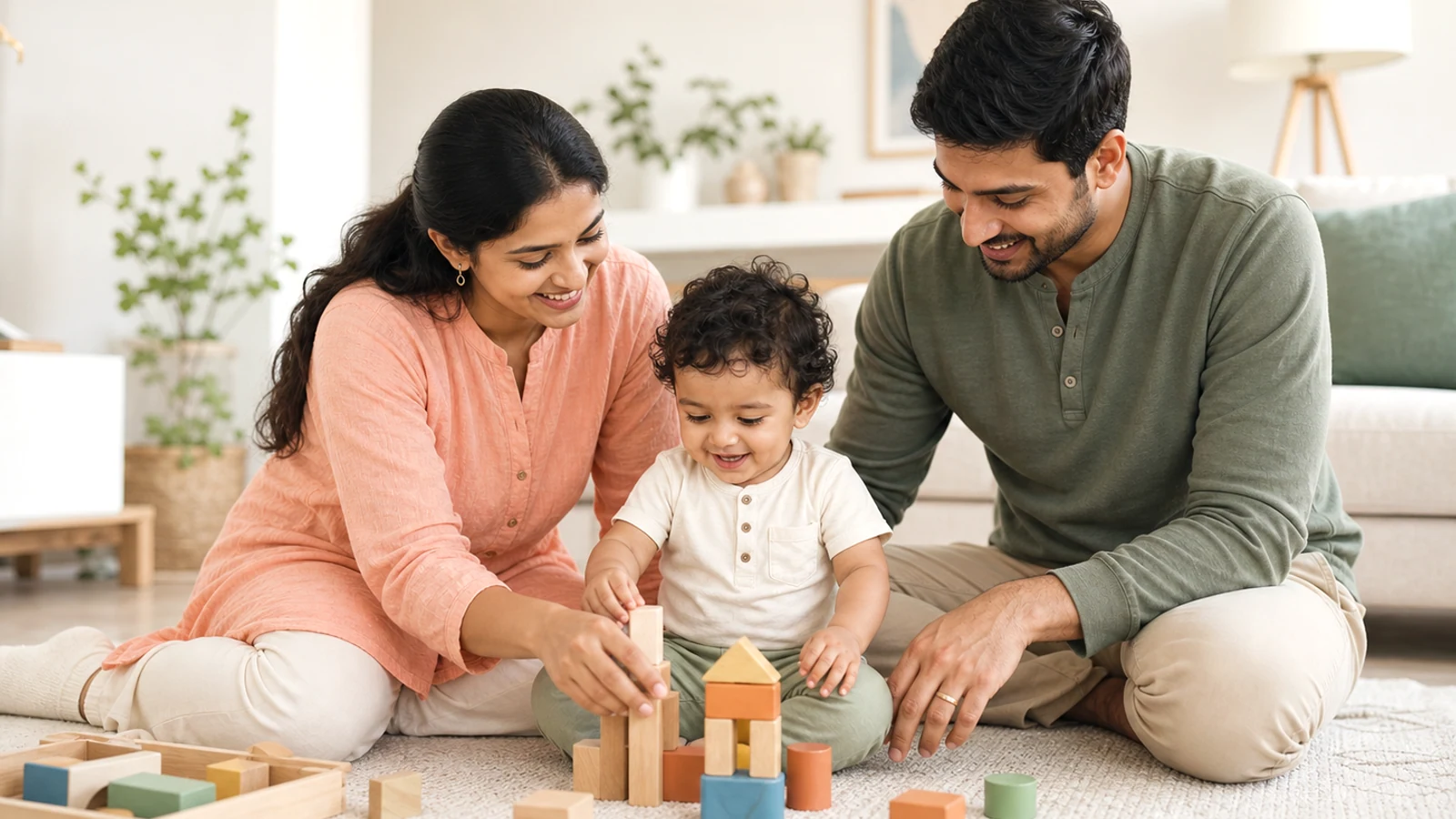
Few stretches of early parenting attract as much advice, and as much quiet worry, as the big physical milestones. Sitting up, taking first steps, and saying goodbye to nappies all feel like turning points, and it is natural to wonder whether your child is on track. The most helpful thing to remember is that these skills are not races. Each one appears when a child's body and confidence are ready, and that readiness varies enormously between perfectly healthy children.
The thread running through all three milestones is the same: watch for signs of readiness, offer gentle opportunities to practise, and let your child set the pace. Pressure rarely speeds anything up, and it often adds stress for everyone. Patience, encouragement, and a relaxed attitude do far more.
Sitting: building the foundation
Independent sitting usually develops gradually as a baby's neck and core strength grow. Long before they sit alone, babies build the muscles through plenty of supervised tummy time, reaching for toys, and being supported in upright positions. When a baby starts holding their head steadily and pushing up on their arms, the foundation for sitting is forming.
You can support the process by giving lots of floor time and placing interesting toys just within reach to encourage movement. Cushions around a new sitter can soften the inevitable topples. There is no need to prop a baby into sitting for long stretches before they can manage it themselves; let their own strength lead the way.
Walking: every child on their own timeline
Walking famously arrives across a wide range of ages, and the age of first steps says nothing about how well a child will eventually run, climb, or play. Many children cruise along furniture, push toys, and wobble through tentative steps for weeks or months before walking confidently. Some skip stages entirely. All of this can be perfectly normal.
The best encouragement is a safe space to explore and the freedom to fall safely and try again. Barefoot time on safe surfaces helps balance and strengthens little feet. Steady push-along toys can offer confidence. What helps least is comparison; the child walking at nine months and the one walking at fifteen months are usually both completely fine.
Potty training: readiness over the calendar
Potty training tends to go far more smoothly when it follows a child's readiness rather than a date you have circled. Pushing before a child is ready often leads to frustration and setbacks, while waiting for genuine signs of readiness usually makes the whole process quicker and calmer.
- Staying dry for longer stretches during the day
- Showing interest in the toilet or in others using it
- Telling you when a nappy is wet or soiled, or before it happens
- Being able to follow simple instructions and pull clothing up and down
- Discomfort with a dirty nappy and a wish to be changed
When several of these signs appear together, it is a good time to begin gently. Keep it positive and low pressure, expect accidents as a normal part of learning, and celebrate effort rather than only success. If it clearly is not working, it is completely fine to pause for a few weeks and try again later. A short break is not a failure; it is simply meeting your child where they are.
Encouragement, not comparison
Across all three milestones, the kindest approach is to celebrate your own child's progress without measuring it against anyone else's. Offer opportunities, cheer the attempts, and trust that readiness will come. Children are remarkably good at mastering these skills when they are met with patience instead of pressure.
When to check in with a professional
A wide range of timing is normal, but you know your child best. If you ever feel genuinely concerned that a milestone is significantly delayed, or your instinct tells you something is not right, that is exactly the moment to speak with your doctor or health visitor. Bringing along a few dated notes about what you have observed makes that conversation more useful.
This article is general guidance and is not medical advice. Every child develops differently, and your doctor or health visitor is the right person to assess questions about your child's development.
Medical disclaimer. This article is general information, not medical advice, and does not replace a consultation with your doctor, midwife, or paediatrician. Always seek professional guidance for your own situation. See our medical disclaimer and medical review policy.
Sources & standards
ParentVibes content is written to our editorial policy and guided by recognised authorities including World Health Organization, Indian Academy of Pediatrics, UK National Health Service, American College of Obstetricians and Gynecologists, and peer-reviewed literature. Guidance can vary by country — always confirm specifics with your own clinician.
Related guides

Tummy time made simple: building strength through play
Tummy time builds the strength babies need to roll, sit, and crawl. Many babies dislike it at first, but short, playful, frequent sessions make all the difference.
Read article
How to keep vaccination records easier to find
Vaccination paperwork has a way of scattering across clinics, phones, and folders. Here is a calm, repeatable system for keeping every record in one place you can open in seconds.
Read article
A gentle way to track milestones without comparison
Milestone charts can quietly turn joy into worry. Here is a kinder way to capture your child's growth that you will actually treasure later, without the comparison trap.
Read article
School admin habits that reduce the Sunday scramble
The Sunday-night panic over forgotten homework and missing permission slips is rarely about effort. It is about scattered information. A few small habits can quietly fix it.
Read articleBuilding a simple medical vault for your family
Reports, prescriptions, and test results pile up fast. A simple, well-organised medical vault means the right document is in your hand the moment a doctor asks for it.
Read article
A calm morning routine that survives school days
School mornings can feel like a daily sprint. A few small changes the night before, and a predictable sequence, can turn the rush into something that almost runs itself.
Read articleExplore more on ParentVibes
Continue your journey