
Health organization
Building a simple medical vault for your family

Every family accumulates a surprising amount of medical paper. Discharge summaries, blood test results, prescriptions, allergy notes, growth charts, and the occasional referral letter. Individually each one feels minor. Together, after a few years, they become a drawer nobody wants to open. And of course the one document a doctor asks for is always the one you cannot find.
A medical vault is simply a deliberate home for all of this, organised so that finding any single item takes seconds rather than minutes of dread. You do not need special software to start. You need a consistent structure and the habit of filing things once, in the right place, when they arrive.
Organise by person, then by type
The structure that holds up best over time is one section per family member, and within each person a small number of predictable categories. When everything for one child lives together, you can hand a new doctor a complete picture instead of a scattered pile.
- Prescriptions and current medications
- Test results and reports
- Vaccination certificates
- Allergies and important medical notes
- Referrals, discharge summaries, and letters
Capture the document the day it arrives
The hardest part of any filing system is the gap between receiving a document and storing it. That gap is where paper gets lost. Make it a rule to photograph or file anything medical the same day, while it is still in your hand. A clear photo with all text readable is enough; the original can then live in a single physical folder as a backup.
Add a one-line label to everything
A scan called "document_4471" is almost useless six months later. Spend the extra five seconds to note who it is for, what it is, and the date, for example "Aarav — blood test — 12 May 2026". Future you, standing in a clinic, will be grateful for that tiny effort.
Keep an emergency summary
Alongside the full vault, keep a short summary for each family member that you could share quickly in an urgent situation: blood group if known, allergies, current medications, and any ongoing conditions. In a stressful moment, having these few facts in one place is genuinely reassuring.
Protect the privacy of it
Medical information is sensitive, especially for children. Wherever you store it, make sure it is somewhere private and access-controlled rather than a shared family photo stream. The goal is for the right person to reach it instantly and for no one else to stumble across it.
This article is general organisation guidance and is not medical advice. Always rely on your doctor for clinical decisions, and follow their guidance on storing and sharing health records.
Medical disclaimer. This article is general information, not medical advice, and does not replace a consultation with your doctor, midwife, or paediatrician. Always seek professional guidance for your own situation. See our medical disclaimer and medical review policy.
Sources & standards
ParentVibes content is written to our editorial policy and guided by recognised authorities including World Health Organization, Indian Academy of Pediatrics, UK National Health Service, American College of Obstetricians and Gynecologists, and peer-reviewed literature. Guidance can vary by country — always confirm specifics with your own clinician.
Related guides
How to keep vaccination records easier to find
Vaccination paperwork has a way of scattering across clinics, phones, and folders. Here is a calm, repeatable system for keeping every record in one place you can open in seconds.
Read article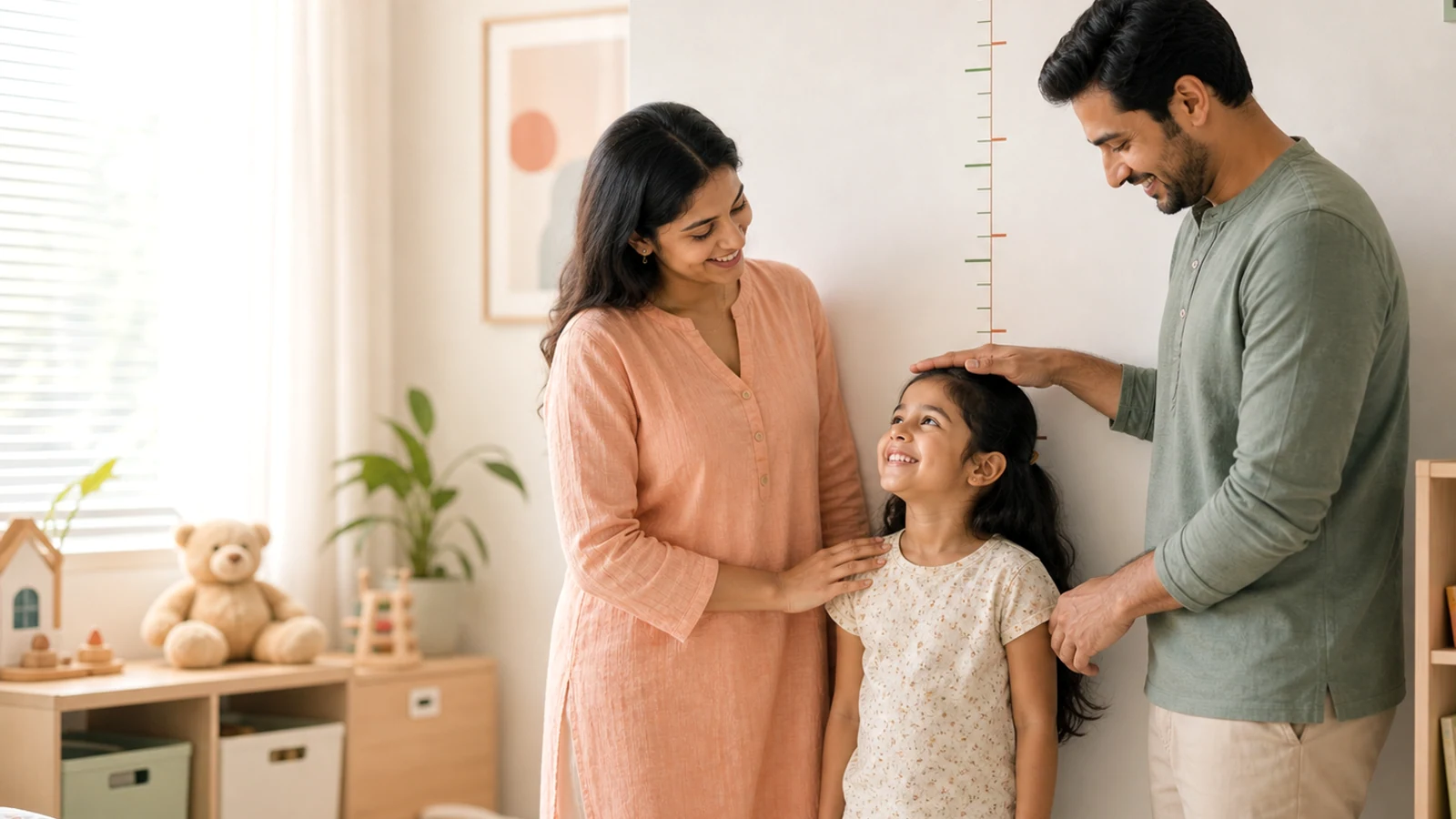
A gentle way to track milestones without comparison
Milestone charts can quietly turn joy into worry. Here is a kinder way to capture your child's growth that you will actually treasure later, without the comparison trap.
Read article
School admin habits that reduce the Sunday scramble
The Sunday-night panic over forgotten homework and missing permission slips is rarely about effort. It is about scattered information. A few small habits can quietly fix it.
Read article
A calm morning routine that survives school days
School mornings can feel like a daily sprint. A few small changes the night before, and a predictable sequence, can turn the rush into something that almost runs itself.
Read article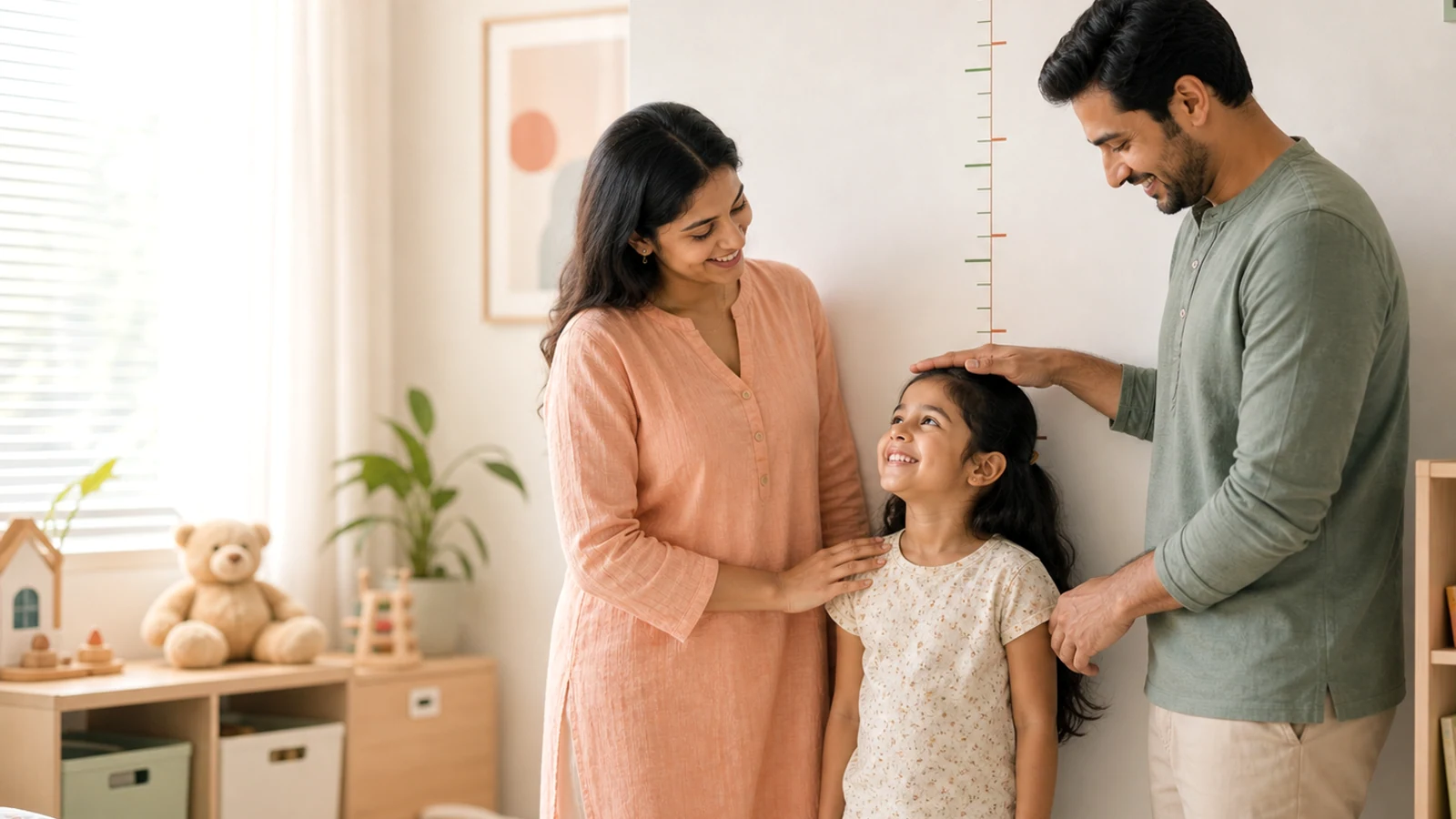
Tracking growth: what to note and what to let go
Height, weight, and feeding notes are useful to keep, but they are easy to over-worry. Here is what is genuinely worth recording, and what you can comfortably let go.
Read article
Sharing the parenting mental load without keeping score
The mental load of parenting is the invisible work of remembering everything. Sharing it is less about splitting tasks evenly and more about making the invisible visible.
Read articleExplore more on ParentVibes
Continue your journey