
Birth to about 4 weeks
Newborn Baby: Development, Feeding and Sleep
The newborn weeks are a season of adjustment for the whole family. Many babies feed little and often, sleep in short scattered stretches and communicate almost entirely through crying. There is no routine to get right yet — the focus is feeding, closeness and rest.
These guides describe common developmental patterns, not deadlines. Every baby develops at their own pace.
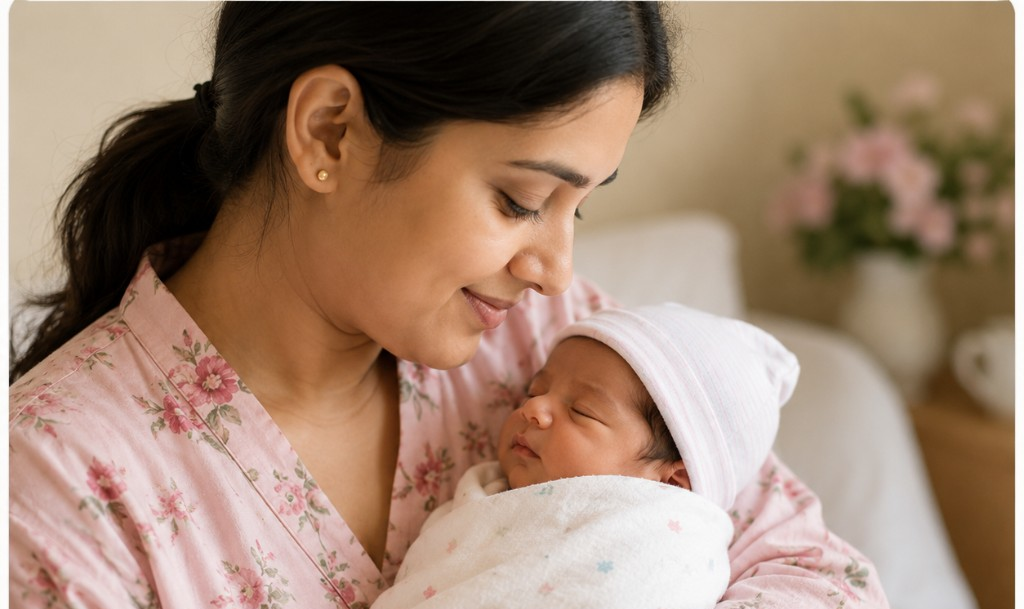
What this month looks like
Development
Early reflexes such as rooting, grasping and the startle response are common. Many newborns can briefly focus on a face around 20–30 cm away and may turn toward familiar voices.
Feeding
Most newborns feed frequently — often 8–12 times in 24 hours, breast or bottle. Feeding on demand and watching wet nappies are more useful than watching the clock.
Sleep
Newborn sleep is broken up across day and night and that is expected. Total sleep varies widely between babies at this stage.
Play
Gentle skin-to-skin, soft talking and short, calm face-time are plenty. Brief supervised tummy time can begin from the early weeks.
Safety
Always place your baby on their back to sleep, on a firm flat surface with no loose bedding. Keep the sleep space smoke-free.
Medical guidance
Speak with your paediatrician about early check-ups and the first vaccinations. Seek urgent care for fever in a young baby, difficulty breathing, or poor feeding.
The weeks in the newborn stage
For week-specific guidance, open any week below.
Medically reviewed by Dr. Megha, MD, DNB (Paediatrics) · Last reviewed July 26, 2026. General information only — not a substitute for advice from your own paediatrician.